Spelling practice Easy Phonics Worksheets for Ages 6-7
5 filtered results
Difficulty Level
Grade
Age
-
From - To
Subject
Activity
Standards
Explore our Spelling Practice Easy Phonics Worksheets for ages 6-7 to boost your child's reading and writing skills. These engaging and skillfully designed worksheets enhance phonemic awareness and spelling accuracy through fun activities and exercises. Ideal for young learners, our worksheets cover a variety of phonics topics including vowel sounds, consonant blends, and word patterns. Using these resources, your child will develop a strong foundation in spelling and literacy in an enjoyable and interactive way. Provide the best start in your child’s spelling journey with our easy-to-use and effective phonics worksheets!
Favorites
With answer key
Interactive
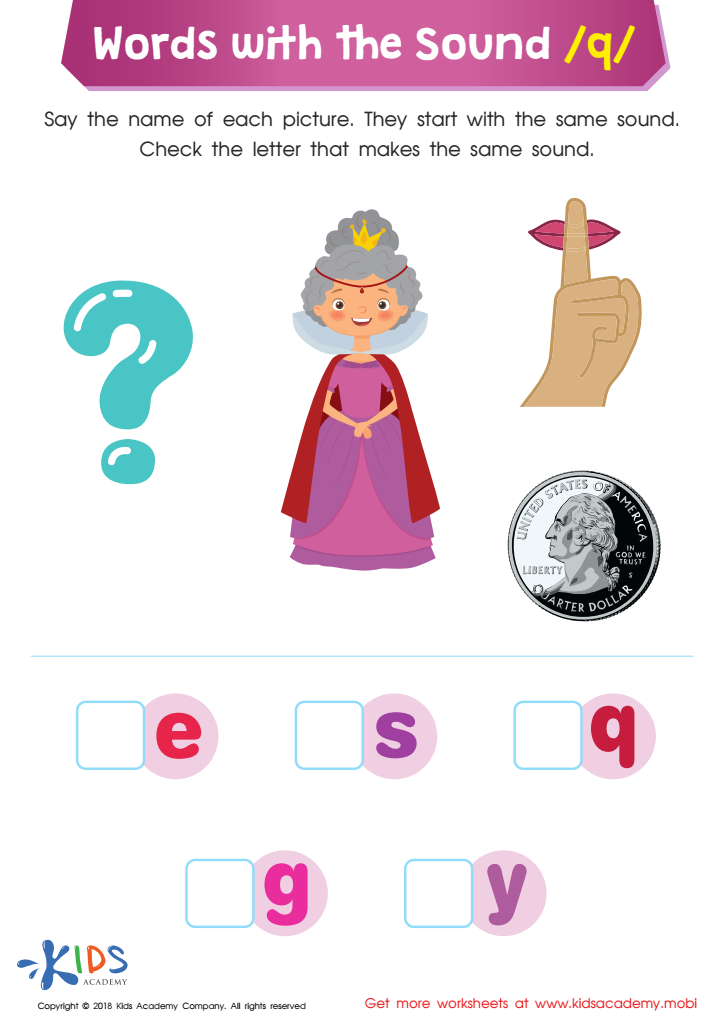
Words with Sound Q Reading Worksheet
Beginning readers will love this free PDF worksheet! Bright colors and familiar pictures make it fun, as they say the name of each image and work on fine motor skills. Letters “q” is featured among others, helping to recognize and isolate its sound, which is often seen with a “u” behind it.
Words with Sound Q Reading Worksheet
Worksheet
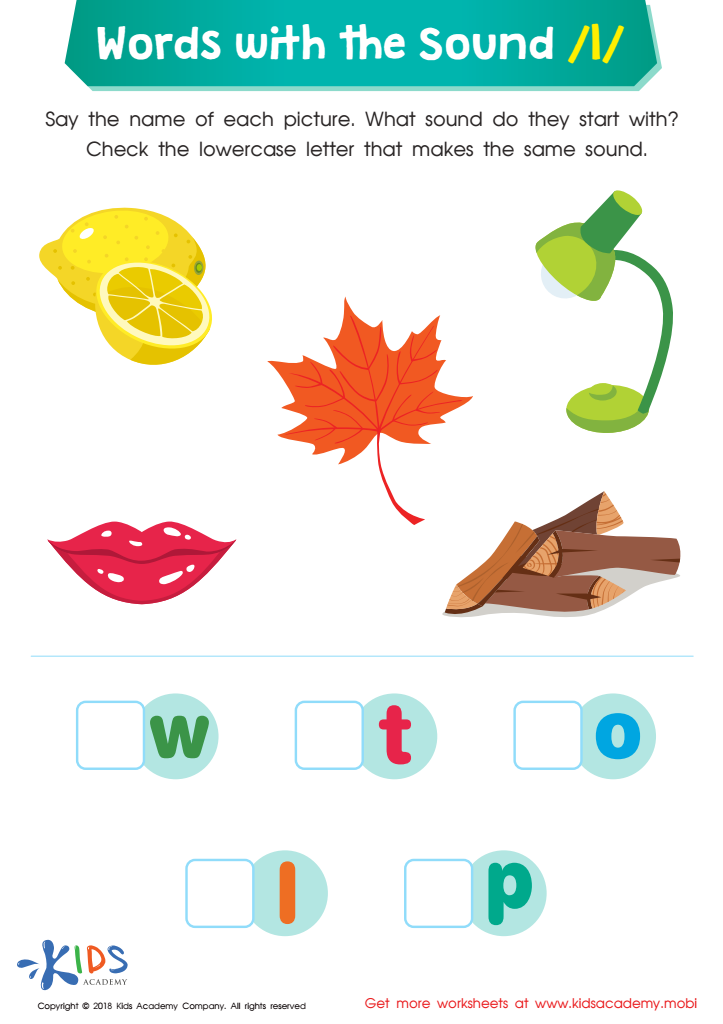
Words with Sound L Reading Worksheet
This PDF worksheet is great for helping emerging readers isolate initial sounds. Kids name familiar pictures, then identify the correct letter for the "l" sound. This worksheet strengthens fine motor skills, plus builds visual discernment. It's fun and colorful too!
Words with Sound L Reading Worksheet
Worksheet
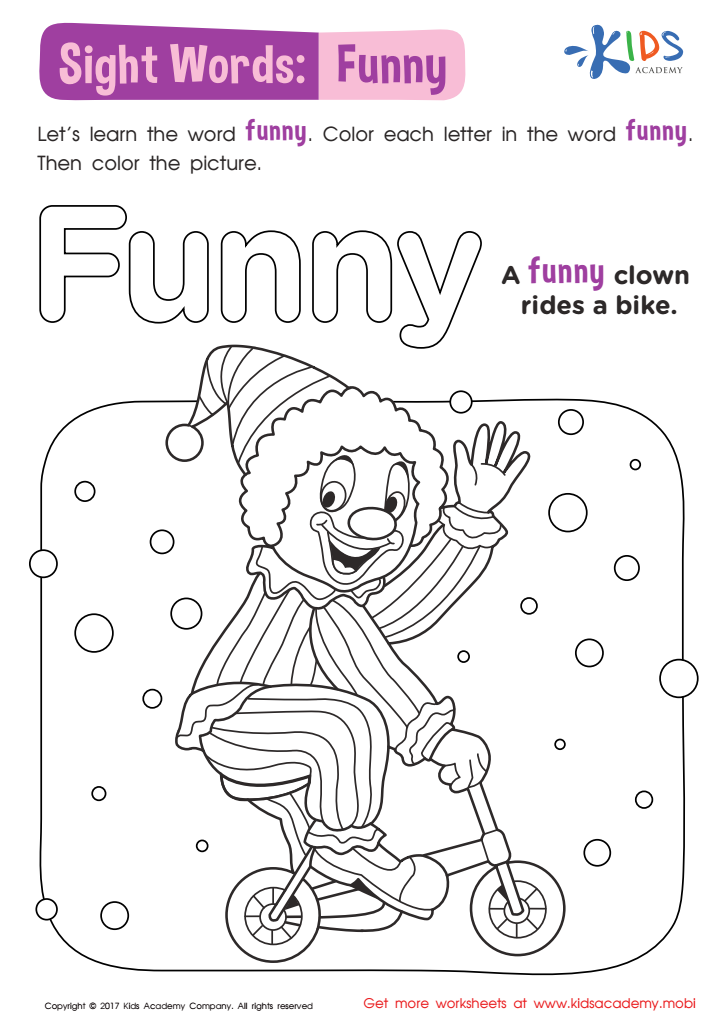
Funny Worksheet Sight Words Worksheet
Love humor? Introduce "funny" as a sight word with this fun worksheet! Have your child read the sentence then color the word in the center. Let them use their imagination to color the silly clown in any way they like!
Download (PDF)
 Assign to My Students
Assign to My Students
Funny Worksheet Sight Words Worksheet
Worksheet
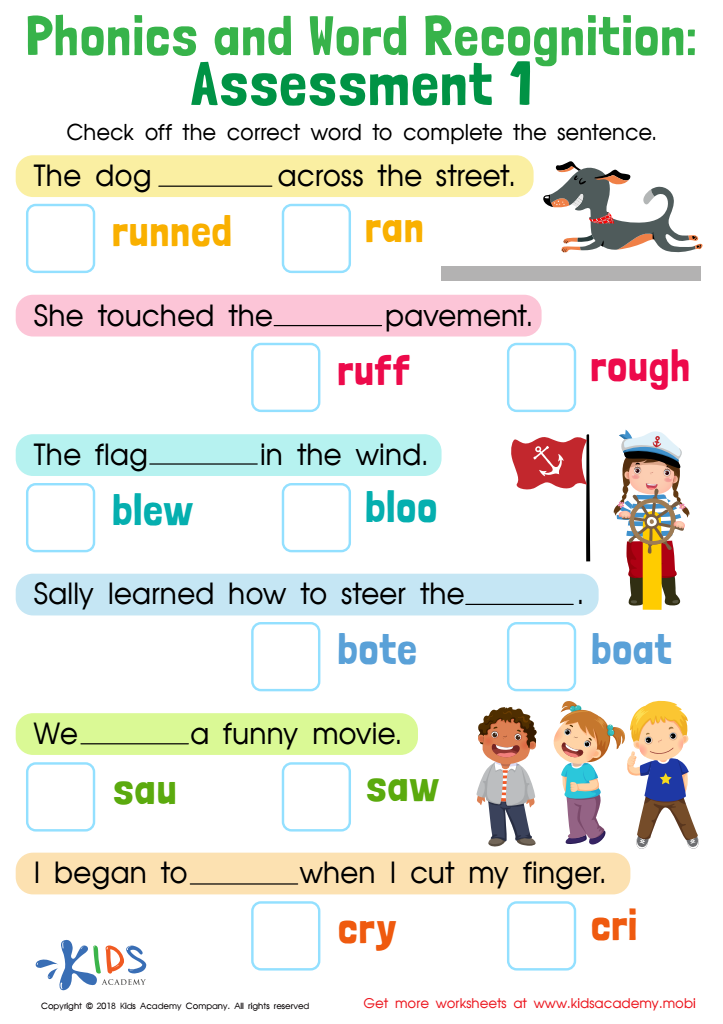
Phonics and Word Recognition: Assessment 1 Worksheet
This worksheet tests phonetics and word recognition. Students should be familiar with past tense verbs. Read incomplete sentences, then read multiple options and help students select the correct one.
Phonics and Word Recognition: Assessment 1 Worksheet
Worksheet
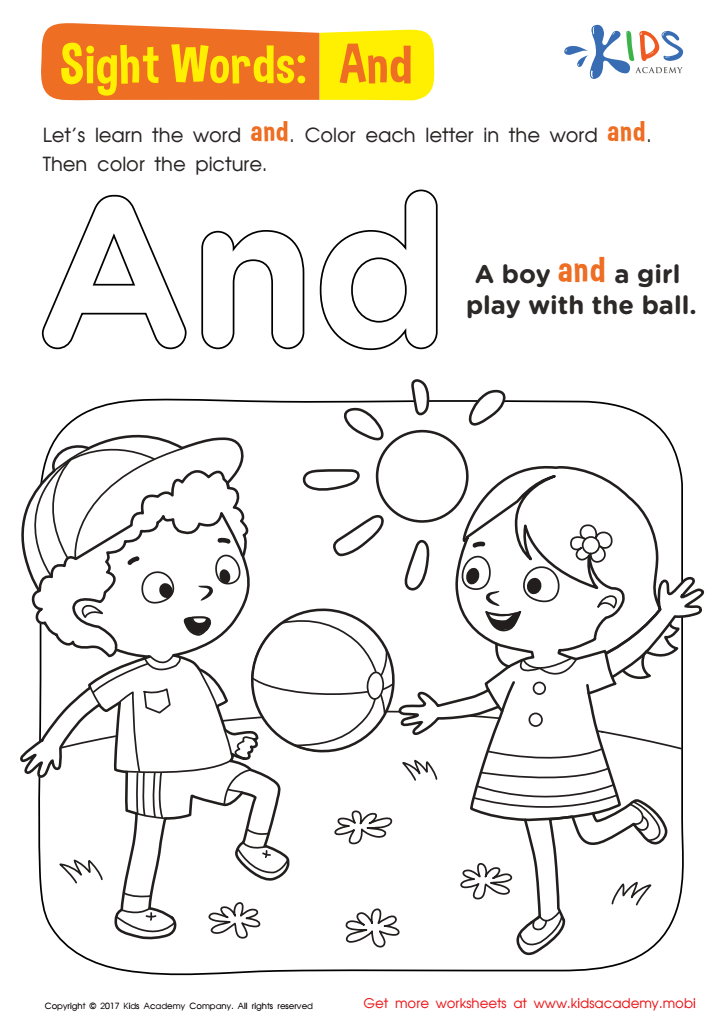
And Worksheet Sight Words Worksheet
Help your child get a jumpstart on reading with sight words! Print out this fun worksheet and get your child to read the sentence. Point out the word "and", then color the word and enjoy the rest of the scene! It's a great way to introduce sight words and get their early reading skills going!
Download (PDF)
Assign to My Students
Assign to My Students
And Worksheet Sight Words Worksheet
Worksheet
Join Kids Academy for Free
Who is primarily going to use this learning content?








Spelling practice using Easy Phonics for children aged 6-7 is critical for laying a solid foundation in literacy, which directly impacts their overall educational trajectory. This foundational stage is when young brains are most receptive to language acquisition. Engaging in regular spelling practice helps children recognize patterns in words, understand phonetic rules, and become familiar with different letter combinations. This, in turn, enhances their reading fluency, comprehension, and writing skills.
For parents and teachers, investing time in Easy Phonics practice can support early identification of any learning challenges, such as dyslexia, ensuring timely interventions are put in place. It also fosters an environment where children perceive learning, particularly reading and spelling, as enjoyable and achievable tasks—boosting their confidence and instilling a lifelong love for reading.
Furthermore, spelling practice encourages critical thinking and problem-solving as kids decode unfamiliar words. From a developmental perspective, such activities can also improve their fine motor skills as they write. Providing this structured yet engaging practice aids in bridging the gap between spoken and written language, ensuring that the children not just speak clearly but also understand and use correct grammar, setting them up for future academic and communicative success.