Sorting skills Easy Numbers Worksheets for Ages 6-7
3 filtered results
-
From - To
Enhance your child's sorting skills with our engaging Easy Numbers Worksheets designed for ages 6-7. These printable worksheets help young learners develop essential academic abilities through fun and interactive activities. Your child will practice identifying, categorizing, and sorting numbers, fostering critical thinking and problem-solving skills. Our thoughtfully crafted content caters to various learning styles, making mathematics approachable and enjoyable. Perfect for classroom use or at-home learning, these worksheets provide a solid foundation for future math success. Explore our diverse range of exercises that will motivate your child to practice sorting while building confidence in their numerical understanding!
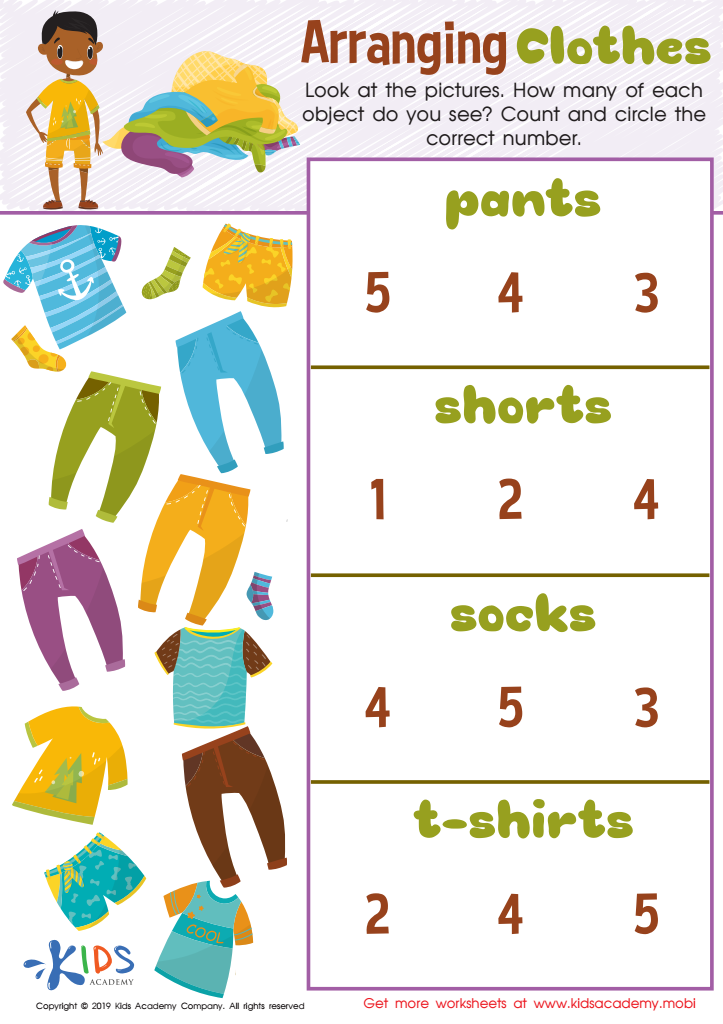
Arranging Clothes Worksheet
 Assign to My Students
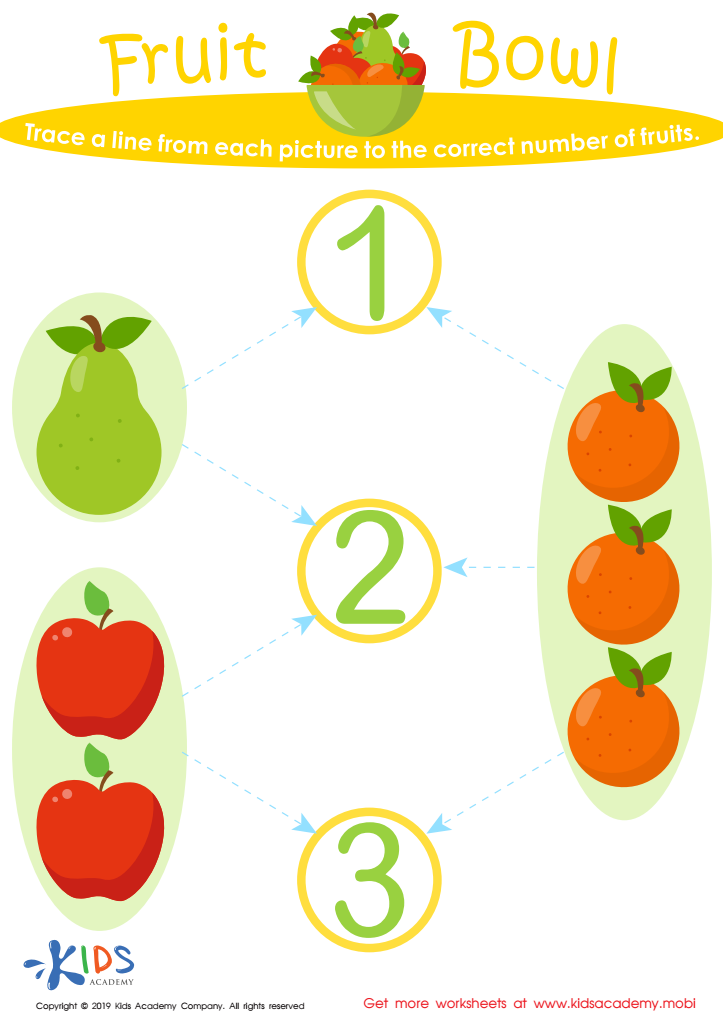
Fruit Bowl Worksheet
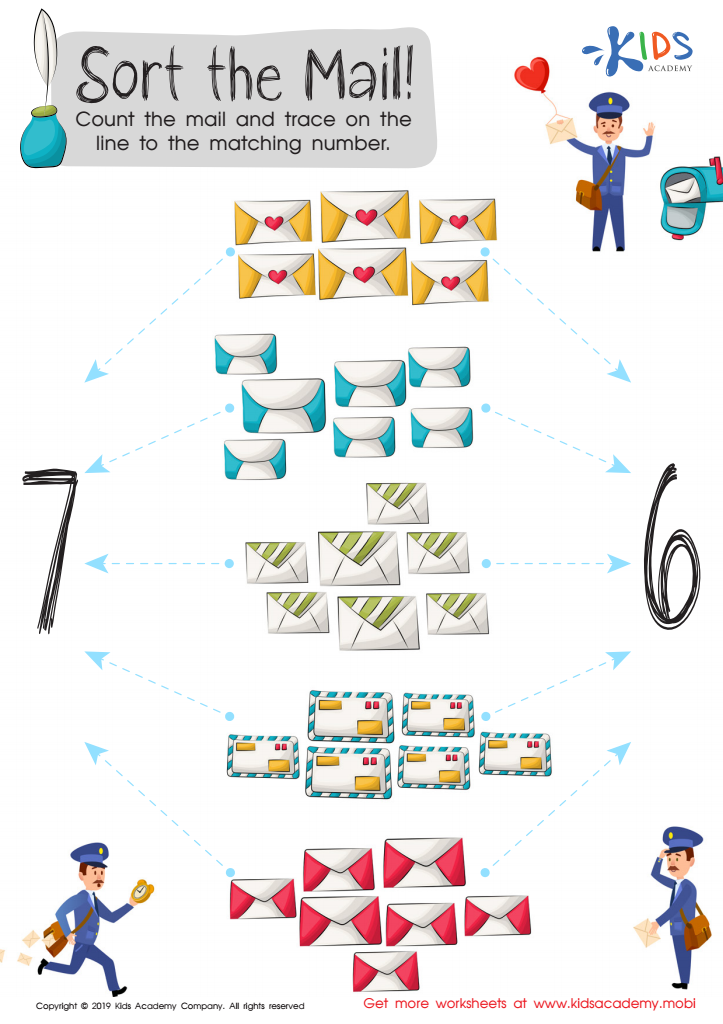
Sort the Mail Worksheet








Sorting skills involving easy numbers are crucial for children ages 6-7, as they serve as foundational elements for mathematical understanding and cognitive development. At this age, children are preparing to grasp more complex mathematical concepts such as addition, subtraction, and even basic math operations. Mastering sorting helps them recognize patterns, categorize information, and develop logical reasoning skills.
When children sort numbers, they learn to identify similarities and differences, enhancing their analytical thinking. For instance, sorting numbers into even and odd or by size fosters critical foundational skills necessary for higher-level math. Furthermore, these sorting activities engage children in active learning, making math enjoyable and interactive.
Moreover, sorting skills lay the groundwork for organizational and problem-solving abilities that extend beyond mathematics. As parents and teachers nurture these skills, they not only help children perform better academically but also instill confidence and independence in their learning. Ultimately, investing time in developing sorting abilities benefits children's overall cognitive and social-emotional growth, setting them up for future success in both school and life. Therefore, parents and teachers should prioritize and integrate sorting activities into daily learning.








