Identifying shapes Easy Math Worksheets for Ages 6-7
3 filtered results
-
From - To
Unlock the world of shapes with our "Identifying Shapes Easy Math Worksheets" tailored for kids aged 6-7! These engaging, colorful exercises make learning about shapes both fun and simple. Designed to enhance critical thinking and visual recognition skills, each worksheet features a variety of shapes for students to identify, color, and categorize. Perfect for classroom use or homeschooling, these worksheets promote early math skills while keeping children entertained. Equip your young learners with the confidence they need to master geometry with these interactive and educational resources. Download today and watch your child's understanding of shapes grow!
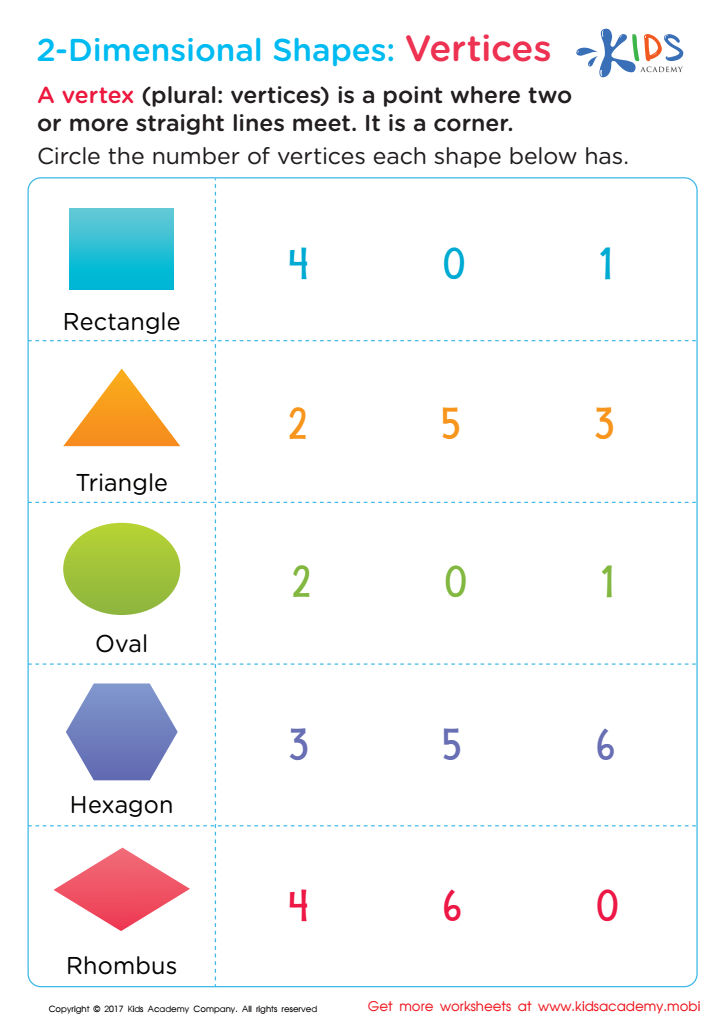
Two–Dimensional Shapes: Vertices Printable
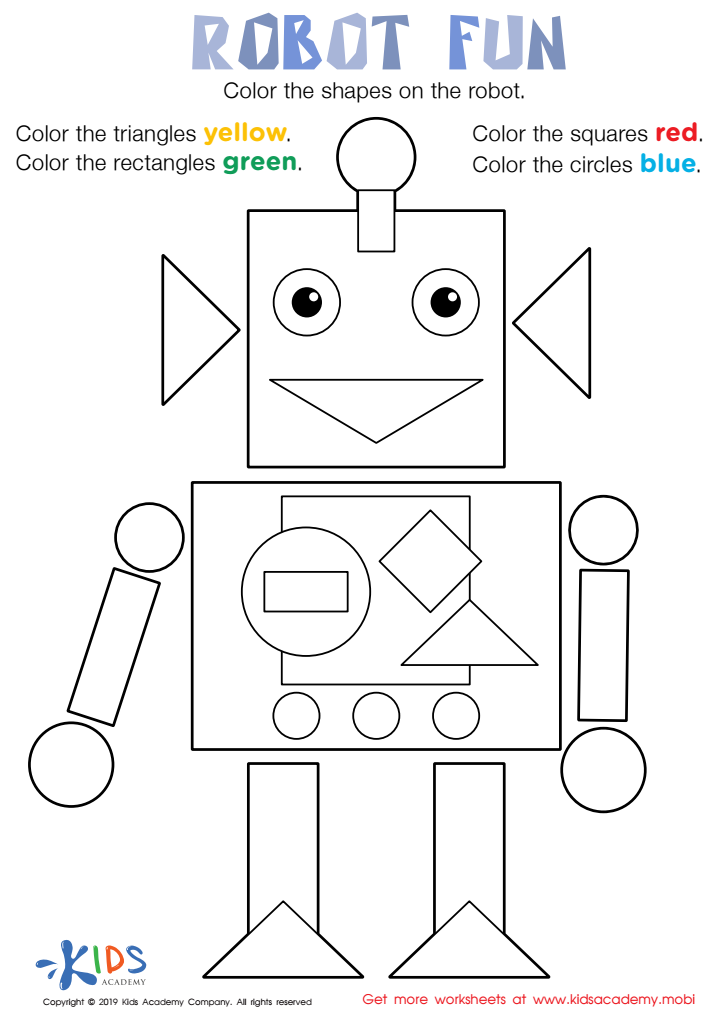
Robot Fun Worksheet
 Assign to My Students
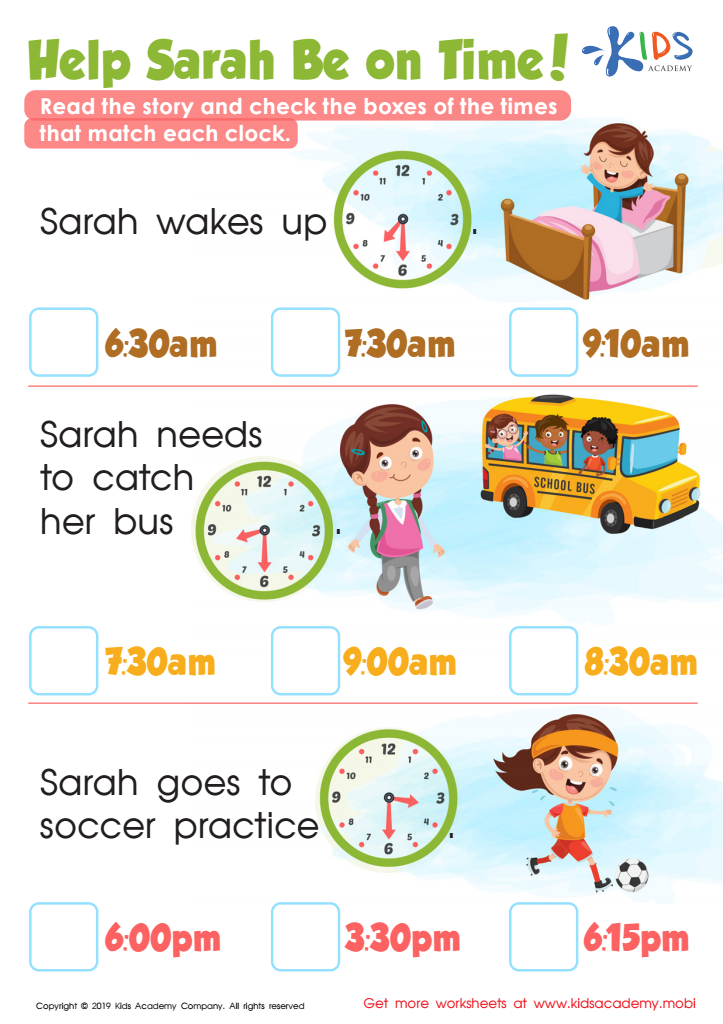
Help Sarah Be on Time! Worksheet








Identifying shapes forms a foundational aspect of early mathematics education for children aged 6-7. Understanding shapes is crucial for several reasons. First, it enhances spatial awareness, enabling kids to interact intelligently with the world around them. Shapes are everywhere— from architecture to nature— and being able to recognize and categorize them helps in developing observational skills.
Moreover, identifying shapes fosters critical thinking. Children learn to differentiate between two-dimensional shapes, like circles and squares, and three-dimensional shapes, like cubes and spheres, which requires analytical and comparison skills. This cognitive development translates to challenges in more advanced math concepts later in their education.
Engaging with shapes also promotes creativity. Art and design, essential components of childhood development, often focus on shapes. By recognizing and manipulating shapes, children can express themselves through artwork, crafts, and building projects.
Additionally, shape identification links to vocabulary development. Learning terms that describe shapes—such as "edges," "corners," and "sides"—enriches their language skills and facilitates clear communication.
In summary, fostering shape recognition in young learners not only strengthens their mathematical foundation but enhances critical thinking, creativity, and language development—essential skills for their future academic success. Therefore, both parents and teachers should prioritize this essential area of math.








