Visual discrimination Easy Math Worksheets for Ages 6-7
3 filtered results
-
From - To
Boost your child's learning with our "Visual Discrimination Easy Math Worksheets" designed for ages 6-7! These engaging worksheets help young learners develop crucial visual discrimination skills, which are essential for math success. Our resources feature colorful illustrations and age-appropriate tasks that encourage children to recognize similarities and differences, enhancing their ability to process visual information. By practicing with these worksheets, students will improve their attention to detail, paving the way for better problem-solving skills in math and beyond. Perfect for home or classroom use, these fun and interactive activities make learning math enjoyable and effective for your little one!
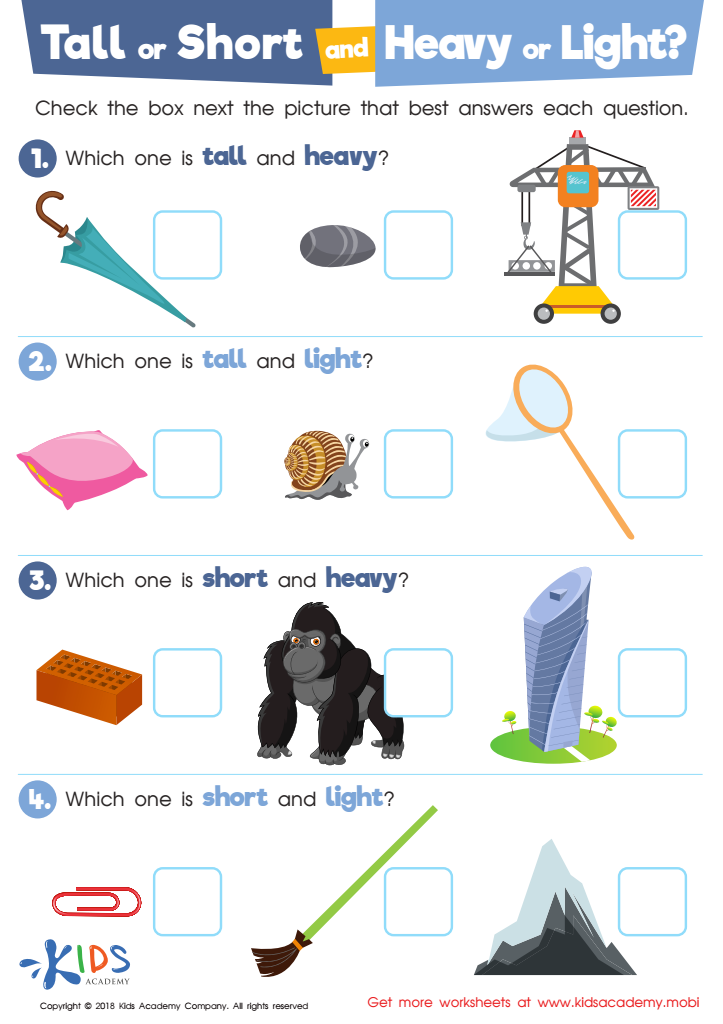
Tall or Short and Heavy or Light? Worksheet
 Assign to My Students
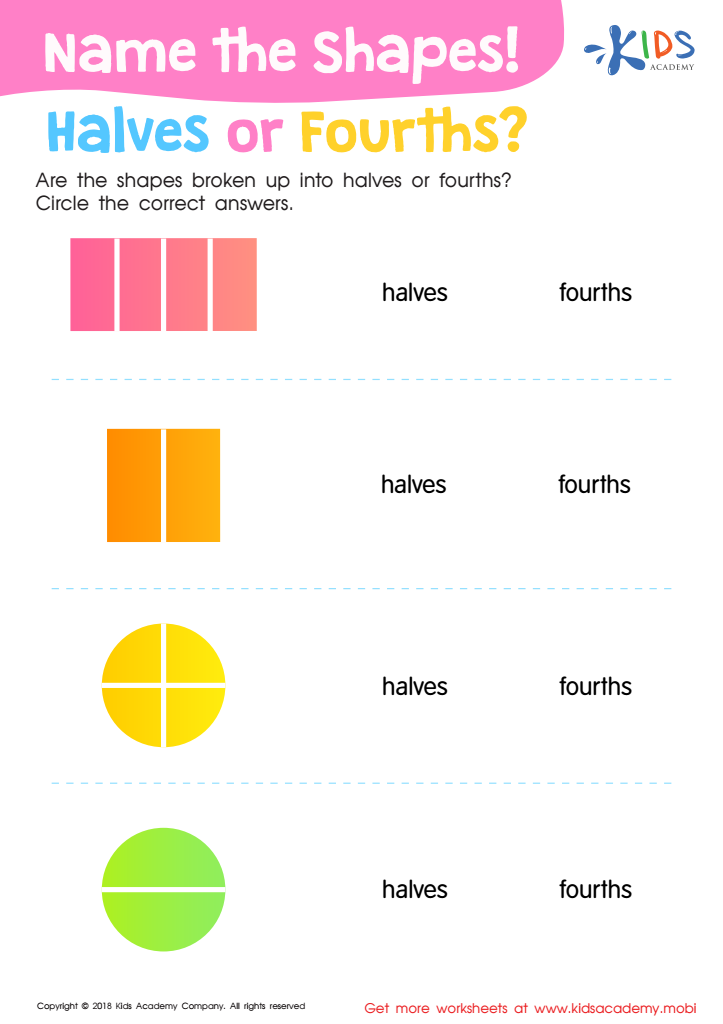
Name the Shapes Halves or Fourths? Worksheet
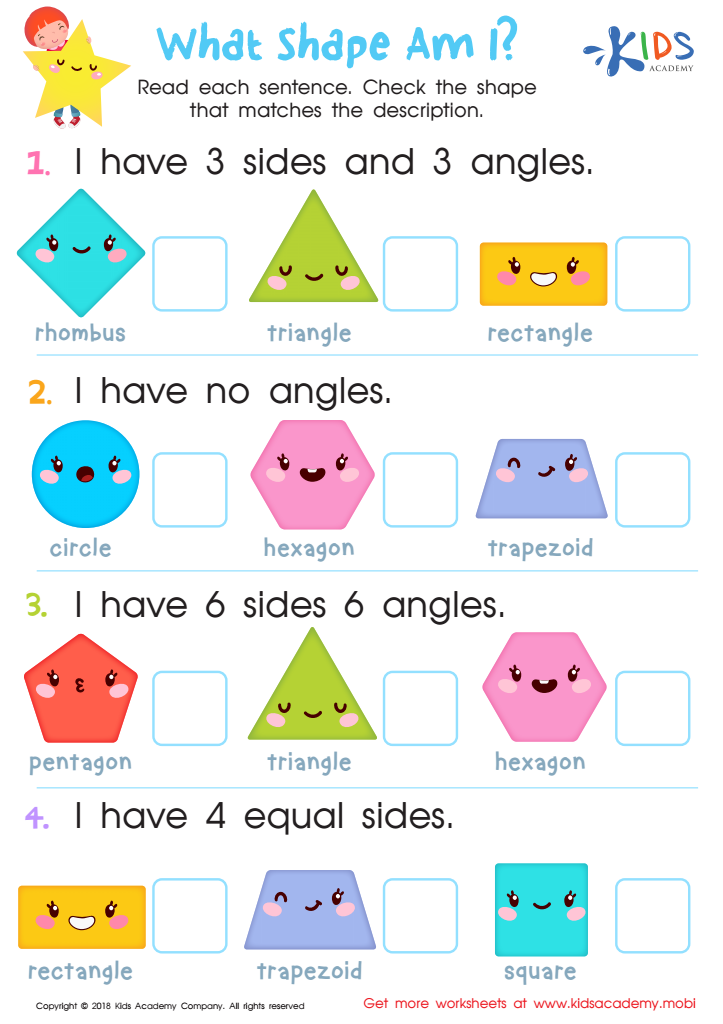
What Shape Am I? Worksheet







.jpg)
Parents and teachers should prioritize visual discrimination skills in early mathematics for children aged 6-7 because these skills lay the foundation for future academic success. Visual discrimination refers to the ability to notice and interpret differences and similarities in shapes, patterns, and numbers. At this age, children are developing critical thinking and problem-solving abilities, and enhancing their visual discrimination can significantly impact their mathematical comprehension.
When children can effectively distinguish between similar shapes or numbers, it helps them grasp essential math concepts such as sorting, counting, and recognizing patterns. It also supports their ability to visualize and comprehend spatial relationships, which are crucial when tackling more complex math topics later on. Engaging activities that involve visual discrimination, such as matching games or puzzles, make learning interactive and enjoyable, thereby increasing motivation and engagement.
Moreover, honing these skills early can prevent future misconceptions and difficulties in mathematics, promoting a positive attitude towards the subject. By integrating visual discrimination exercises into their teaching practices and parenting methods, adults can help foster children’s confidence and competence in math, setting them on a path toward lifelong learning and achievement in a crucial academic area.








