Basic Math Skills Easy Measurement Worksheets for Ages 6-7
4 filtered results
-
From - To
Unlock the world of measurements with our "Basic Math Skills Easy Measurement Worksheets" designed specifically for ages 6-7. These engaging worksheets provide a fun and interactive way for young learners to develop essential math skills. Featuring colorful visuals and relatable problems, students will explore concepts such as length, weight, and volume through hands-on activities. These resources encourage critical thinking and enhance problem-solving abilities, ensuring a strong foundation in measurements. Perfect for classroom or home use, our worksheets are crafted to foster a love for math while building confidence in young learners. Download today and watch their skills soar!
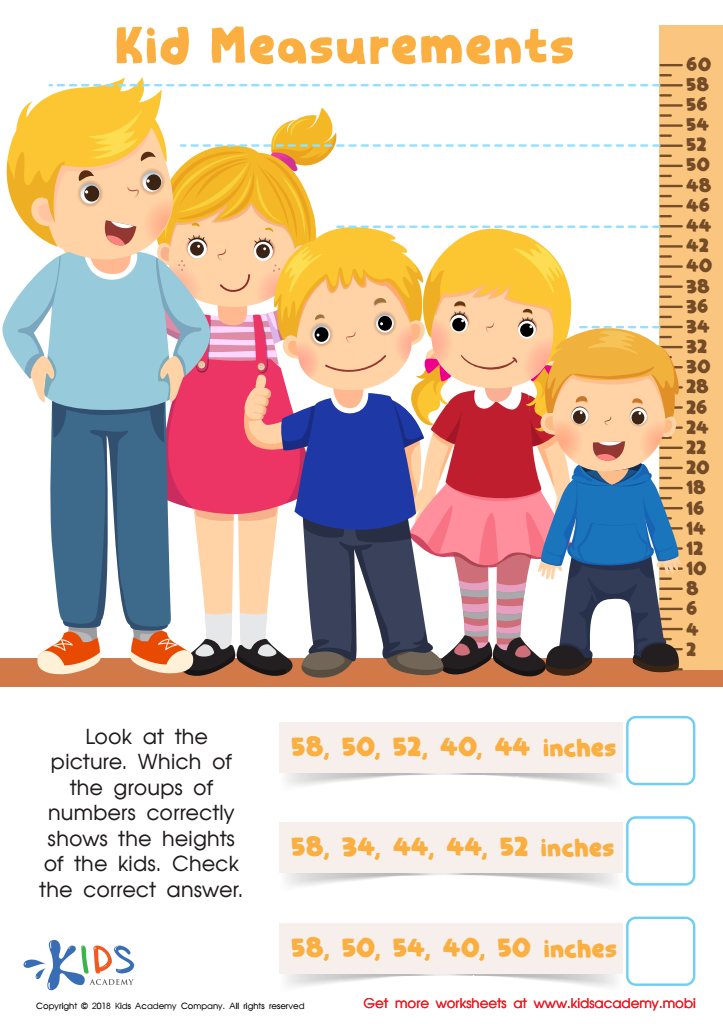
Kids Measurements Worksheet
 Assign to My Students
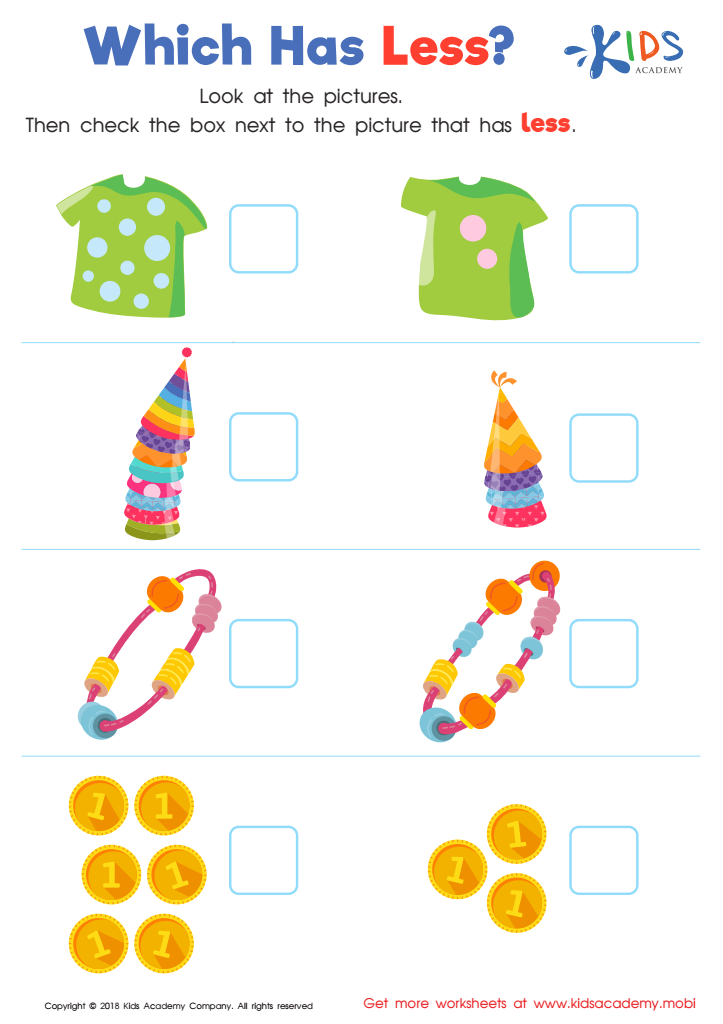
Which Has Less? Worksheet
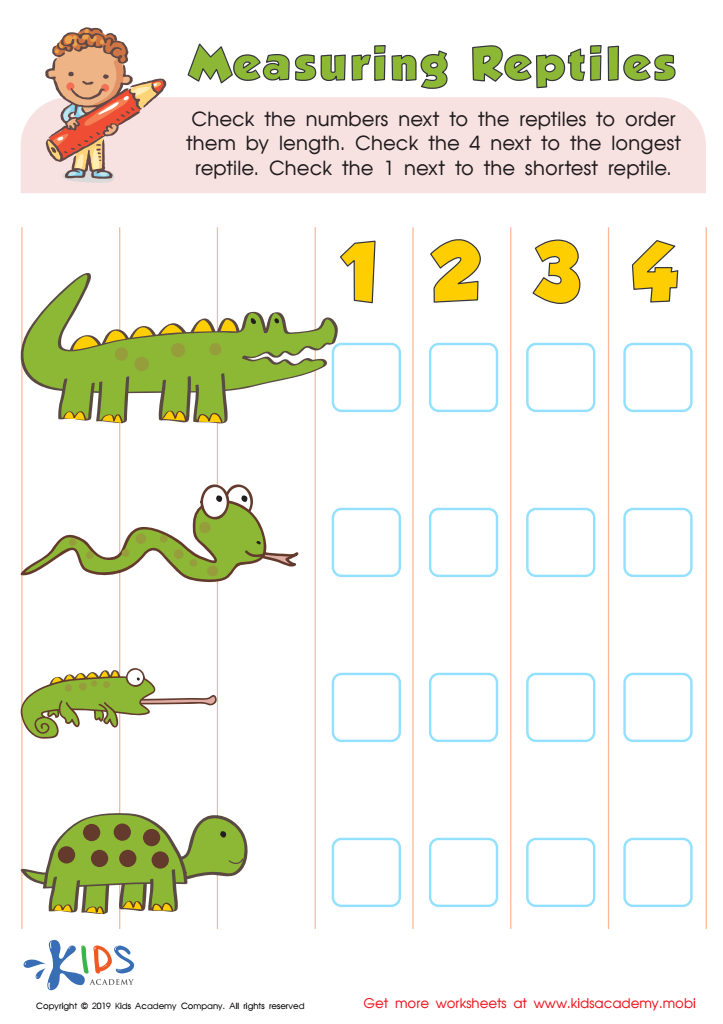
Measuring Reptiles Worksheet
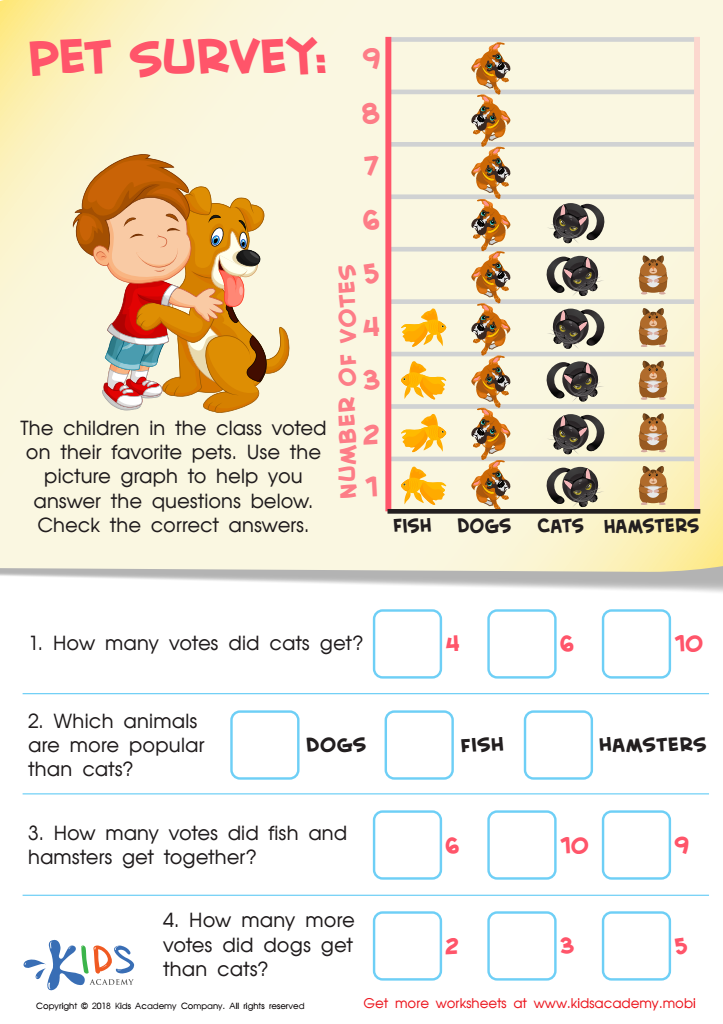
Pet Survey Worksheet








Basic math skills, particularly in measurement, are foundational for children aged 6-7, playing a vital role in both academic and everyday life. Understanding measurement concepts helps children develop critical thinking and problem-solving abilities, which are essential not only for future math success but for making informed decisions in daily scenarios, such as cooking or shopping.
At this age, kids are naturally curious and eager to explore their environment. Introducing measurements—such as lengths, weights, and volumes—awakens their interest and fosters practical application of math in real-life situations. These skills also enhance their spatial awareness, allowing them to comprehend size, shape, and distance, which are key components in various subjects, including science and engineering.
Additionally, learning measurement at an early age builds confidence and encourages a positive attitude toward math. When parents and teachers integrate fun, hands-on measurement activities, it transforms abstract concepts into tangible experiences. This not only solidifies their understanding but also establishes a love for learning. Ultimately, an emphasis on basic measurement skills empowers children to articulate and quantify their world, paving the way for future academic success and equipping them with tools for navigating everyday challenges. Parents and teachers play a crucial role in nurturing these skills, laying the groundwork for future mathematical proficiency.








