
Time reading skills Easy Time Worksheets for Ages 6-7
3 filtered results
Difficulty Level
Grade
Age
-
From - To
Subject
Activity
Standards
Introducing Time Reading Skills Easy Work Sheets for Ages 6-7 by Kids Academy – the ideal educational resource to build essential time-telling abilities in young learners. Specifically crafted for children aged 6-7, these engaging and easy-to-follow worksheets help students grasp the concepts of hours, half-hours, and quarters. With colorful visuals and fun exercises, our printable sheets make learning to read both digital and analog clocks an enjoyable experience. Foster confident and independent learners; visit our page to download and start your child's journey to mastering time-reading skills today!
Favorites
With answer key
Interactive
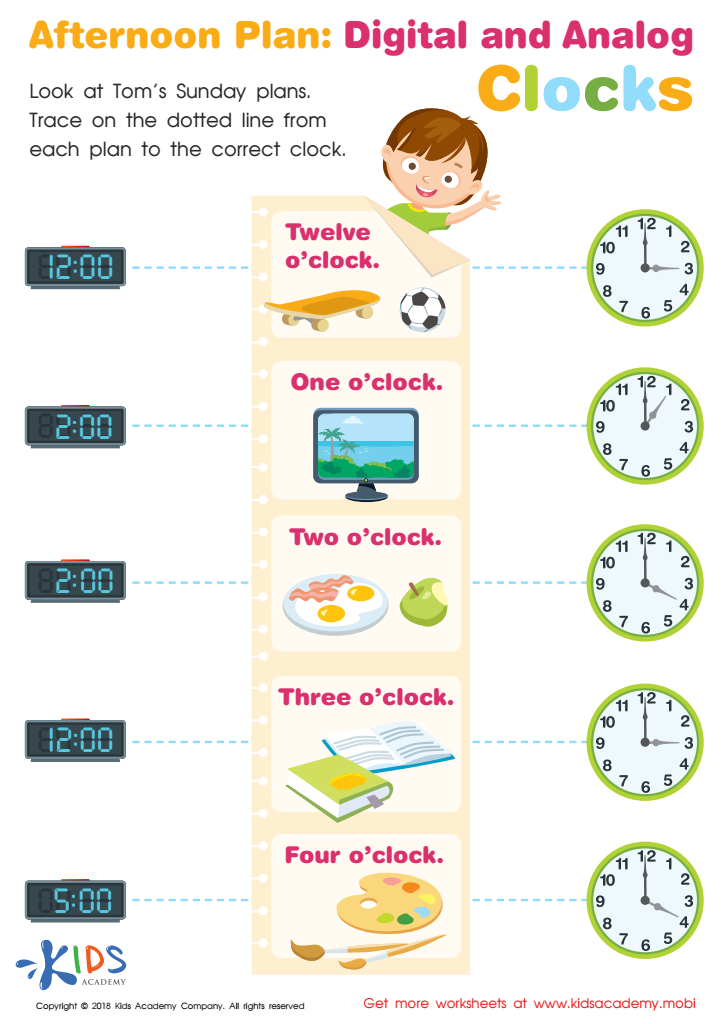
Afternoon Plan: Digital and Analog Clocks Worksheet
Tom's got Sunday plans and your kids can use this worksheet to help them learn how to tell the time. With tracing dotted lines from plans to the correct clock, they'll gain the skills to accurately convert digital time to analog. It'll be a great way to get them better at telling the time.
 Assign to My Students
Afternoon Plan: Digital and Analog Clocks Worksheet
Worksheet
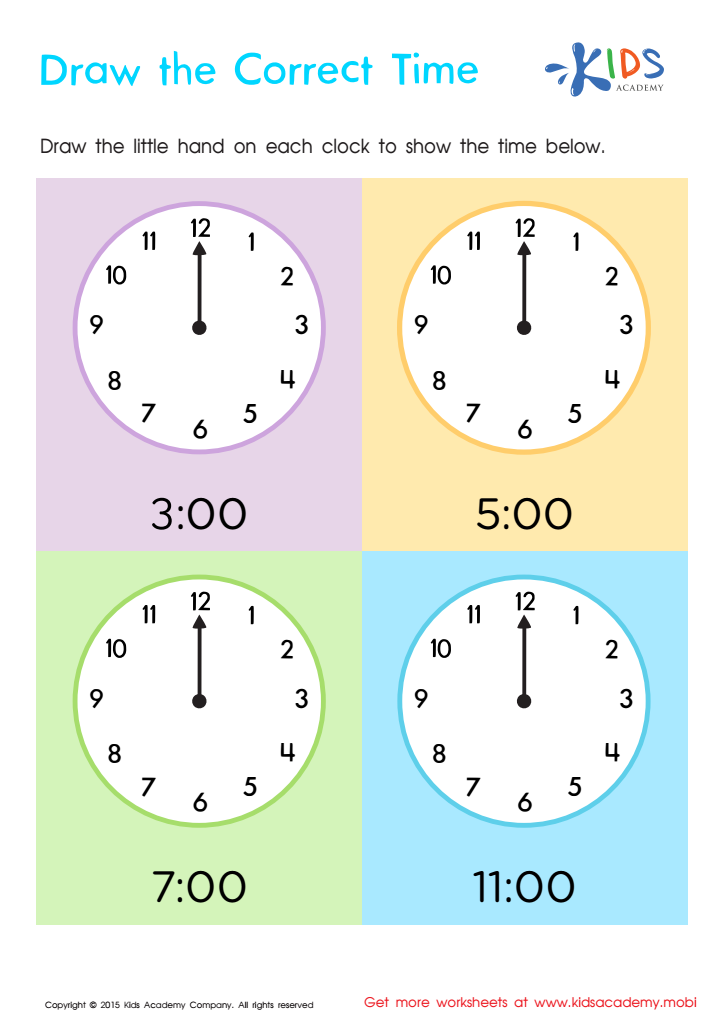
Telling The Time Worksheet: Part 1
Practice telling the time with Kids Academy. Our worksheets make it fun for kindergarteners to learn about clocks and reading the time. Find our free math worksheets on telling the time and draw the little hand on the clock faces to show the time. Let's learn together!
Telling The Time Worksheet: Part 1
Worksheet
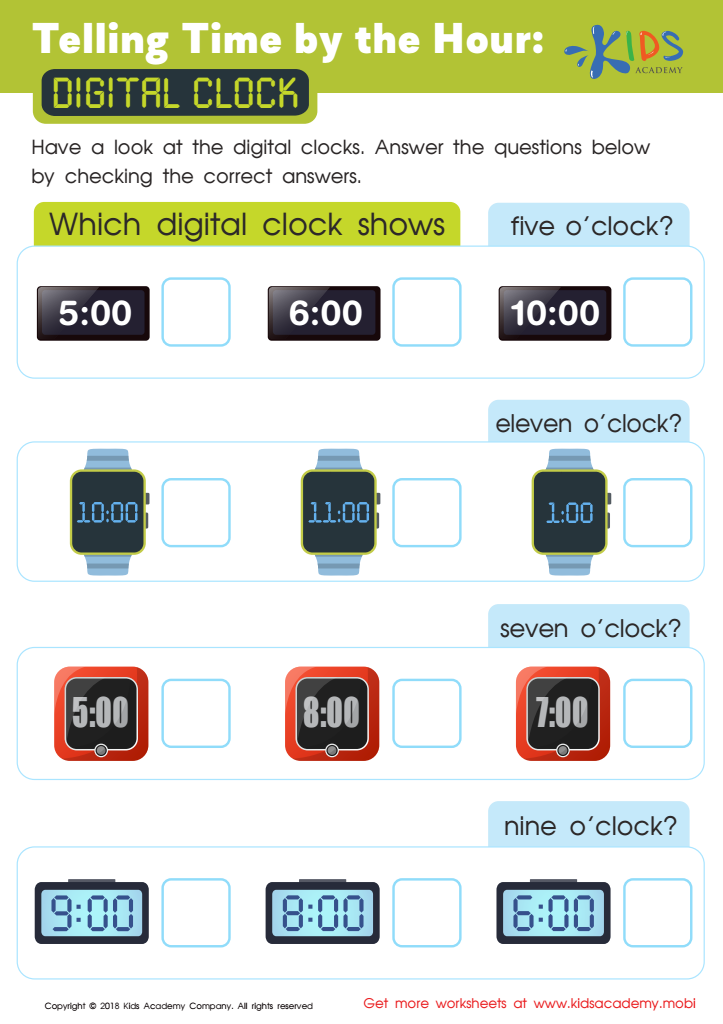
Telling Time by the Hour: Digital Clock Worksheet
Introduce your students to digital clocks. This worksheet will help them become familiar with them. Guide them through answering the questions - they're simple and stimulating. Encourage their young minds to explore the digital clocks in the exercise.
Telling Time by the Hour: Digital Clock Worksheet
Worksheet
Join Kids Academy for Free
Who is primarily going to use this learning content?






.jpg)

Fostering strong reading skills in children ages 6-7 is crucial for their overall academic success and cognitive development. At this age, children transition from recognizing basic words to developing fluency and comprehension skills. Parents and teachers should care deeply about nurturing these abilities, as they form the cornerstone for lifelong learning.
Reading skills, like phonics, vocabulary, and text comprehension, are foundational. Proficiency in these areas allows children to access and understand more complex subjects across the curriculum. Time spent easy reading enhances cognitive abilities, such as critical thinking and problem-solving, while also broadening a child’s knowledge base and fostering curiosity.
Furthermore, reading effectively builds confidence and increases a child's motivation to learn. Being able to read well means they are more likely to succeed academically, which can lead to higher self-esteem and a positive attitude toward school. It also encourages creativity and imagination through exposure to diverse stories and ideas.
Early intervention is key. By supporting children's reading skills at ages 6-7, parents and teachers set the stage for academic success and a lifelong love of reading. Engaging, age-appropriate reading practices can make a significant difference in a child's educational journey and personal growth.








