Visual Learning Easy Word Problems Worksheets for Ages 6-7
3 filtered results
-
From - To
Discover our "Visual Learning Easy Word Problems Worksheets" designed specifically for ages 6-7! These engaging worksheets utilize colorful visuals and relatable scenarios to make math concepts accessible and enjoyable for young learners. Each worksheet focuses on enhancing problem-solving skills through visual aids, allowing children to connect math with real-life situations. Ideal for both classroom use and homeschooling, our resources foster critical thinking and promote a deeper understanding of math. Help your child build confidence in their math abilities while having fun! Explore our collection today and watch your little ones thrive in their learning journey.
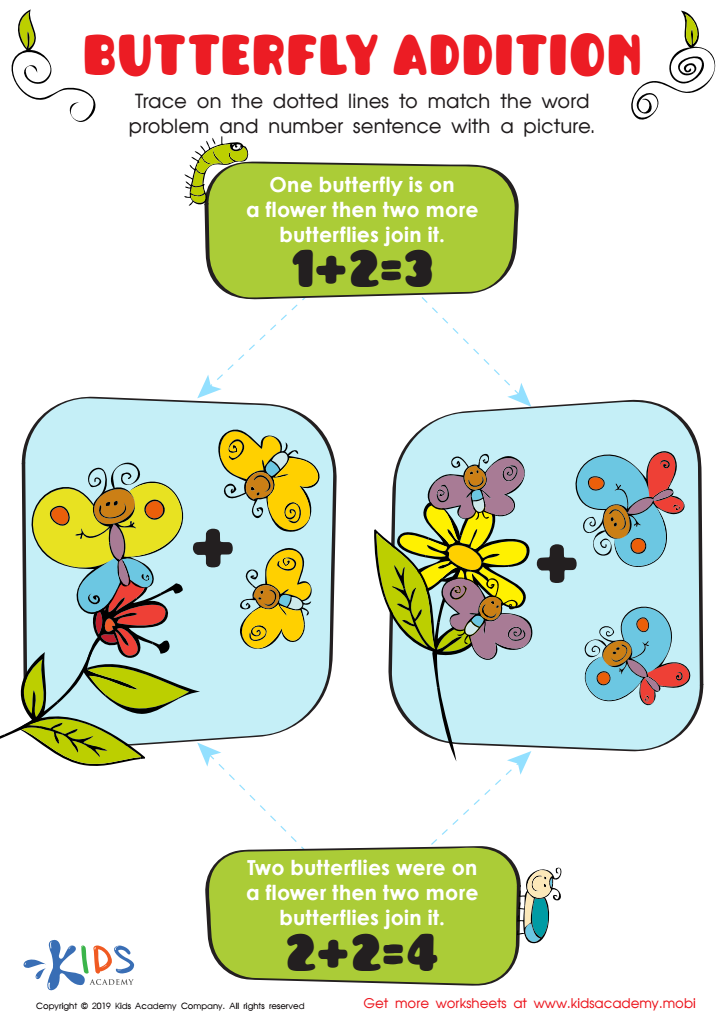
Butterfly Addition Worksheet
 Assign to My Students
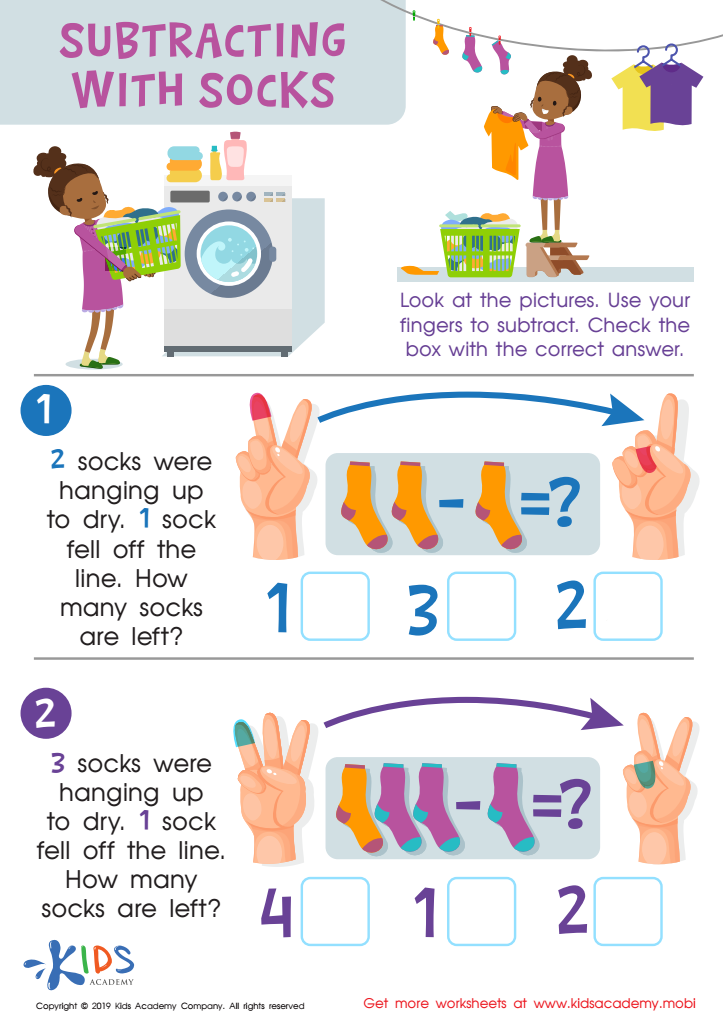
Subtracting Socks Worksheet
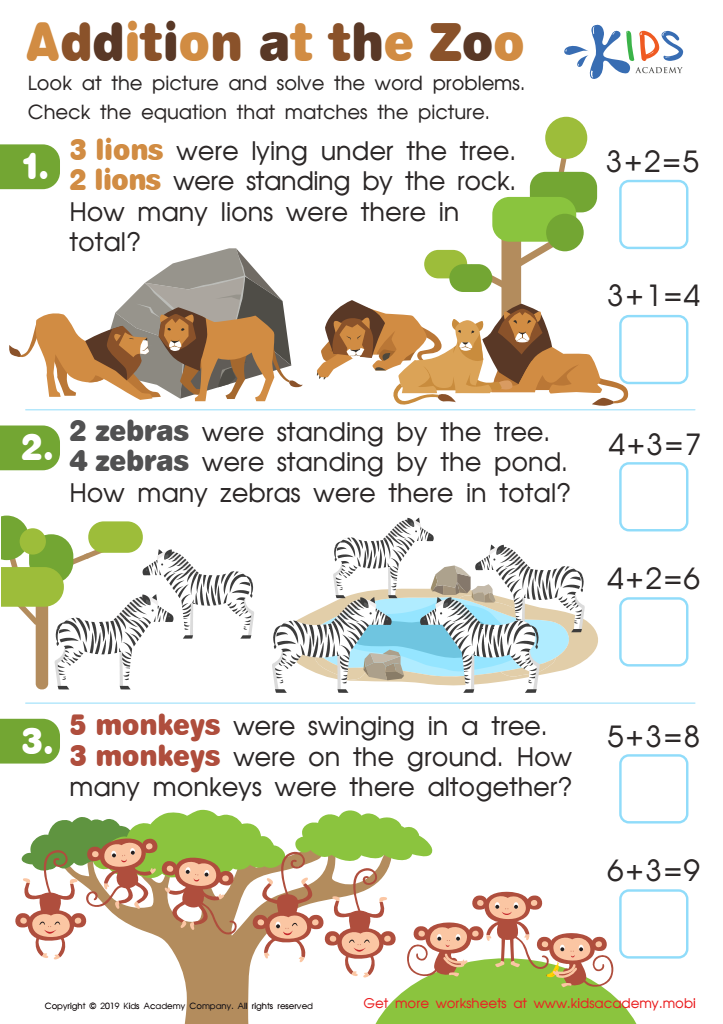
Addition at the Zoo Worksheet








Visual learning, particularly for easy word problems aimed at ages 6-7, is crucial because it caters to the developmental stage of young children who begin to think in images and rely on visuals to grasp abstract concepts. At this age, children are forming foundational skills in problem-solving and math. By incorporating visual aids—such as pictures, diagrams, or manipulatives—teachers and parents can make word problems more relatable and easier to understand.
Visual learning helps in simplifying complex information, allowing children to visualize the problem, track steps, and see connections between numbers and everyday situations. This method engages different learning styles, making math more accessible and reducing anxiety surrounding the subject. It also fosters critical thinking, as children learn to analyze and interpret information visually.
Moreover, encouraging visual learning in problem-solving enhances retention and engagement. Parents and teachers can collaboratively guide children to become more independent thinkers, encouraging a positive attitude towards mathematics.
Ultimately, by implementing visual learning strategies for word problems, caregivers help nurture a love for learning, boost confidence in young learners, and set a strong foundation for future academic success. Supporting this type of learning empowers children and helps transform potential challenges into accomplishments.








