
Understanding times tables Easy Multiplication Worksheets for Ages 6-8
3 filtered results
Difficulty Level
Grade
Age
-
From - To
Subject
Activity
Standards
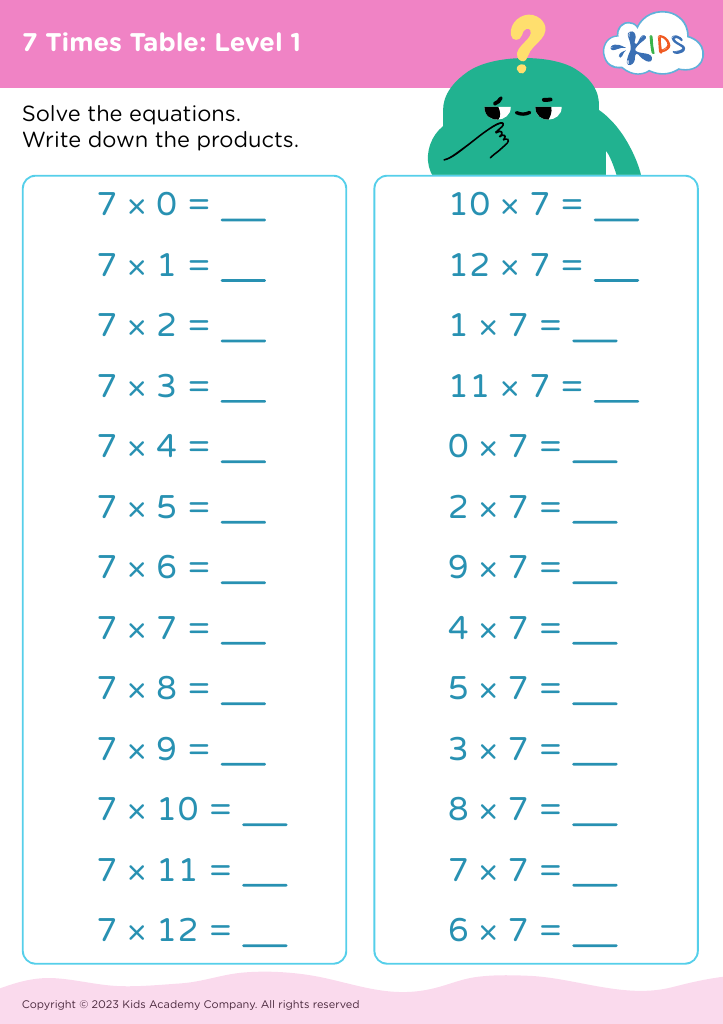
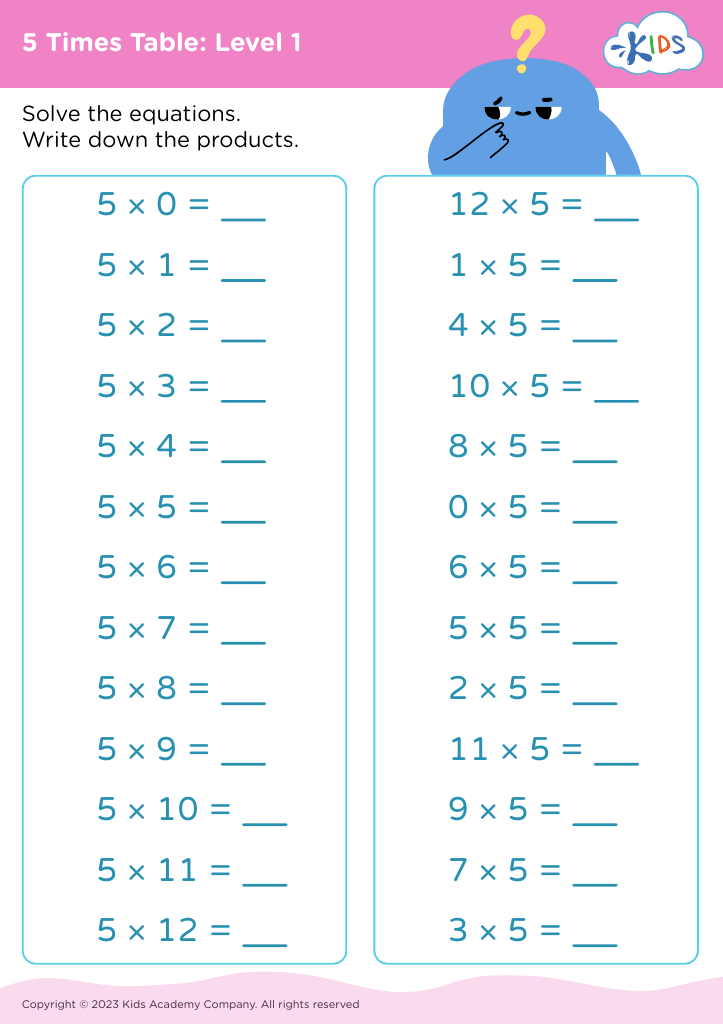
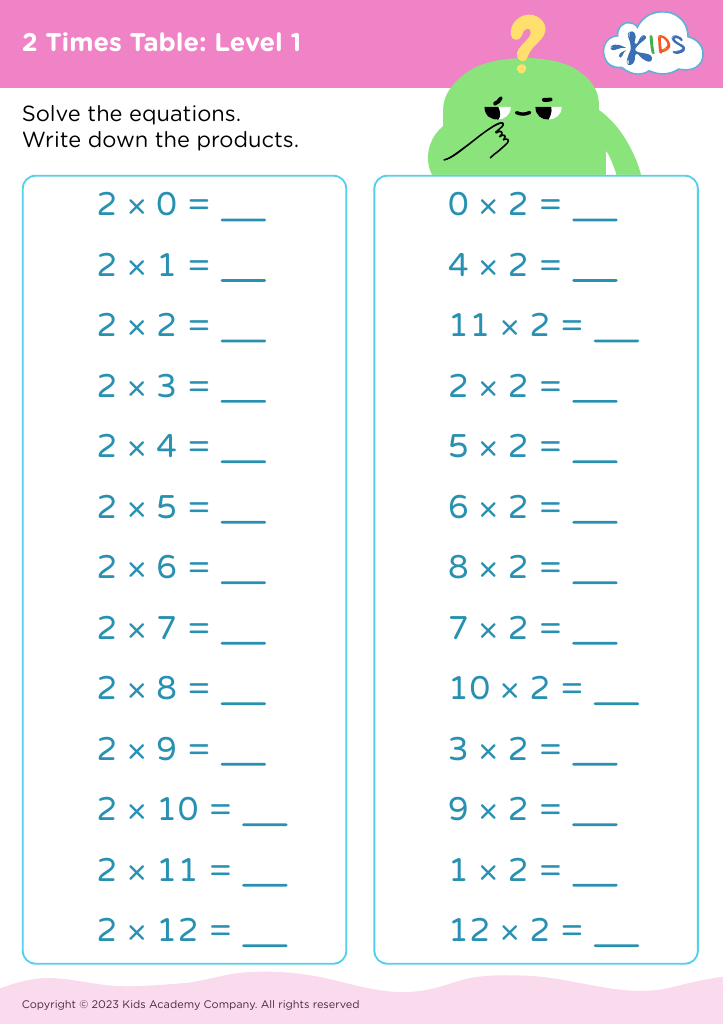
Explore our "Understanding Times Tables" worksheets designed for children ages 6-8! These engaging, easy multiplication resources help young learners grasp fundamental concepts of times tables in a fun and interactive way. With colorful visuals and step-by-step exercises, your child will build confidence in their multiplication skills, making learning both enjoyable and effective. Our worksheets cater to different learning styles, ensuring that each child can master multiplication at their own pace. From basic multiplication facts to more challenging exercises, these worksheets provide a solid foundation for future math success. Empower your child’s learning journey today with our easy multiplication worksheets!
Favorites
With answer key
Interactive
Join Kids Academy for Free
Who is primarily going to use this learning content?








Understanding times tables and easy multiplication is crucial for children aged 6-8 because it lays the foundation for their future math skills and overall academic success. At this age, children are developing critical thinking and problem-solving abilities, and mastering multiplication helps strengthen these skills. Times tables act like building blocks; when children grasp the multiplication facts, they gain confidence to tackle more complex mathematical concepts, such as division, fractions, and problem-solving.
Additionally, these early lessons in multiplication enhance cognitive abilities, encouraging children to make connections between numbers, recognize patterns, and improve their memory. This not only aids in mathematics but also promotes analytical thinking essential in everyday life.
From a practical perspective, memorizing times tables makes it easier for children to perform calculations quickly and accurately, reducing math anxiety. This proficiency not only supports their classroom learning but also lays the groundwork for real-world applications, such as budgeting and time management.
Therefore, parents and teachers play a vital role in nurturing this skill. By providing engaging resources and consistent practice, they can foster a positive math experience, encouraging a lifelong love for learning and empowering children with essential tools for success in future educational pursuits.








