Counting skills Easy Word Problems Worksheets for Ages 6-8
6 filtered results
-
From - To
Unlock your child's potential with our "Counting Skills Easy Word Problems Worksheets" designed specifically for ages 6-8. These engaging worksheets focus on foundational counting skills through fun, relatable scenarios that inspire critical thinking and problem-solving. Each worksheet features vibrant illustrations and simple language to help young learners grasp essential math concepts while enjoying the learning process. Perfect for reinforcing classroom learning or supporting at-home study, these word problems encourage kids to apply counting in real-life situations. Boost confidence and math proficiency today with our comprehensive collection, ensuring your child is well-prepared for future math challenges!
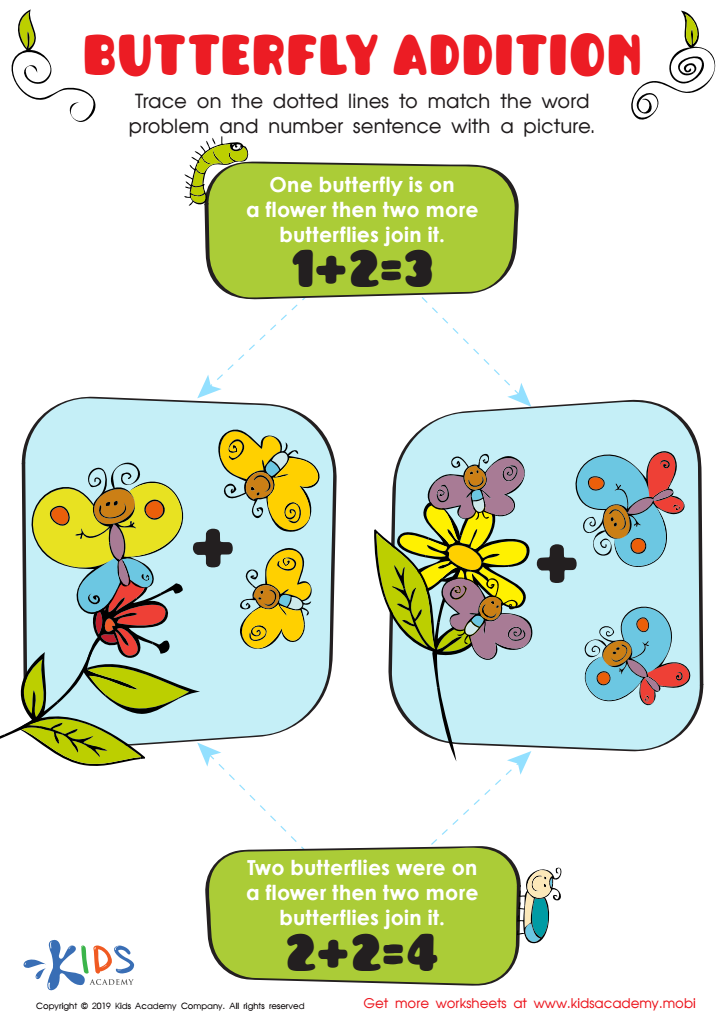
Butterfly Addition Worksheet
 Assign to My Students
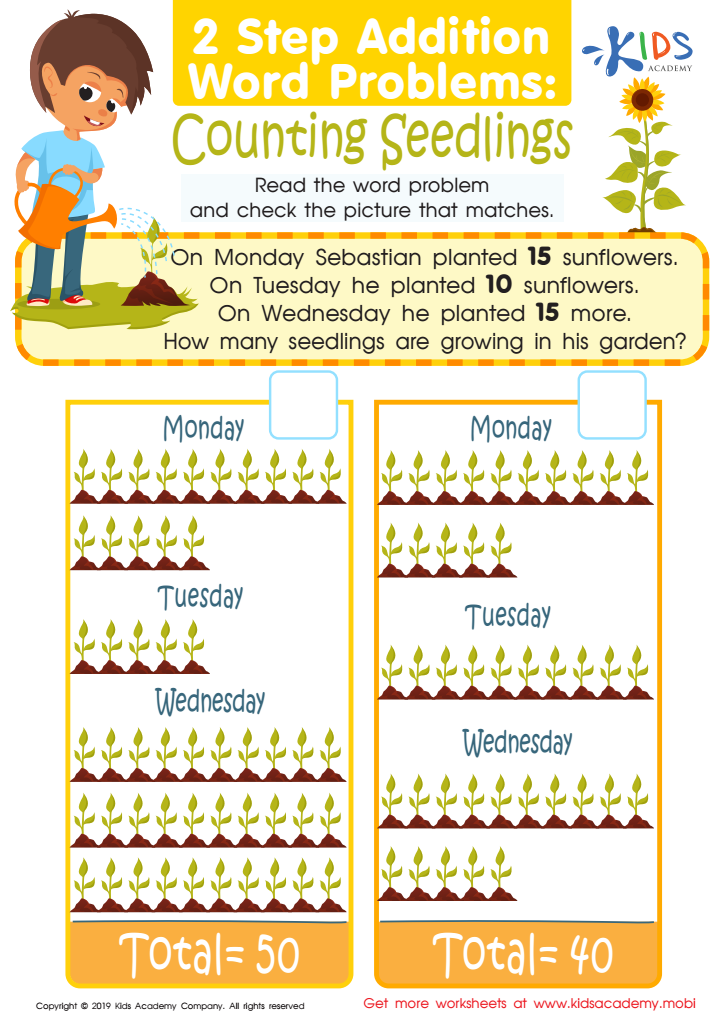
Counting Seedlings Worksheet
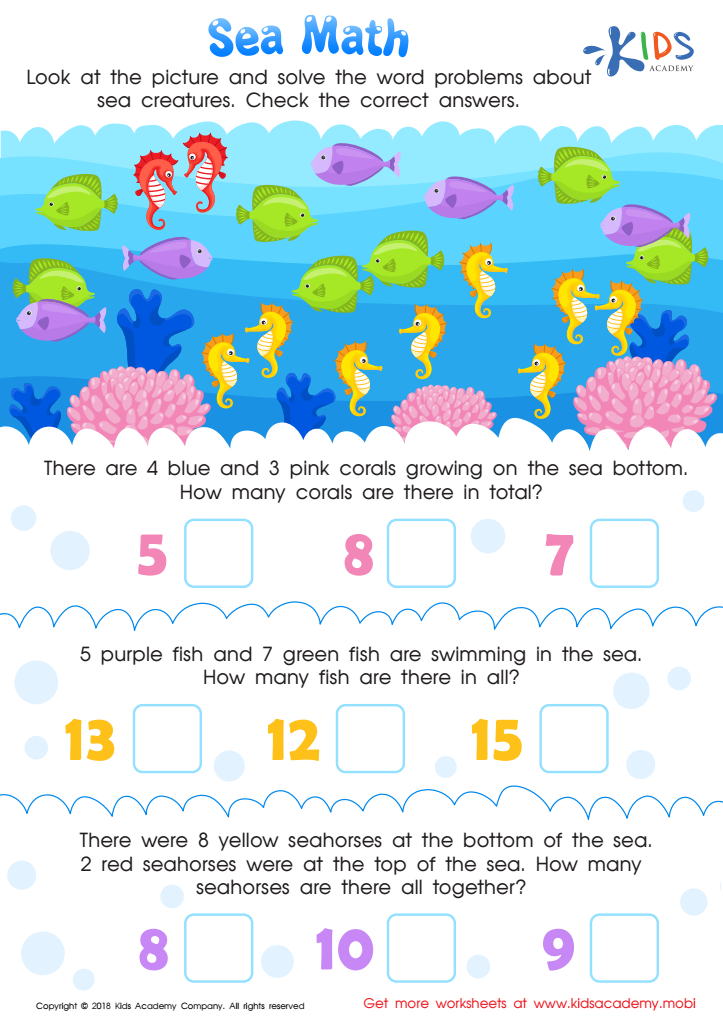
Sea Math Worksheet
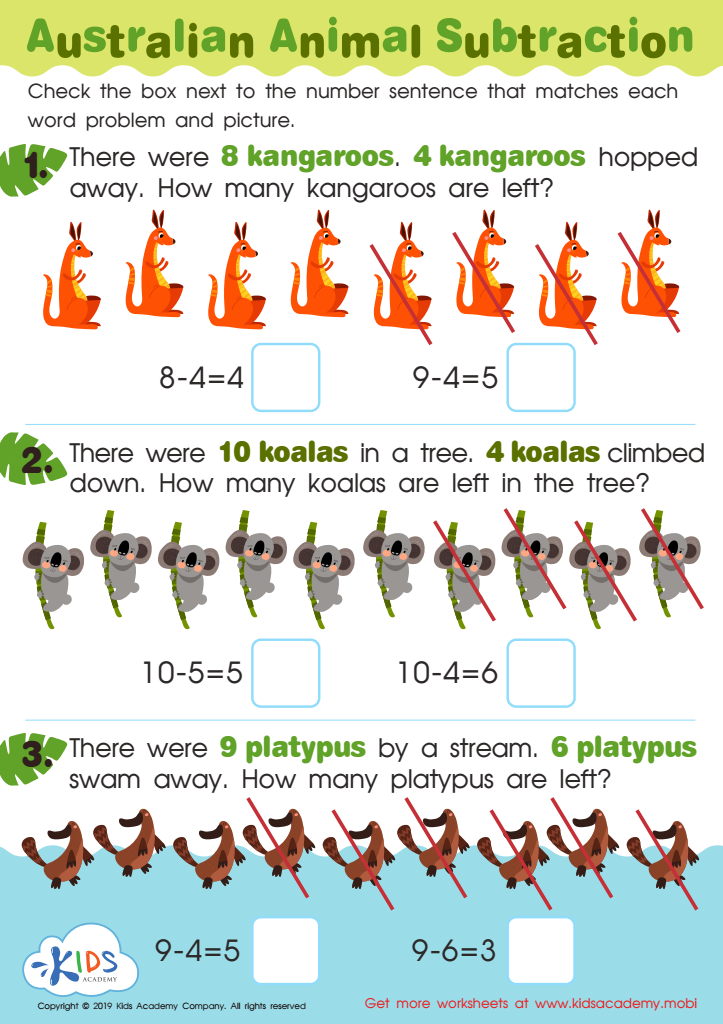
Australian Animal Subtraction Worksheet
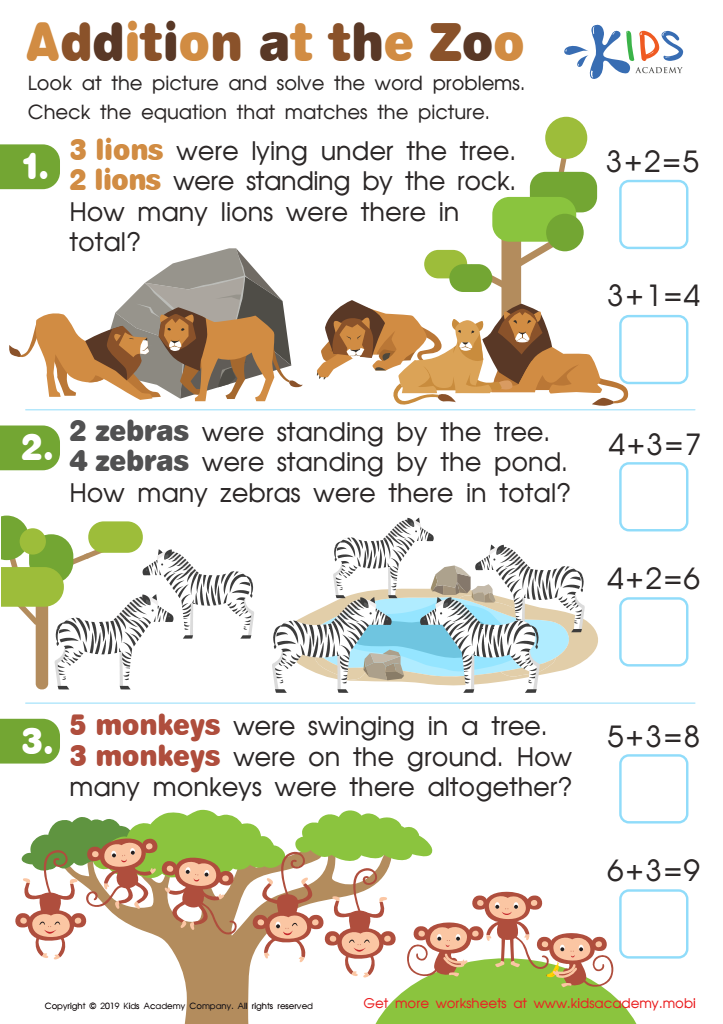
Addition at the Zoo Worksheet
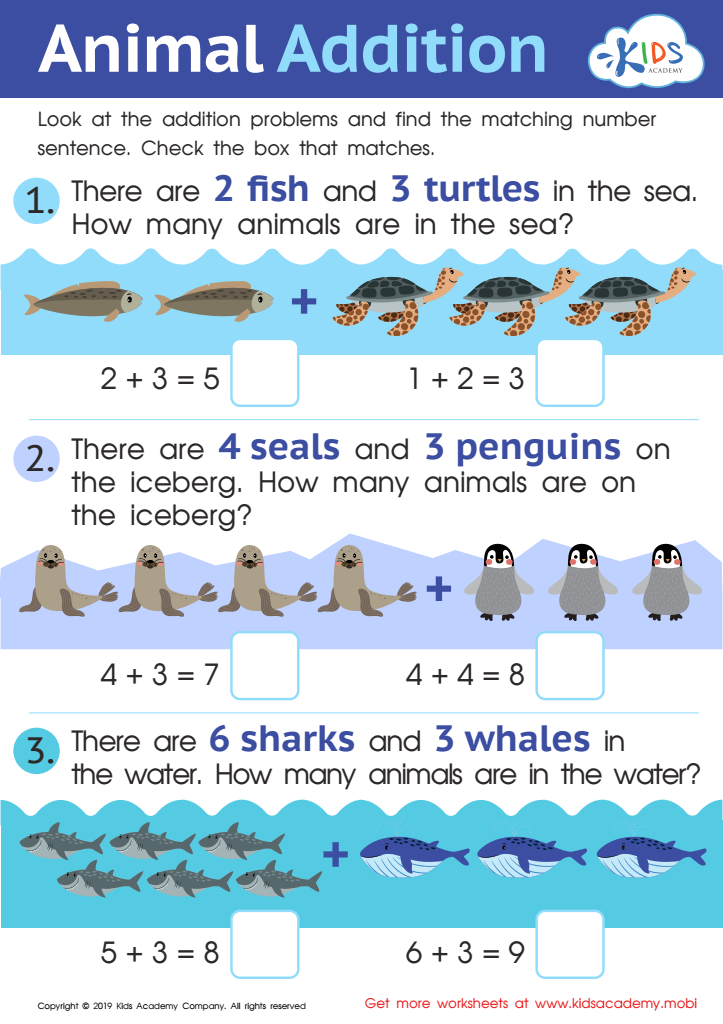
Animal Addition Worksheet



.jpg)




Counting skills and easy word problems are fundamental for children ages 6 to 8, forming the backbone of their mathematical understanding. This developmental stage is crucial, as it lays the foundation for critical thinking and problem-solving abilities. Engaging with counting and simple word problems helps children grasp basic mathematical concepts such as addition, subtraction, and even the beginnings of multiplication and division.
By caring about these skills, parents and teachers can promote numeracy, which is essential not only for academic success but also for everyday life. Counting enhances a child's ability to quantify objects, understand sequences, and develop patterns, fostering logic and reasoning skills. Moreover, word problems encourage children to apply their counting and arithmetic knowledge in practical scenarios, making mathematics relatable and enjoyable.
Addressing these skills early sets a positive attitude towards math, reducing anxiety and building confidence in students. It also promotes collaborative learning, as parents and teachers can work together to support a child's mathematical journey. Encouraging counting and problem-solving prepares children not only for more complex math but also for critical thinking challenges they will encounter in various aspects of life. Thus, investing time and care into these skills is essential for holistic growth and development.








