Sorting skills Easy Numbers Worksheets for Ages 6-9
3 filtered results
-
From - To
Enhance your child's sorting skills with our Easy Numbers Worksheets, specifically designed for ages 6-9! These engaging printable activities help young learners master the concepts of sorting and categorizing numbers in a fun and interactive way. Each worksheet aligns with educational standards and promotes critical thinking, allowing children to identify patterns, group similar numbers, and develop essential math skills. Ideal for both classroom and home use, our worksheets provide varied exercises that cater to different learning styles. Empower your child’s mathematical journey and boost their confidence with our easy-to-follow sorting skills worksheets today! Perfect for fostering foundational math knowledge!
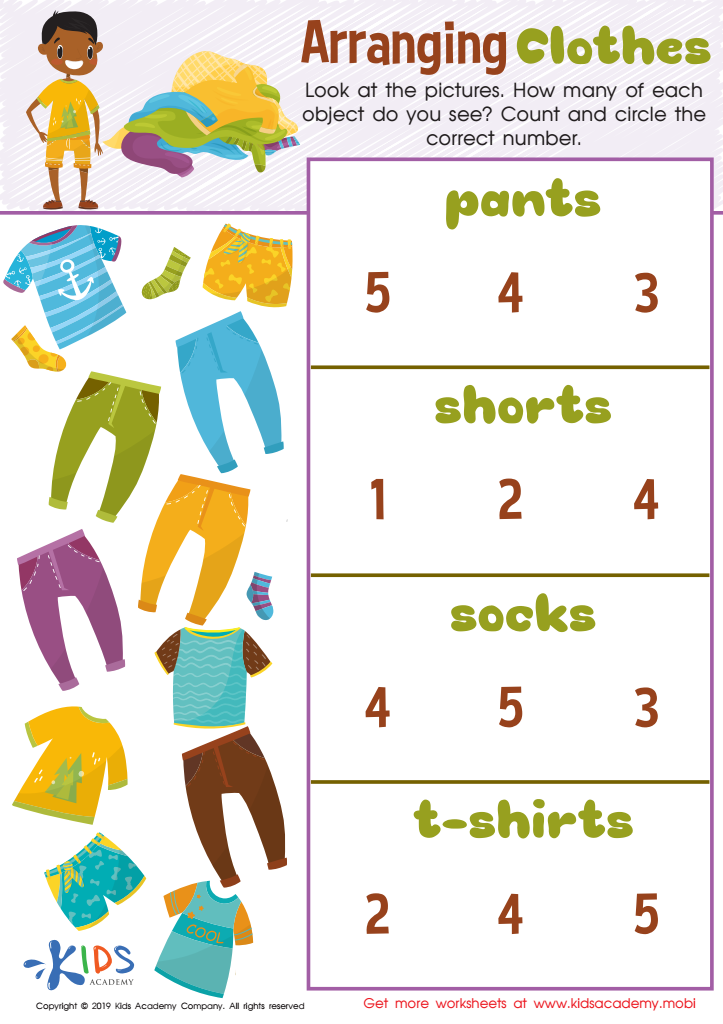
Arranging Clothes Worksheet
 Assign to My Students
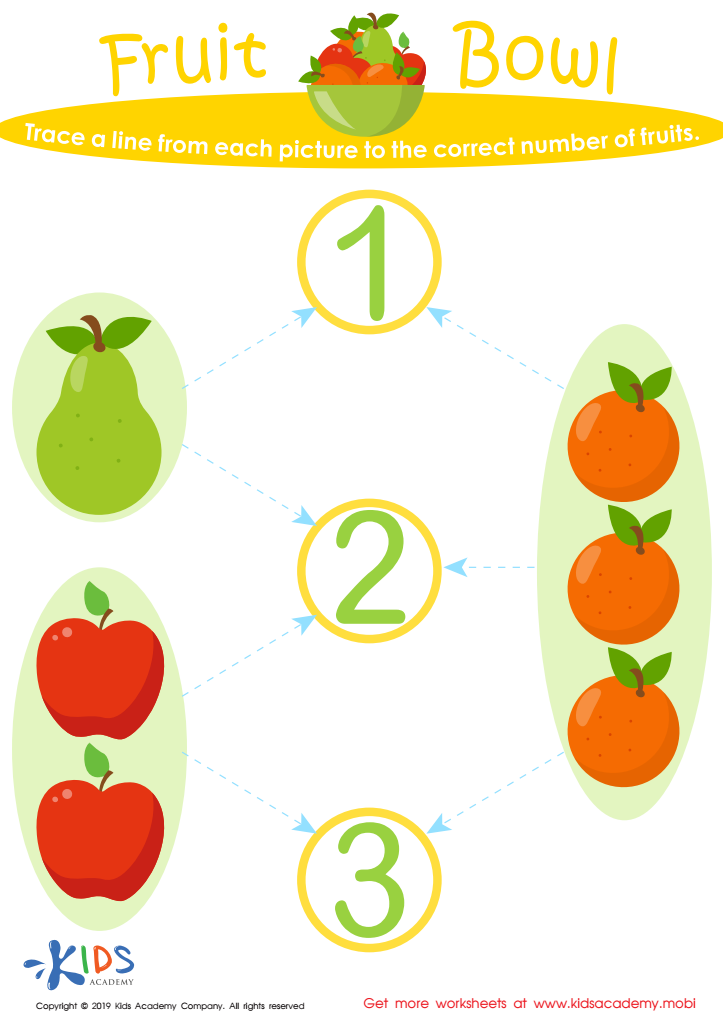
Fruit Bowl Worksheet
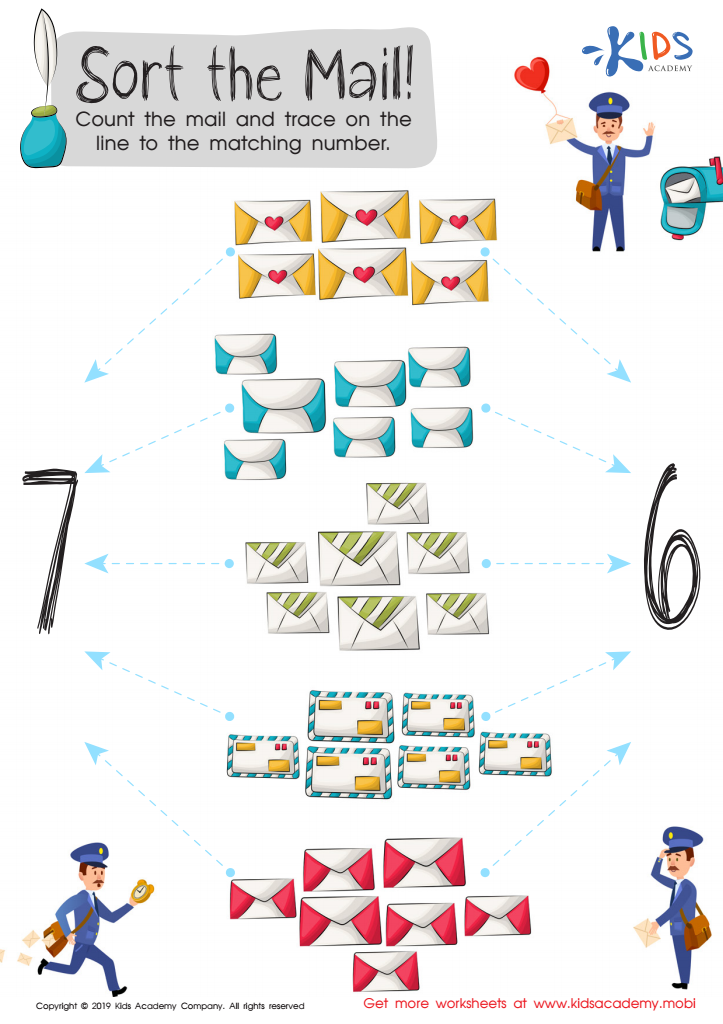
Sort the Mail Worksheet







Sorting skills, particularly with easy numbers, are fundamental for children aged 6-9, as these skills lay the groundwork for more complex mathematical concepts. Understanding how to sort numbers enhances a child's cognitive development, fostering critical thinking and problem-solving abilities. When children sort numbers—whether by size, quantity, or other attributes—they learn to identify patterns and categorize information, which is essential for comprehension in various subjects.
Moreover, sorting exercises promote organizational skills that are beneficial both in academic settings and daily life. As children sort numbers, they practice making decisions based on visual information, an ability that translates into better analytical skills later on. These foundational sorting activities also serve as a precursor to understanding operations like addition and subtraction, where comparing and categorizing numbers becomes crucial.
For parents and teachers, nurturing sorting skills opens doors to engaging, hands-on learning experiences. It provides opportunities for collaboration and improvement in communication as children discuss their sorting choices with peers or adults. Ultimately, prioritizing easy number sorting contributes to a child’s overall development and prepares them for future success in math and beyond. Engaging children in these activities ensures a solid framework for lifelong learning.








