
Comparing quantities Easy Math Worksheets for Ages 6-9
3 filtered results
Difficulty Level
Grade
Age
-
From - To
Subject
Activity
Standards
Welcome to our "Comparing Quantities Easy Math Worksheets" for children ages 6-9! This engaging resource is designed to help young learners strengthen their understanding of numerical relationships through enjoyable and interactive activities. Our worksheets introduce kids to concepts like greater than, less than, and equals, fostering essential numerical reasoning skills. Each worksheet is tailored to capture the attention of young minds, featuring colorful graphics and relatable examples. With gradual difficulty levels, our materials cater to different learning paces, ensuring an effective math learning experience. Encourage your child’s confidence in math today with these fun and educational worksheets!
Favorites
With answer key
Interactive
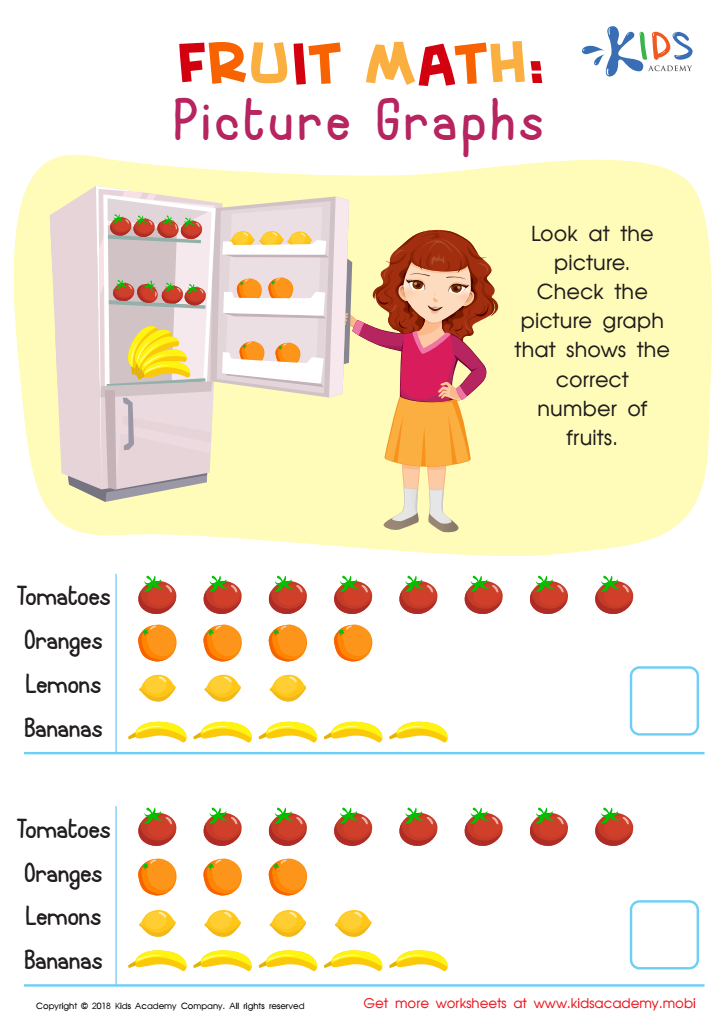
Fruit Math: Picture Graphs Worksheet
Help your child learn to draw graphs by having them look at pictures. Ask them to identify a graph that accurately portrays the data and have them explain why. This will prepare them to easily draw more complex graphs in the future. For example, have them look at the picture with the number of fruits in the colorful worksheet and explain why the graph is accurate.
 Assign to My Students
Fruit Math: Picture Graphs Worksheet
Worksheet
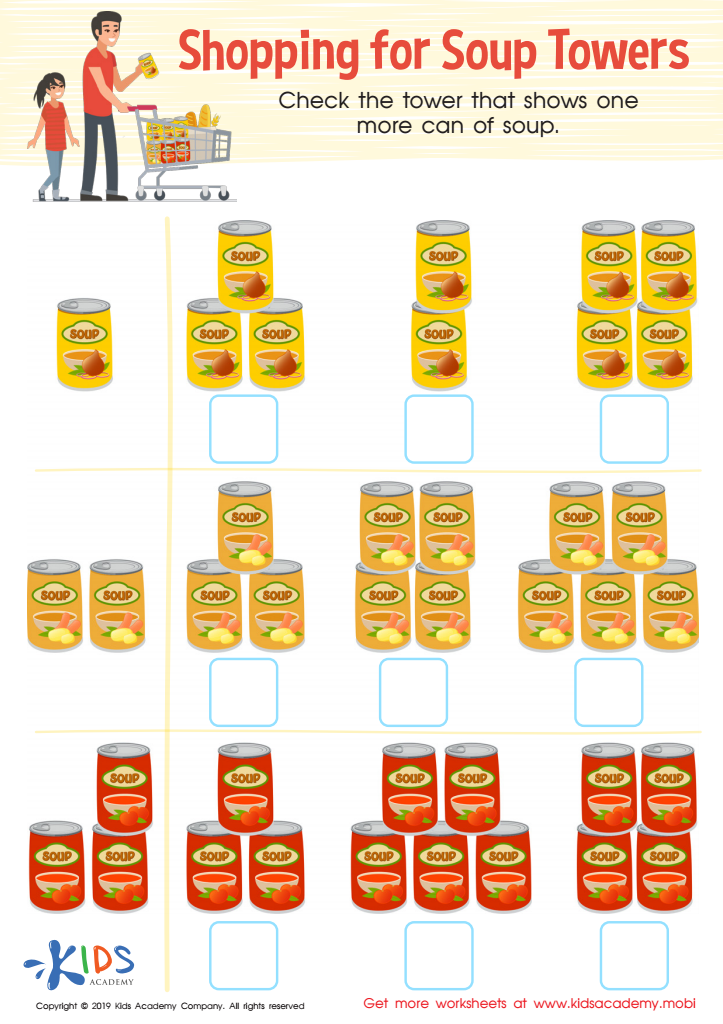
Soup Towers Worksheet
Do your kids come shopping? Transform it into a learning experience! Point out items and ask your kids what they are. Count each stack of cans, and have them check the tower with an extra can of soup. It's a great way to teach them counting and counting up!
Soup Towers Worksheet
Worksheet
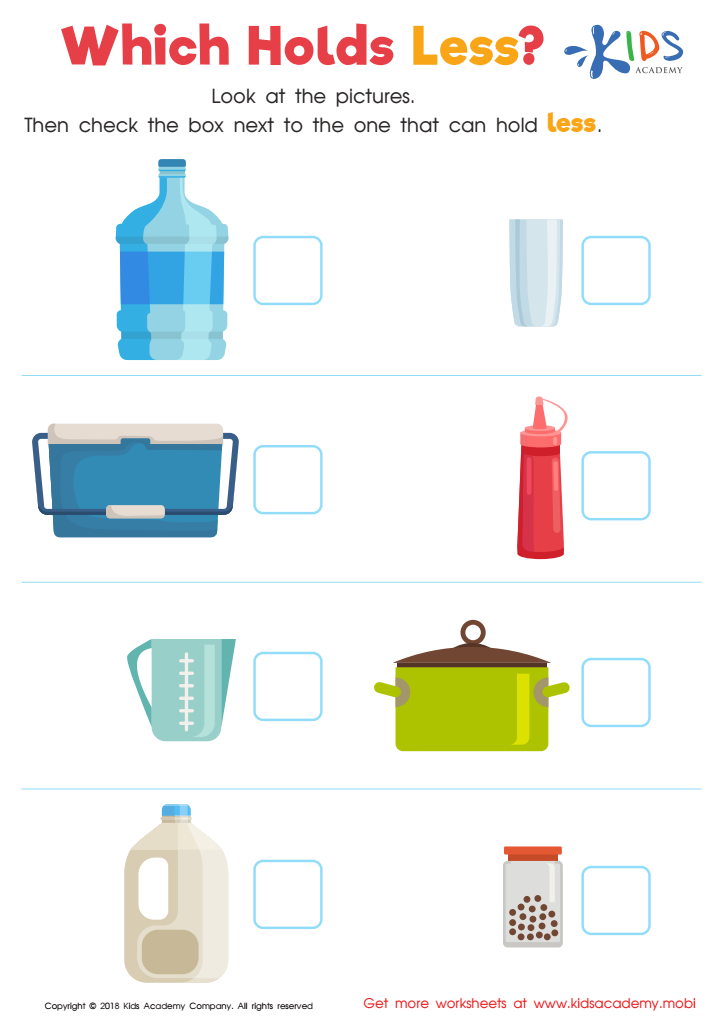
Which Holds Less? Worksheet
Students may find it hard to grasp volume without a visual aid. This free, downloadable worksheet helps with understanding by providing pictures of familiar objects. It allows students to practice comparing volumes and deciding which container holds less. It's a great introduction before they move onto using greater than and less than symbols.
Which Holds Less? Worksheet
Worksheet
Join Kids Academy for Free
Who is primarily going to use this learning content?







Understanding how to compare quantities is a fundamental skill for children aged 6-9, and it's crucial for parents and teachers to prioritize this area of learning. First, comparing quantities lays the groundwork for essential mathematical concepts, such as addition, subtraction, multiplication, and division. By mastering this skill early on, children build confidence and develop a strong numerical foundation, which will be beneficial as they progress to more advanced math concepts.
Moreover, comparing quantities fosters critical thinking and problem-solving skills. Children learn to analyze different sets of data, make judgments based on observations, and understand concepts like greater than, less than, and equal to. These skills are not just applicable to math; they are valuable in everyday decision-making.
Additionally, incorporating fun and engaging activities that involve comparing quantities can make learning more enjoyable. It will instill a positive attitude towards math and encourage a lifelong love for the subject. As children interact with numbers and quantities through games, visual aids, and hands-on experiences, they develop both practical skills and a natural curiosity that supports their overall cognitive growth. Ultimately, the ability to compare quantities empowers young learners and prepares them for future academic success.








