Number Recognition Easy Math Worksheets for Ages 6-9 - Page 5
98 filtered results
-
From - To
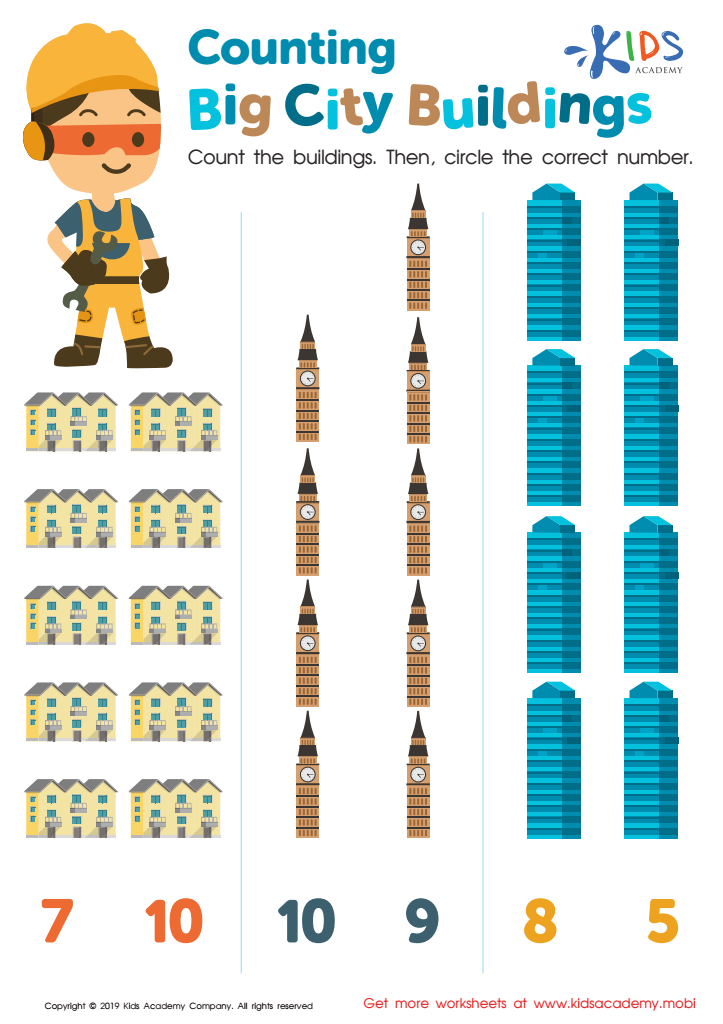
Counting Big City Buildings Worksheet
 Assign to My Students

Night Sky Numbers Worksheet




.jpg)



Number recognition is a crucial foundational skill for children aged 6-9, as it sets the stage for their overall mathematical development. Parents and teachers should care about fostering this skill because it significantly impacts a child's confidence and competence in math-related tasks. Early mastery of number recognition helps children develop strong arithmetic abilities, including addition, subtraction, and more advanced concepts later on.
Understanding and identifying numbers is not only essential for basic math but also for daily life skills such as reading prices, telling time, and managing money. When children can easily recognize numbers, they are more likely to engage positively with math activities and less likely to experience feelings of anxiety or failure when encountering numerical tasks.
Moreover, early math skills can influence academic performance across subjects, enhance logical reasoning, and cultivate critical thinking abilities. By prioritizing number recognition in educational practices and home routines, caregivers can create a supportive environment that encourages exploration and curiosity about numbers. Utilizing playful and interactive methods can make this learning enjoyable, fostering a love for math that benefits children throughout their educational journey and beyond.








