
Comparing lengths Easy Measurement Worksheets for Ages 6-9
5 filtered results
Difficulty Level
Grade
Age
-
From - To
Subject
Activity
Standards
Our "Comparing Lengths Easy Measurement Worksheets for Ages 6-9" are designed to make learning fun and interactive. Perfect for young learners, these printable worksheets introduce children to basic measurement concepts using engaging imagery and practical exercises. Students will practice comparing lengths, understanding measurement terms, and developing critical thinking skills. Ideal for classroom use or homeschooling, each worksheet aims to solidify foundational math abilities through hands-on activities. Help your child master the essential skill of measurement while boosting their confidence and enthusiasm for math. Easily downloadable and printer-friendly, these resources are a must-have for early education success.
Favorites
With answer key
Interactive
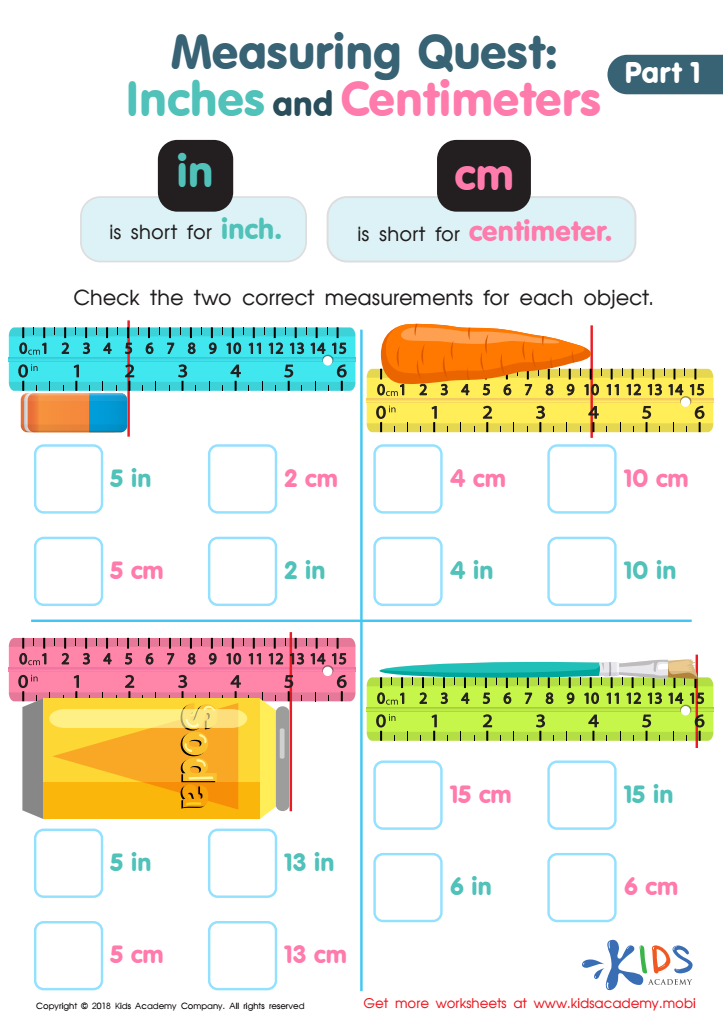
Measuring Quest: Inches and Centimeters Worksheet
Your child will measure items in both inches and centimeters and check the correct measurements from the options given. The metric ruler states 2.5 cm equals 1 inch, and 15 cm equals 6 inches. This worksheet helps ensure accurate measurements, despite the different figures.
 Assign to My Students
Measuring Quest: Inches and Centimeters Worksheet
Worksheet
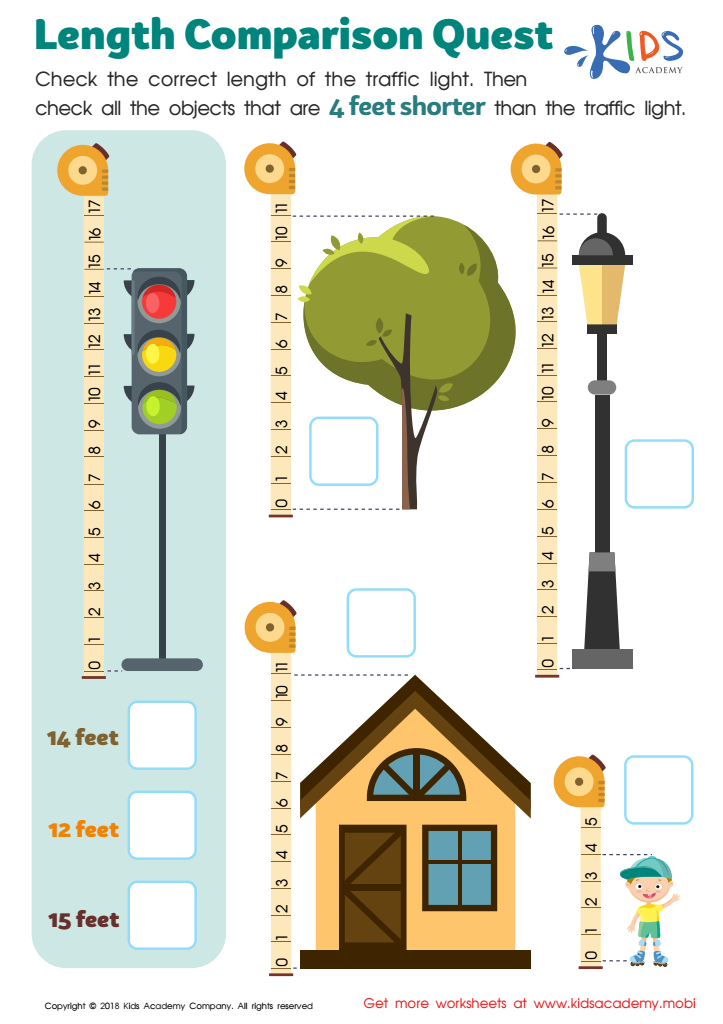
Length Comparison Quest Worksheet
Knowing measurement tools and how to use them is just the start. To be proficient, your kid must be able to accurately compare objects and their lengths. With the 'Length Comparison Quest' worksheet, they will check the correct length of the traffic light in the picture and then compare other objects to it, marking those that measure 4 feet shorter.
Length Comparison Quest Worksheet
Worksheet
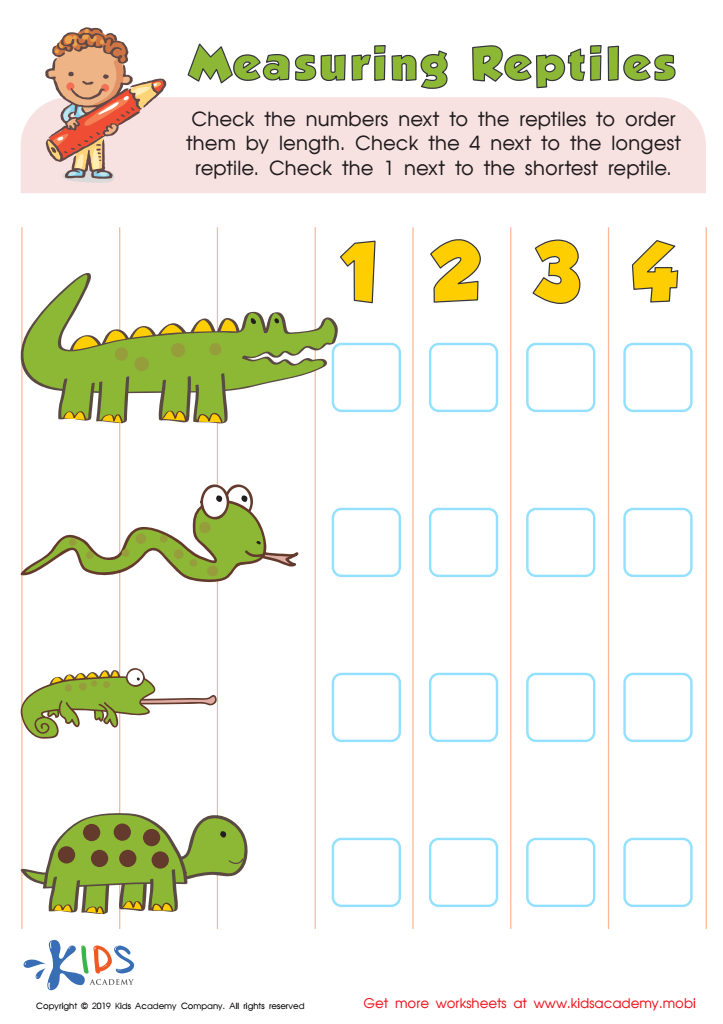
Measuring Reptiles Worksheet
Do your kids know what reptiles are? Ask them to name some and name features. In this activity, your kindergartners will measure with reptiles. Show them the picture and get them to order by length, starting with the one with 4 by the longest reptile, then the one with 1 by the shortest.
Measuring Reptiles Worksheet
Worksheet
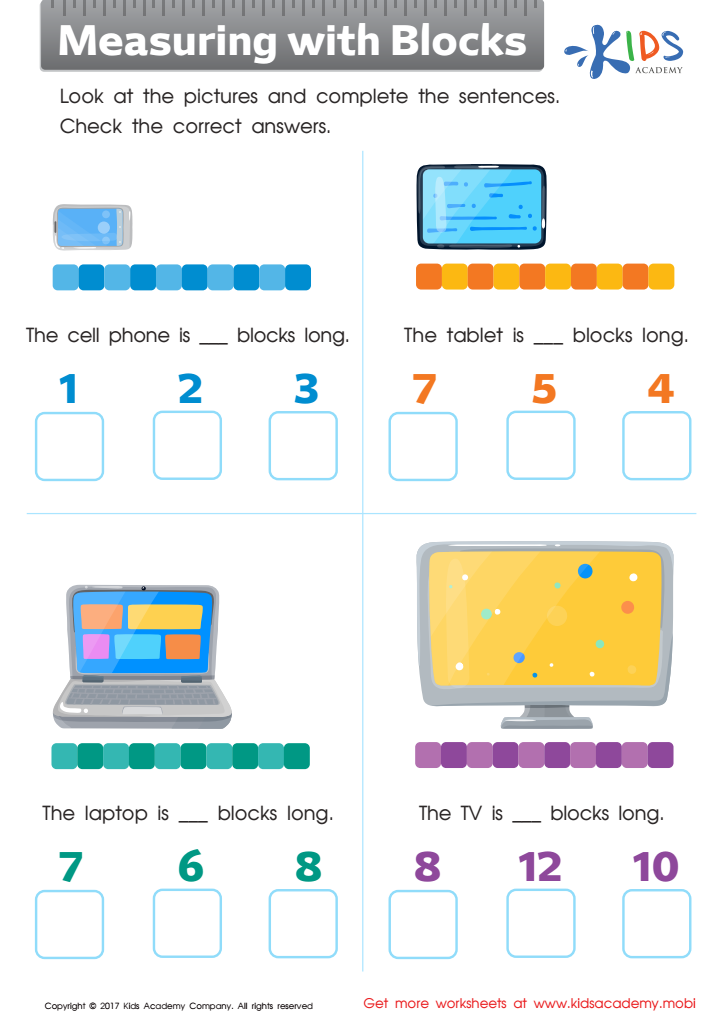
Measuring with Blocks Worksheet
Help your child get ready for math success with this Kids Academy worksheet. It provides colorful blocks to practice measuring objects. Coach them to count the boxes under each picture, then check the box with the right answer. It's a fun way to get acquainted with rulers!
Measuring with Blocks Worksheet
Worksheet
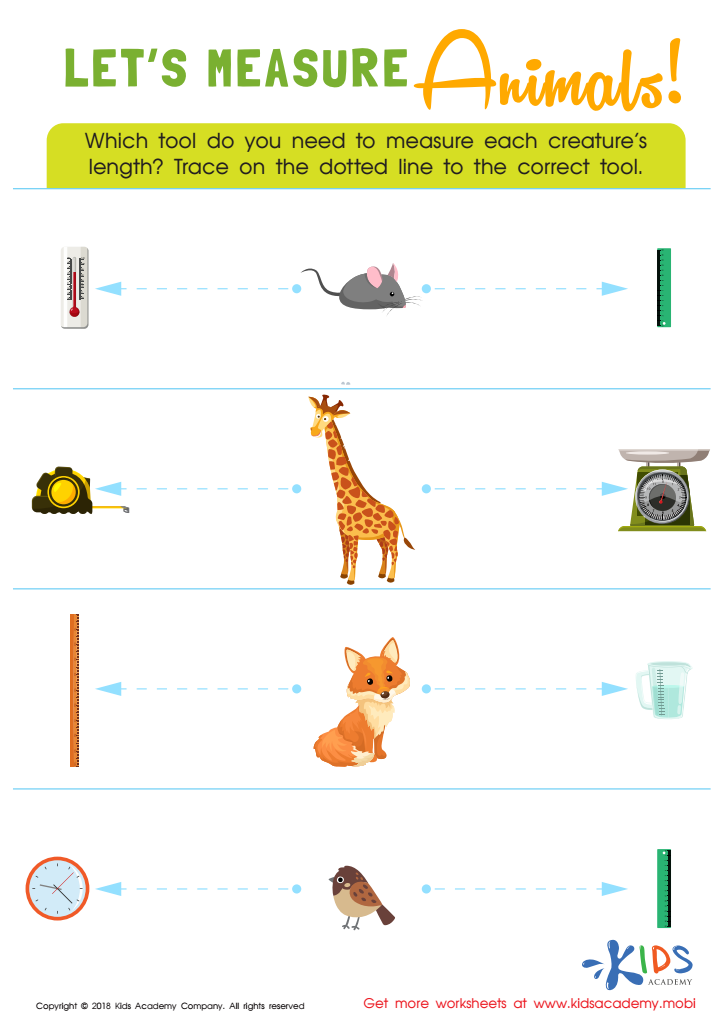
Let's Measure Animals! Worksheet
Have your students measure the length of animals like a mouse, giraffe, fox, and bird using this fun tracing sheet. They must carefully follow the dotted lines to the correct measuring tool, and by the end of the colorful worksheet, they'll know more about measuring and the different tools used.
Let's Measure Animals! Worksheet
Worksheet
Join Kids Academy for Free
Who is primarily going to use this learning content?








Comparing lengths and understanding measurement are crucial foundational skills for children aged 6 to 9 as they form the basis of mathematical thinking and problem-solving. When parents or teachers emphasize these concepts, they provide children with essential tools that they will use throughout their education and daily lives.
Learning to compare lengths helps children develop spatial awareness and a sense of proportion. This ability is not only vital for math but also for everyday tasks such as determining how much space is needed in a given situation or estimating distances. Early measurement activities strengthen observation and analytical skills by encouraging children to notice and discuss differences and similarities.
Moreover, introducing measurement concepts in these formative years builds a child's confidence in handling numbers and improves their understanding of more complex math later in life, like geometry and algebra. Children who can confidently compare lengths are better prepared to tackle problems involving size, space, and structure.
Engaging in hands-on activities that involve comparing and measuring lengths—using objects like rulers, tape measures, or building blocks—can also make learning fun and interactive. This nurtures a positive attitude towards math and bolsters a child's curiosity, ultimately fostering a lifelong love of learning and discovery.








