Comparing numbers Easy Measurement Worksheets for Ages 6-9
3 filtered results
-
From - To
Discover our engaging "Comparing Numbers Easy Measurement Worksheets" designed specifically for children aged 6-9. Our collection offers a variety of interactive and fun worksheets that help young learners master the essential concepts of comparing numbers. Through colorful visuals and relatable exercises, children will build confidence in their mathematical skills as they evaluate and compare different values. These worksheets not only promote critical thinking but also enhance problem-solving abilities in an enjoyable way. Perfect for home or classroom use, our resources support early math education and encourage a love for learning. Start your child's journey to numerical understanding today!
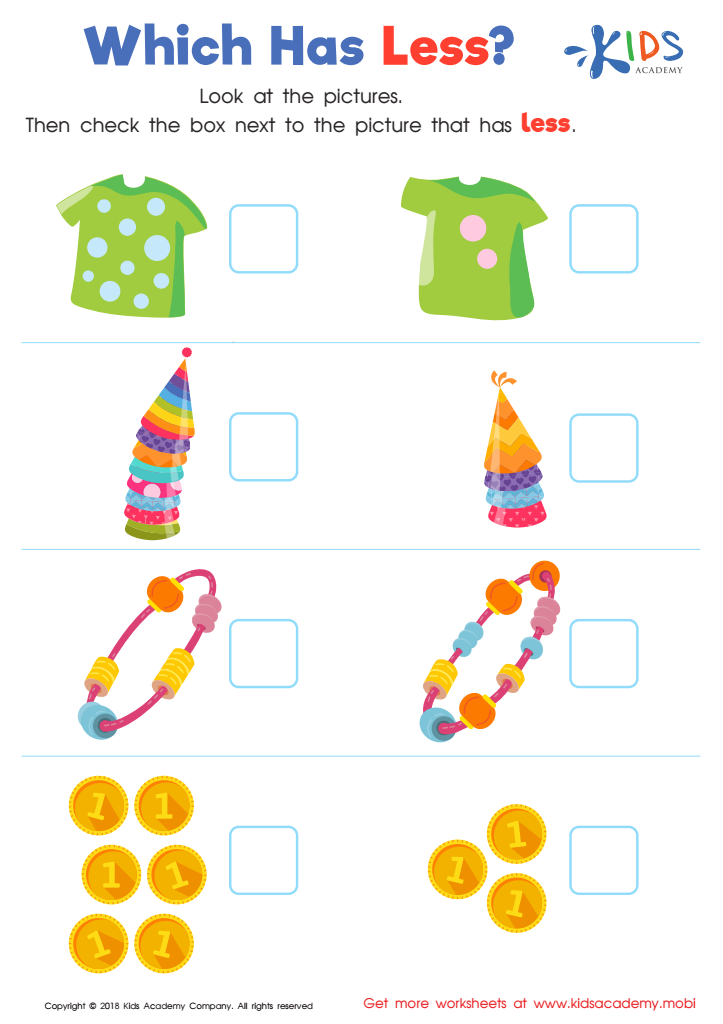
Which Has Less? Worksheet
 Assign to My Students
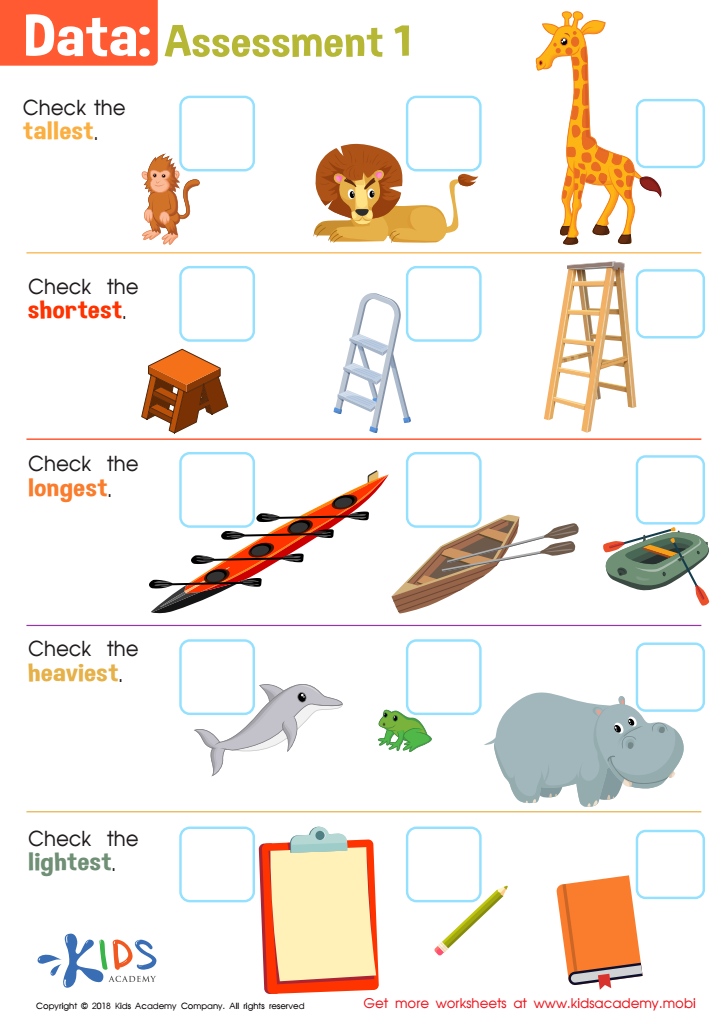
Data: Assessment 1 Worksheet
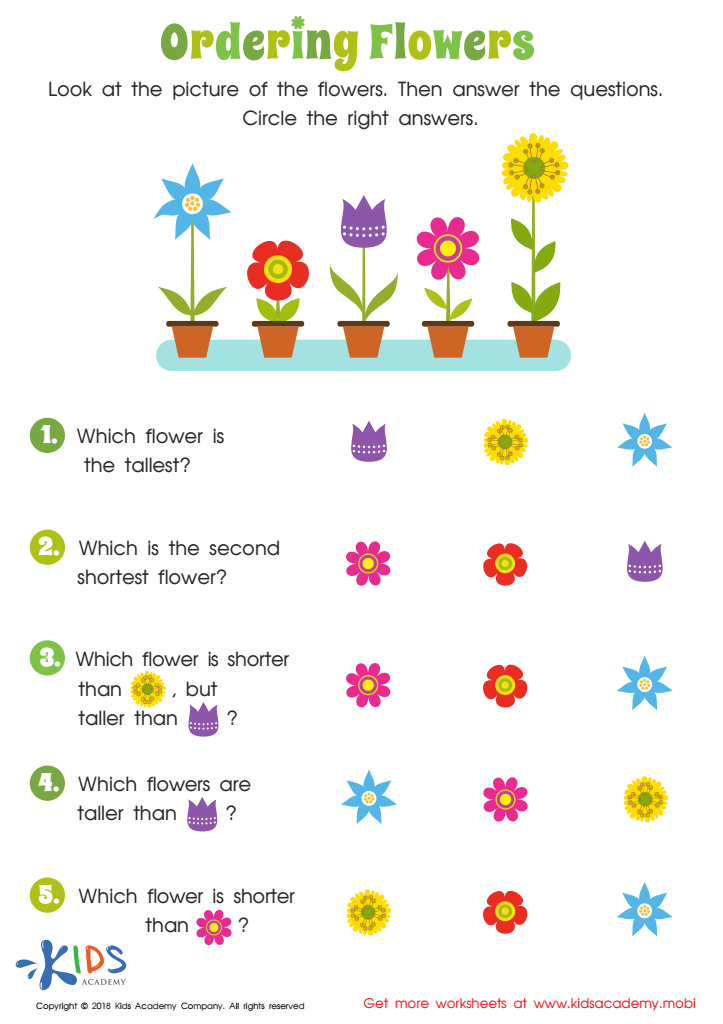
Ordering Flowers Worksheet








Comparing numbers and engaging in easy measurement activities are fundamental skills for children aged 6 to 9, and parents and teachers should prioritize these concepts for several reasons. First, these skills form the building blocks for mathematical understanding. Children learn to recognize, analyze, and manipulate numbers, which lays the foundation for more advanced math concepts they will encounter in later years.
Additionally, these skills are vital for real-world applications. Learning to compare numbers helps children assess quantities, understand greater and lesser amounts, and develop critical thinking skills. For instance, when measuring ingredients while baking or comparing heights of plants in a garden, these skills become relevant and practical.
Furthermore, engaging in these activities fosters a positive attitude toward math. Consistent practice in comparing numbers and measuring can build confidence and reduce math anxiety. It encourages problem-solving and boosts children’s ability to present logical arguments based on numerical comparisons.
Lastly, this understanding enhances communication skills; children learn to articulate their reasoning, discuss outcomes, and even collaborate on math-related tasks. Thus, by emphasizing comparing numbers and easy measurement, parents and teachers equip children with essential skills for academic success and everyday life.








