Writing practice Easy Letter Recognition Worksheets for 6-Year-Olds
3 filtered results
-
From - To
Support your 6-year-old's writing journey with our Easy Letter Recognition Worksheets! Designed specifically for young learners, these engaging worksheets encourage letter recognition while developing essential writing skills. Each printable resource blends fun activities with educational content, making learning enjoyable for children. Kids will practice tracing letters, identifying upper and lower case forms, and even forming simple words. The creative approach captivates children's attention, fostering their confidence in writing. Ideal for home or classroom use, our worksheets tailor to diverse learning styles, ensuring every child thrives. Explore our collection to enrich your child's literacy foundation today!
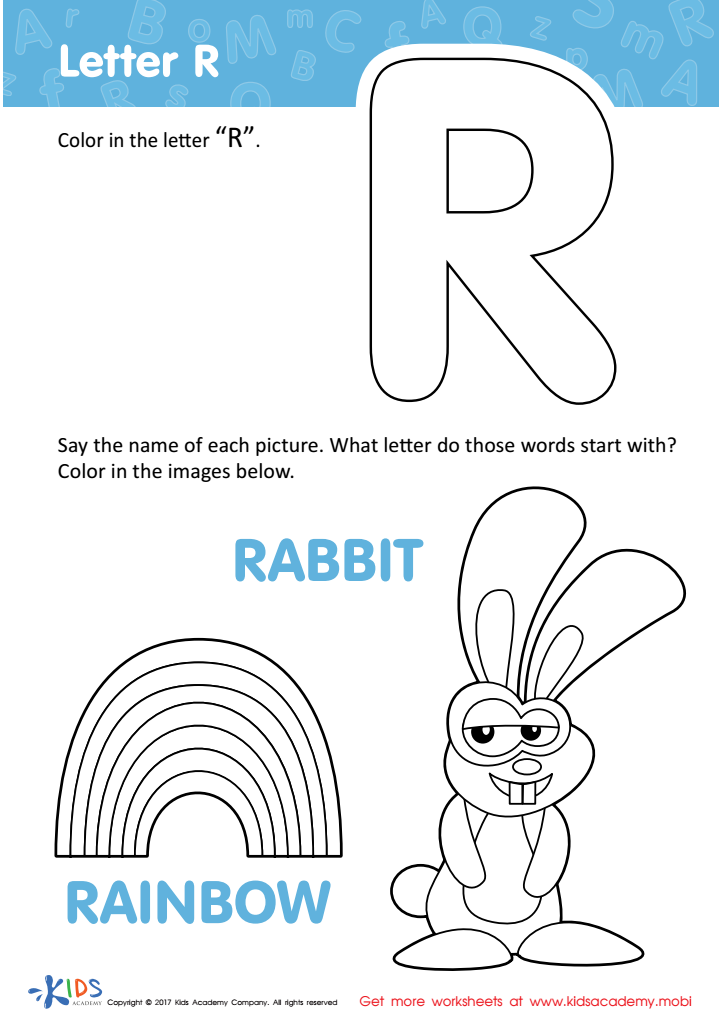
Letter R Coloring Sheet
 Assign to My Students
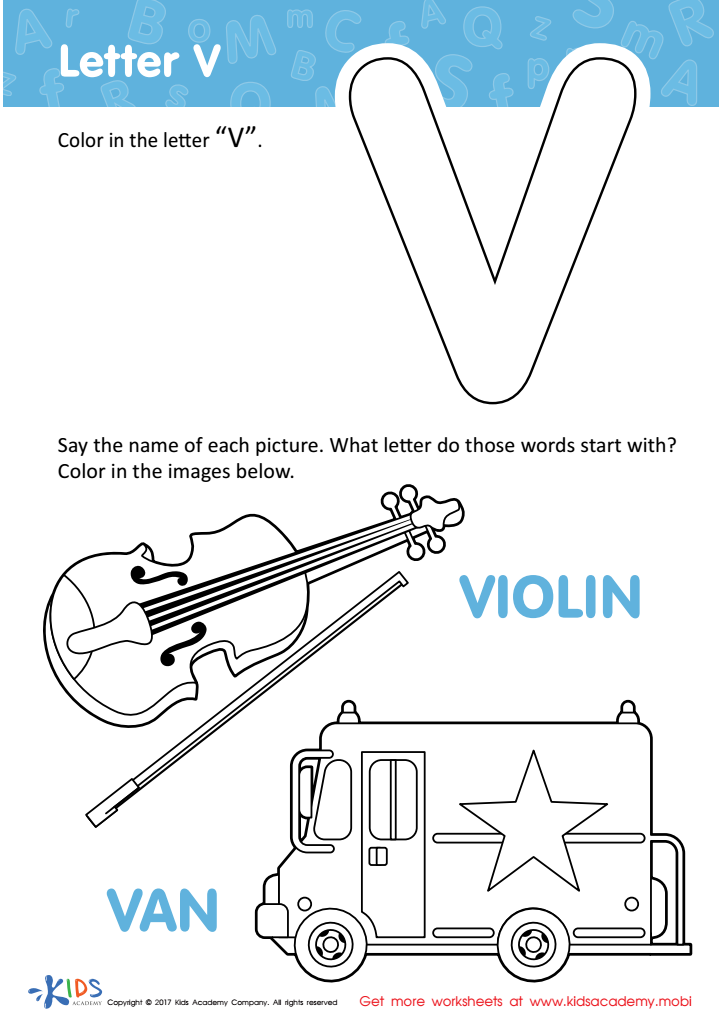
Letter V Coloring Sheet
Assign to My Students
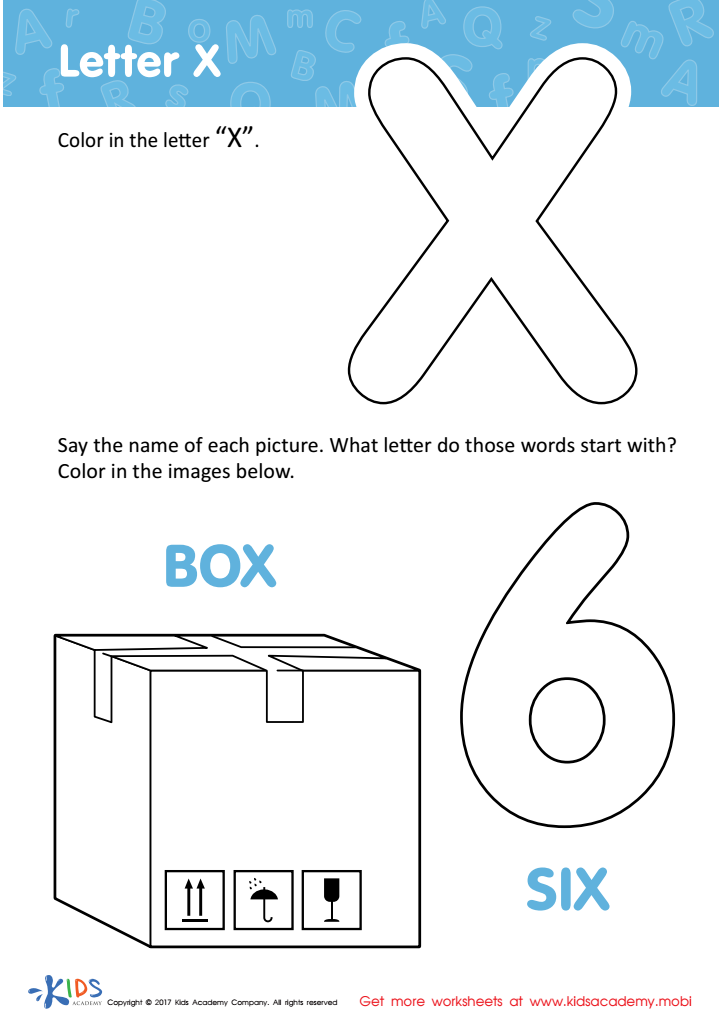
Letter X Coloring Sheet
Assign to My Students








Writing practice and easy letter recognition are crucial for 6-year-olds as they form the foundation of literacy skills essential for future learning. At this age, children's cognitive abilities are rapidly developing, making it the perfect time to introduce them to letters and writing.
First, letter recognition is vital for reading proficiency. When children can easily identify letters, they can connect sounds and words, essential steps in decoding words while reading. Strong reading skills enhance comprehension, vocabulary, and overall academic performance.
Additionally, writing practice cultivates fine motor skills. Activities like tracing or forming letters help strengthen hand muscles, improving grip and control. These skills are not only important for writing but also for other tasks requiring dexterity.
Furthermore, engaging in writing activities promotes self-expression and creativity. Children start to find their voice, communicate their thoughts, and share their ideas through writing, fostering confidence.
Lastly, parents and teachers play a significant role in motivating children during this stage. By creating a positive environment that values writing and letter recognition, adults can inspire a lifelong love for learning and literacy, setting their children up for success in school and beyond.