Identifying shapes Easy Math Worksheets for 6-Year-Olds
3 filtered results
-
From - To
Discover our "Identifying Shapes Easy Math Worksheets" designed specifically for 6-year-olds to make shape recognition fun and engaging! These worksheets feature vibrant illustrations and interactive activities that help young learners identify and differentiate various shapes like circles, squares, triangles, and more. As children complete these worksheets, they enhance their analytical skills and boost their confidence in math. Ideal for home or classroom use, our resources are aligned with early learning standards and cater to beginners. Encourage a love for math with our easy-to-use, printable worksheets, transforming shape identification into an exciting adventure! Perfect for nurturing early geometry skills.
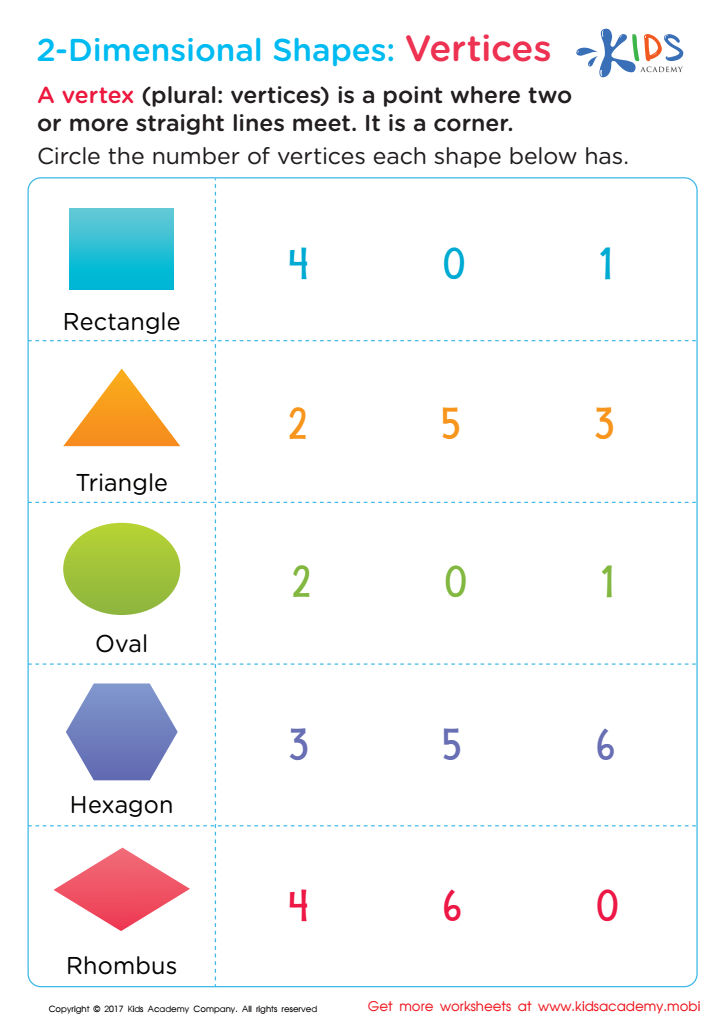
Two–Dimensional Shapes: Vertices Printable
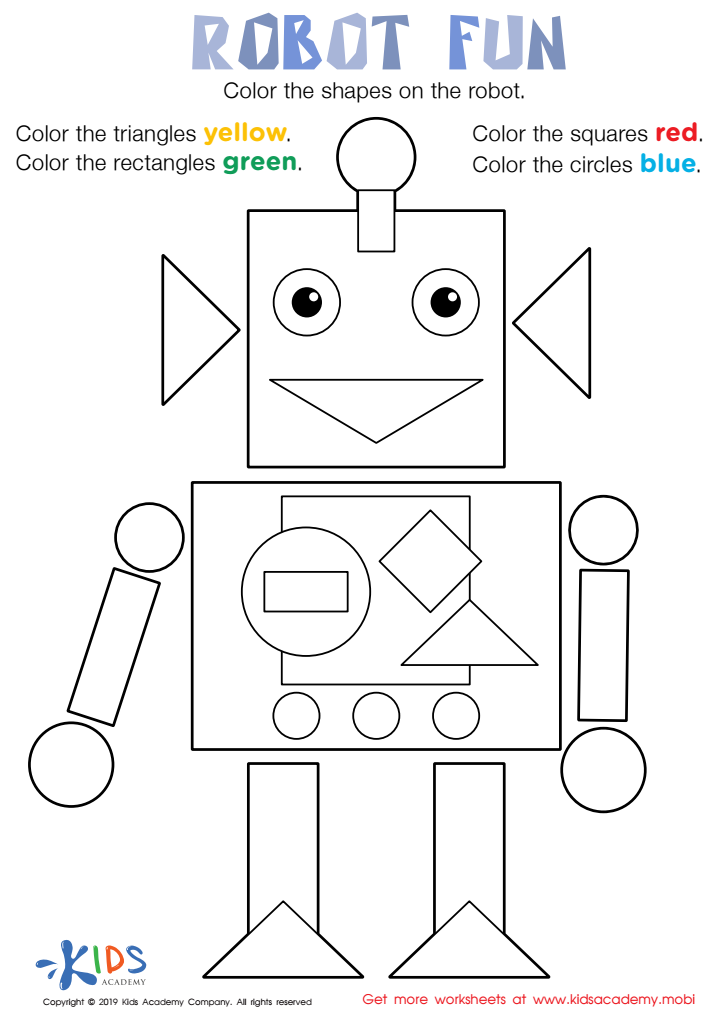
Robot Fun Worksheet
 Assign to My Students
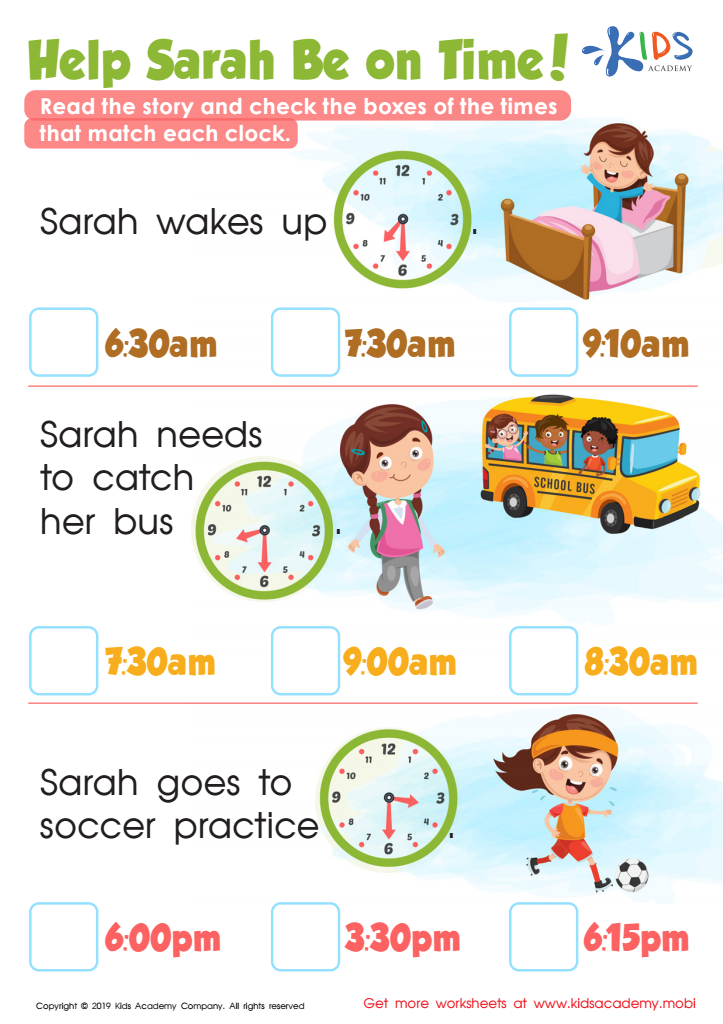
Help Sarah Be on Time! Worksheet








Identifying shapes is a fundamental skill in early mathematics that serves as a building block for more advanced concepts. For 6-year-olds, understanding shapes not only enhances their ability to recognize and categorize objects in their environment, but also fosters critical thinking and spatial awareness. Parents and teachers should care about this foundational aspect for several reasons.
First, shape recognition helps develop observational skills. When children learn to identify shapes, they start to notice characteristics like edges, angles, and symmetry, which can aid in many areas of learning.
Second, it boosts problem-solving abilities. Understanding how different shapes interact lays the groundwork for more complex math concepts like geometry, addition, and subtraction, particularly when dealing with physical objects.
Third, learning about shapes supports creativity and expression. Many art and craft activities, which are vital for holistic development, incorporate shapes. By recognizing and manipulating shapes, children hone fine motor skills and engage in creative thinking.
Finally, teaching shapes can be fun! Interactive games and activities make learning enjoyable and memorable, fostering a positive attitude toward math that can last a lifetime. By investing time in shape identification, parents and teachers cultivate a love for learning that extends far beyond math.








