Sorting skills Easy Numbers 0–10 Worksheets for 6-Year-Olds
3 filtered results
-
From - To
Enhance your 6-year-old's sorting skills with our engaging Easy Numbers 0–10 Worksheets! Designed specifically for young learners, these worksheets focus on sorting numbers in a fun and interactive way. Kids will enjoy organizing numbers and developing critical thinking through various activities. Each worksheet is designed to build foundational skills in number recognition and sorting while promoting independent learning. Perfect for classroom use or at-home practice, these resources support the mathematical growth of your child. Keep learning fun with colorful visuals and stimulating content that makes sorting numbers an enjoyable experience. Download now and watch your child's confidence bloom!
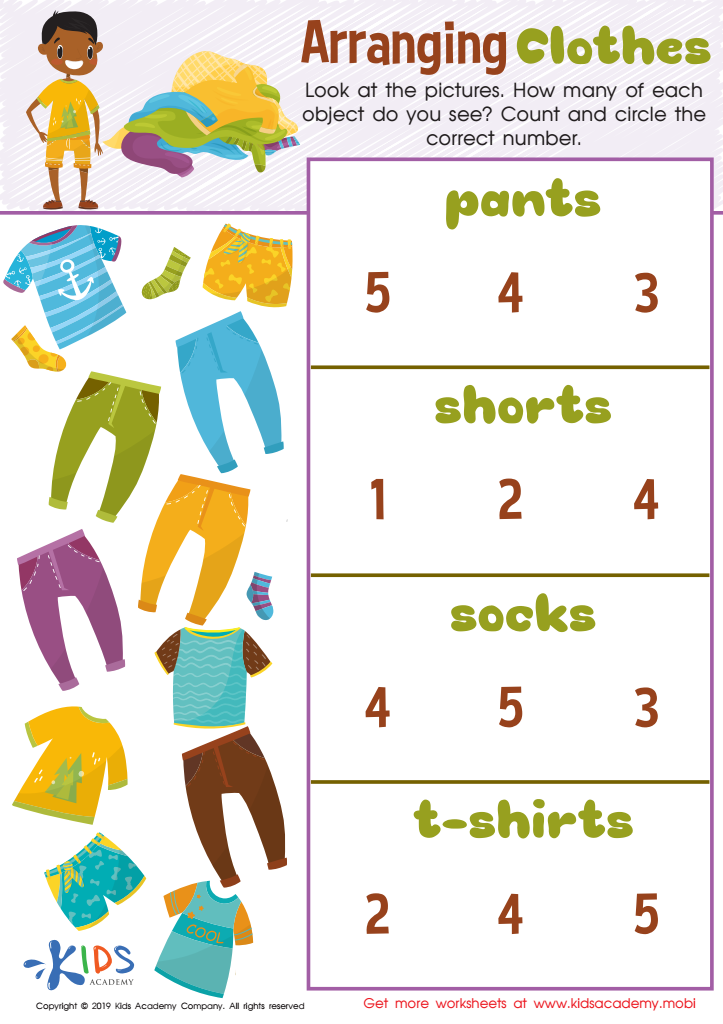
Arranging Clothes Worksheet
 Assign to My Students
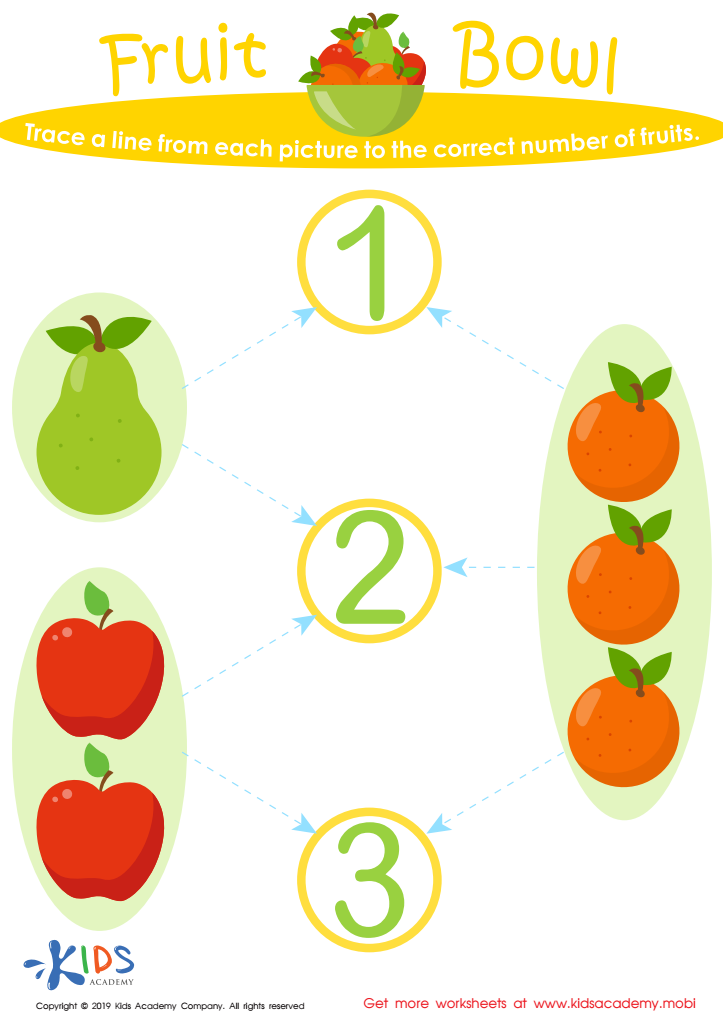
Fruit Bowl Worksheet
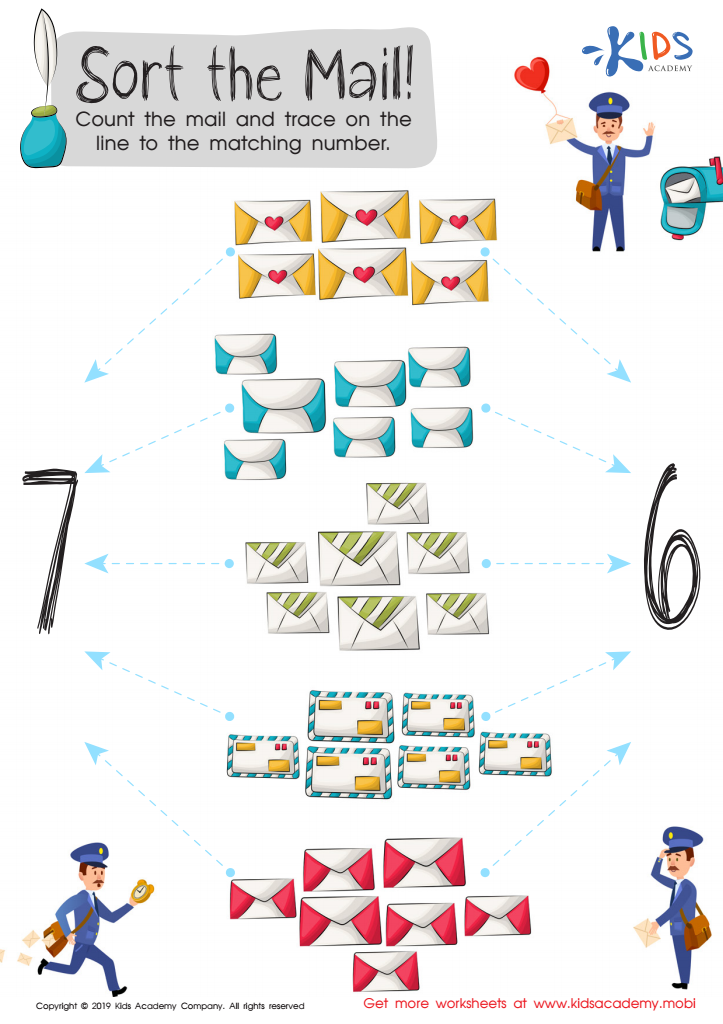
Sort the Mail Worksheet








Sorting skills are fundamental for children, especially for 6-year-olds who are just beginning to develop their cognitive capacities. Understanding how to sort easy numbers from 0 to 10 not only builds foundational math skills but also enhances critical thinking and problem-solving abilities. When children learn to categorize and sort, they gain an awareness of relationships and distinctions between different objects and numbers, paving the way for more advanced mathematical concepts like addition and subtraction.
For parents and teachers, fostering sorting skills promotes engagement and interest in math at an early age, translating into greater confidence in their abilities. This process also encourages neatness and organization, as children learn to group similar items by attributes such as size, color, or quantity. Additionally, sorting activities can be easily integrated into everyday scenarios, turning learning into a fun and interactive experience rather than a chore.
Ultimately, strong sorting skills contribute to a child's overall academic readiness, supporting their transition into more complex subjects in the future. Nurturing these essential skills now sets children on a path toward lifelong learning and interest in mathematics, which is a valuable asset in a technology-driven world.