Understanding times tables Easy Worksheets for Ages 7-8
3 filtered results
-
From - To
Discover engaging "Understanding Times Tables Easy Worksheets" designed for children ages 7-8! These worksheets provide fun, interactive exercises that make learning multiplication simple and enjoyable. With colorful visuals and clear instructions, your child will boost their confidence while mastering times tables. The worksheets are tailored to reinforce essential math skills through a variety of activities, including puzzles, games, and problem-solving tasks. Ideal for both classroom and home learning, these resources support young learners in becoming proficient with multiplication, setting the foundation for future math success. Help your child thrive in math with our specially crafted worksheets that turn learning into an exciting adventure!
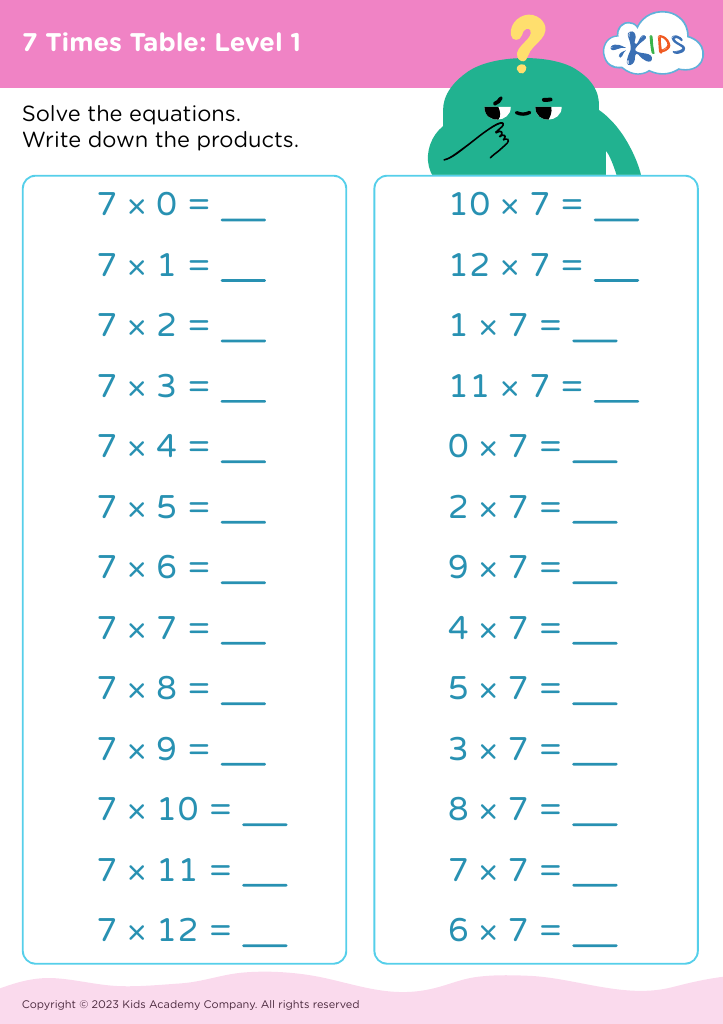
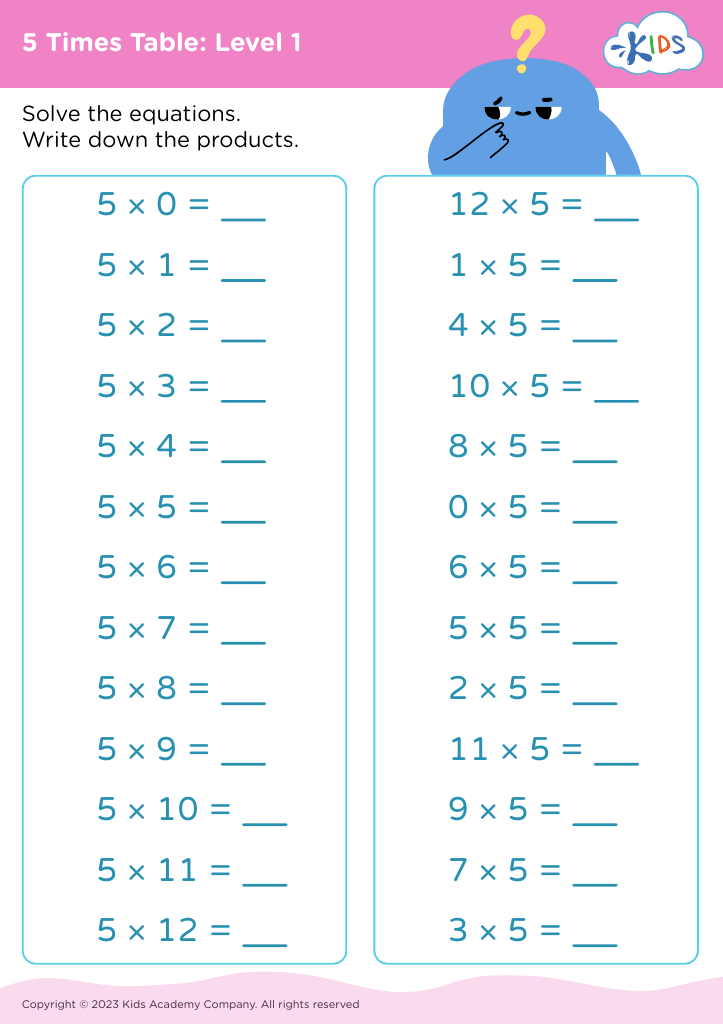
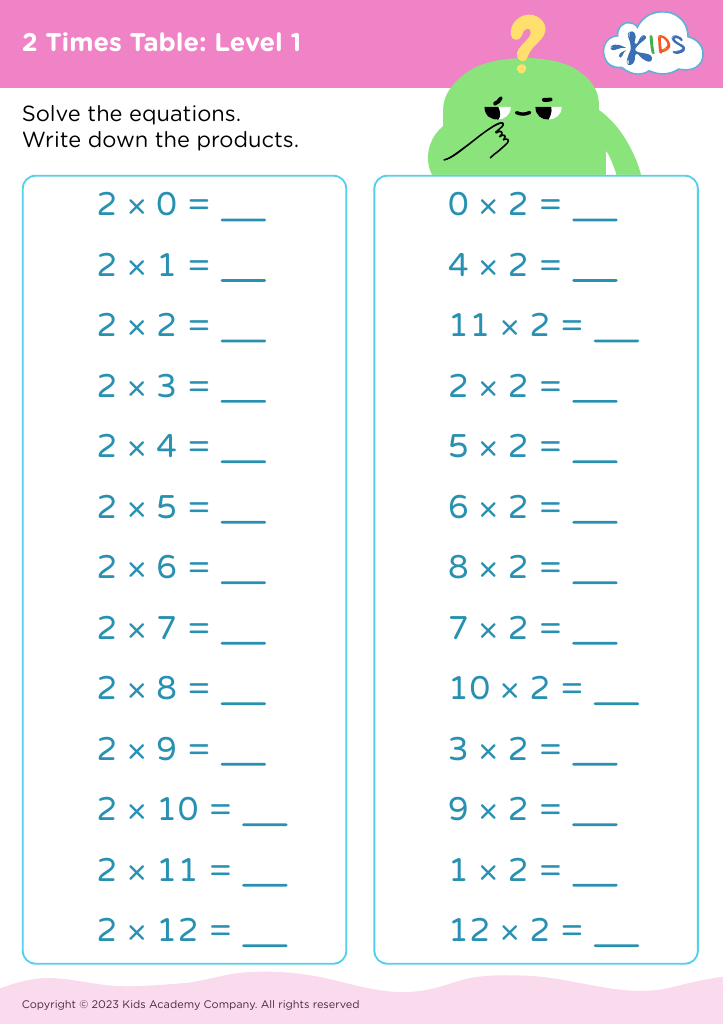








Understanding times tables is crucial for children aged 7-8, as it builds a strong foundation for their future learning in mathematics. At this age, students are often introduced to more complex math concepts, and a firm grasp of times tables acts as a springboard toward success in these areas.
Times tables enhance children's ability to perform calculations efficiently, promoting greater accuracy and speed in problem-solving. Mastery of multiplication also aids in understanding division, fractions, and even more advanced concepts that they will encounter as they progress in their education. Additionally, knowing times tables can develop children's confidence in their math abilities, reducing anxiety and frustration during classes.
Moreover, learning multiplication tables fosters critical thinking and pattern recognition skills. It can turn what may seem like monotonous memorization into engaging activities, making math more enjoyable and less intimidating.
Parents and teachers play a pivotal role in this by creating supportive environments that encourage practice and exploration of multiplication through games, songs, and real-life applications. By investing time and effort into helping children understand their times tables, parents and teachers equip them with essential skills that will serve them well throughout their academic journey and beyond.








