Observational skills Easy Numbers Worksheets for Ages 7-8
3 filtered results
-
From - To
Enhance your child’s observational skills with our Easy Numbers Worksheets designed specifically for ages 7-8! These engaging and colorful worksheets encourage kids to recognize, compare, and analyze numbers in a fun and interactive way. Through a variety of activities, students will practice identifying number patterns, sorting numerical values, and honing their focus on essential details. Our worksheets not only bolster math skills but also promote critical thinking and attention to detail, laying a strong foundation for future learning. Perfect for classroom settings or at-home practice, these resources ensure that children enjoy learning while building essential observational competencies. Download now and watch them thrive!
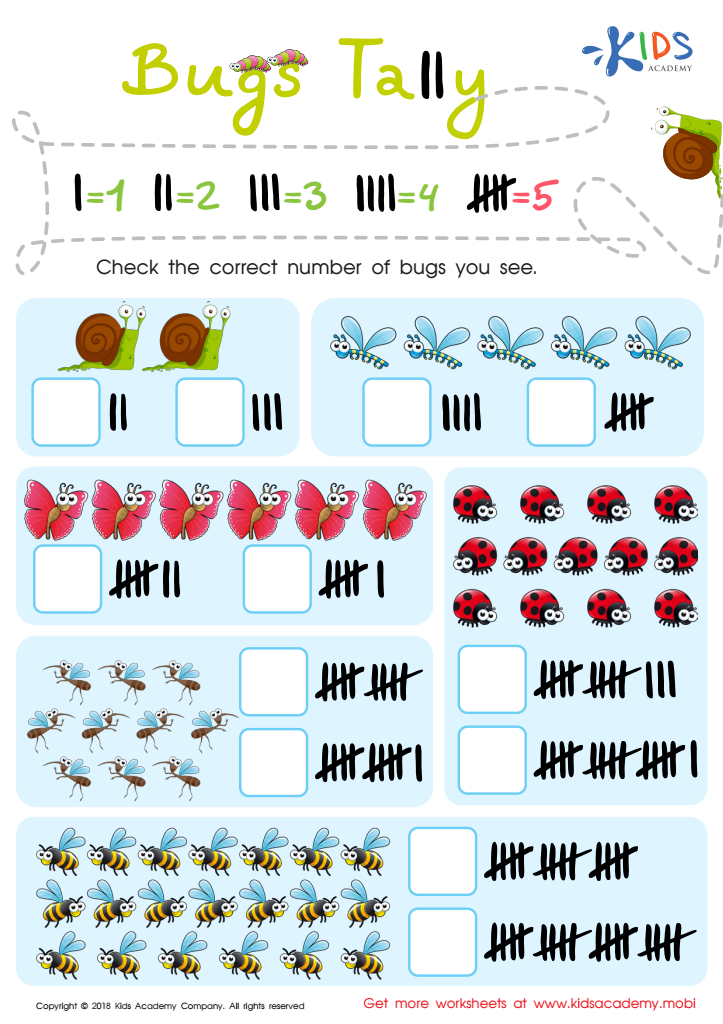
Bugs Tally Worksheet
 Assign to My Students
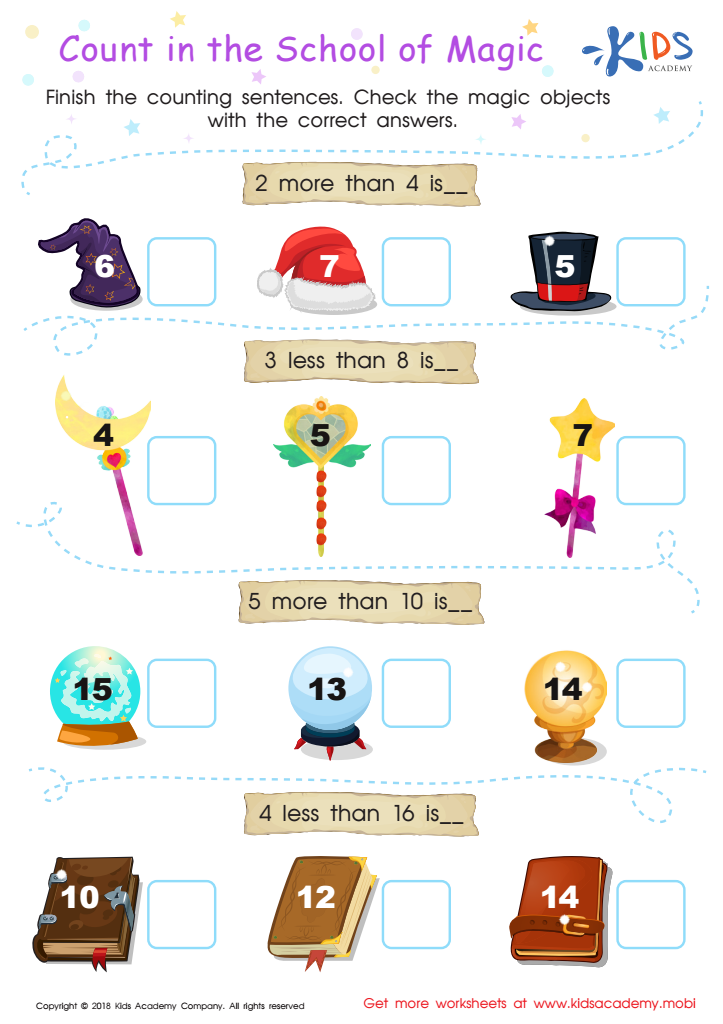
Count in the School of Magic Worksheet
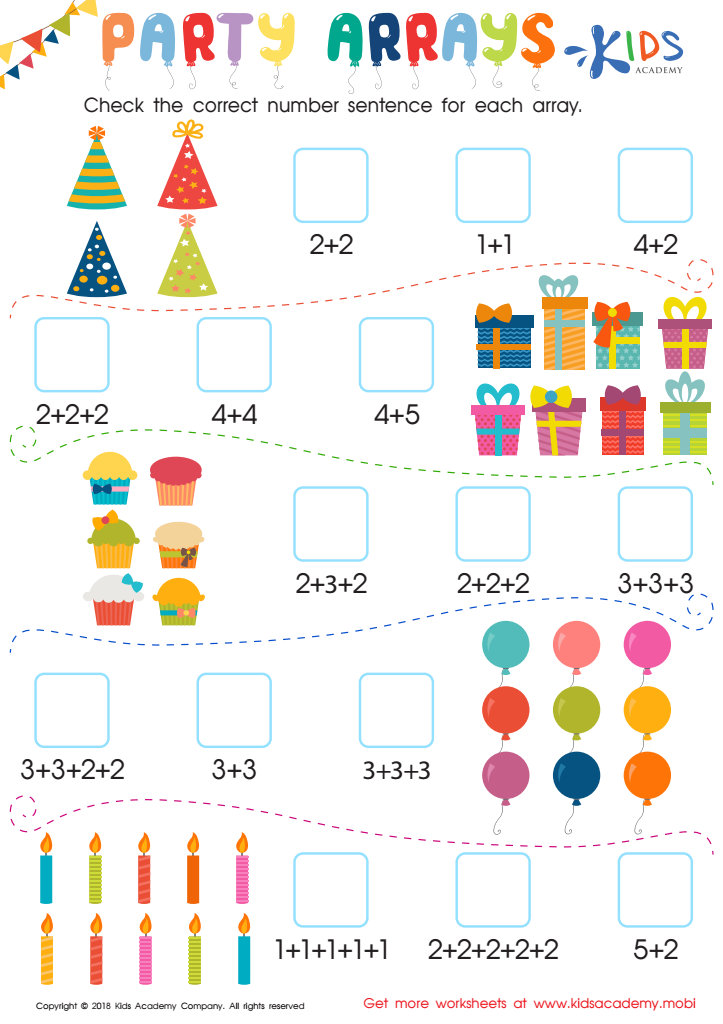
Party Arrays Worksheet








Observational skills are crucial for children ages 7-8, as they serve as the foundation for effective learning and problem-solving. At this stage, children are developing the ability to notice details, patterns, and relationships in their environment, which aids in their understanding of mathematical concepts. "Observational Skills Easy Numbers" helps children become adept at recognizing numbers in various contexts, facilitating significant connections between math and real-life situations.
Parents and teachers should care about fostering these skills because they directly impact a child's confidence and competence in mathematics. When children can observe and identify numbers in their surroundings, they become more engaged learners, boosting their analytical thinking and boosting their overall academic performance across subjects. Developing these skills also encourages inquisitiveness and exploration, which are essential for lifelong learning.
Moreover, strong observational skills promote critical thinking, enabling children to analyze information and draw informed conclusions. In a world increasingly driven by data, the ability to observe and interpret information is invaluable. Moreover, fostering these skills early on lays the groundwork for complex cognitive abilities, preparing children not just for future academic success, but also for real-world challenges. Supporting "Easy Numbers" activities enriches children's educational journeys, enhancing their future prospects.








