Visual perception Easy Math Worksheets for Ages 7-8
4 filtered results
-
From - To
Enhance your child's visual perception and math skills effortlessly with our Easy Math Worksheets designed for ages 7-8! These engaging worksheets focus on developing visual learning, a crucial aspect of early education. They feature fun exercises incorporating patterns, shapes, and numbers to help children recognize and interpret visual information effectively. By repeatedly solving these problems, young learners will build a strong foundation in key math concepts while sharpening their visual perception abilities. Ideal for both classroom and at-home learning, these worksheets provide a perfect blend of education and enjoyment, ensuring that your child progresses with confidence and excitement.
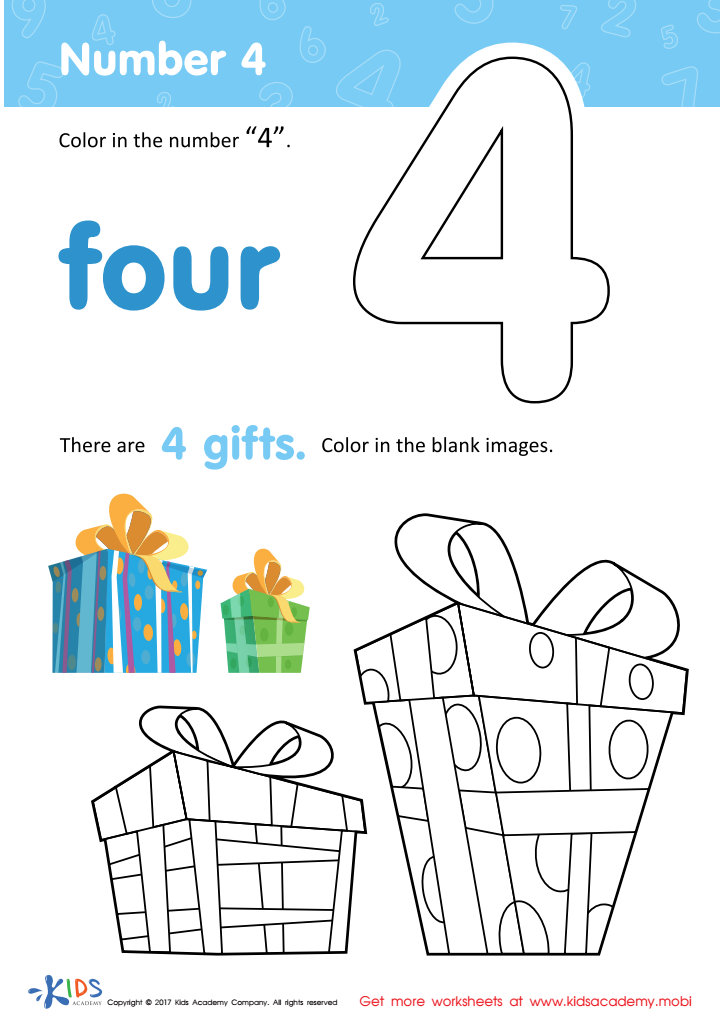
Number 4 Printable
 Assign to My Students
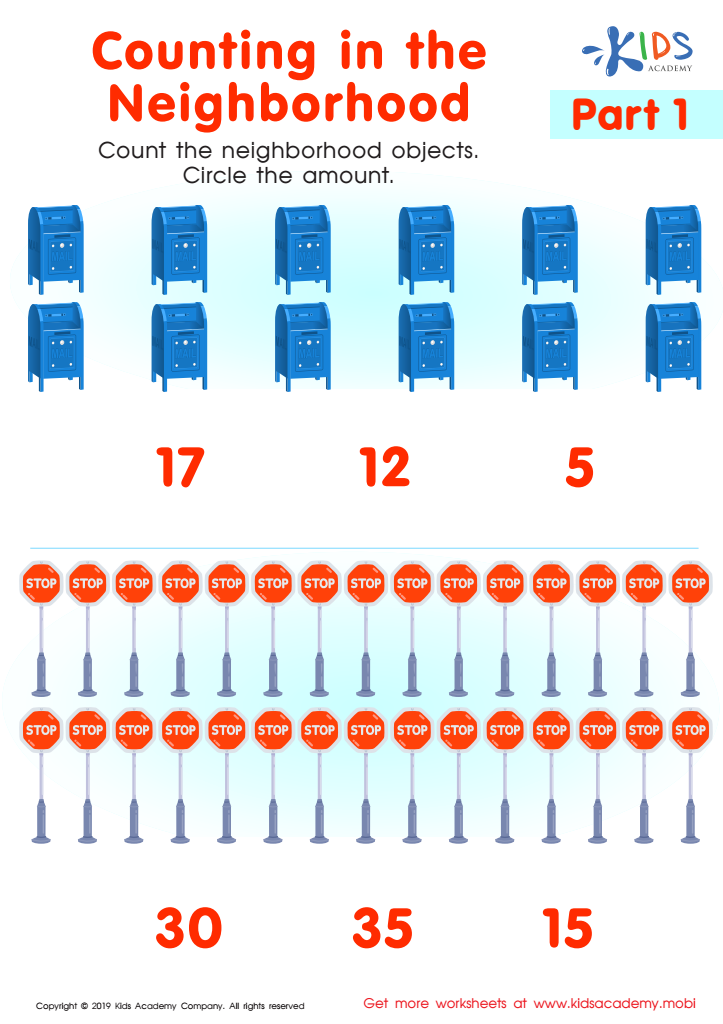
Counting in the Neighborhood Part1 Worksheet
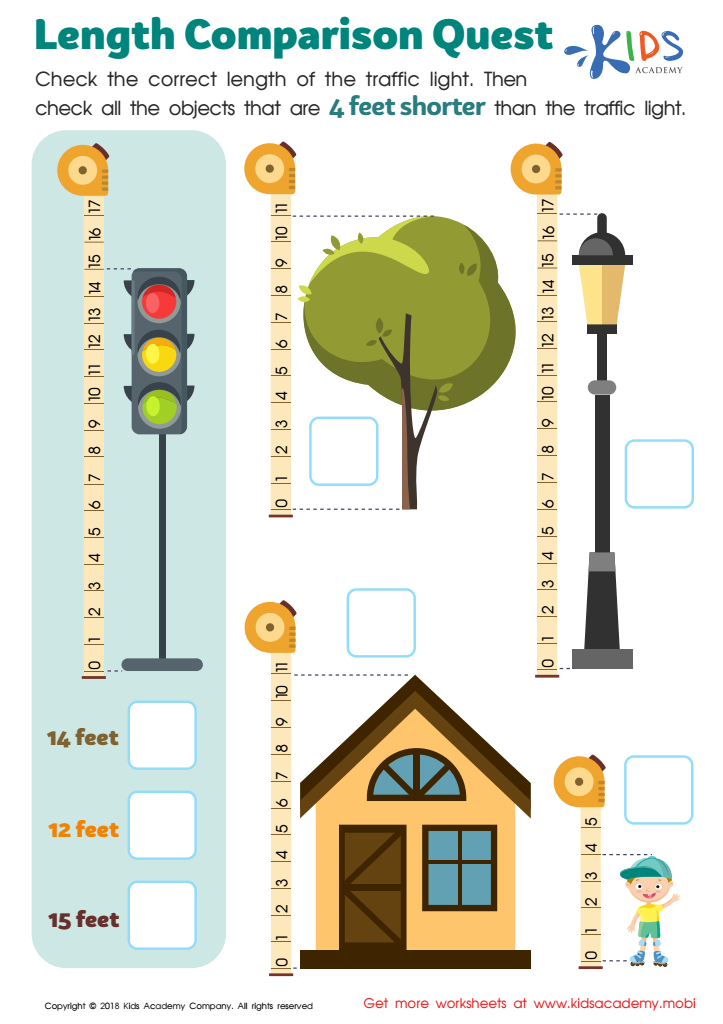
Length Comparison Quest Worksheet
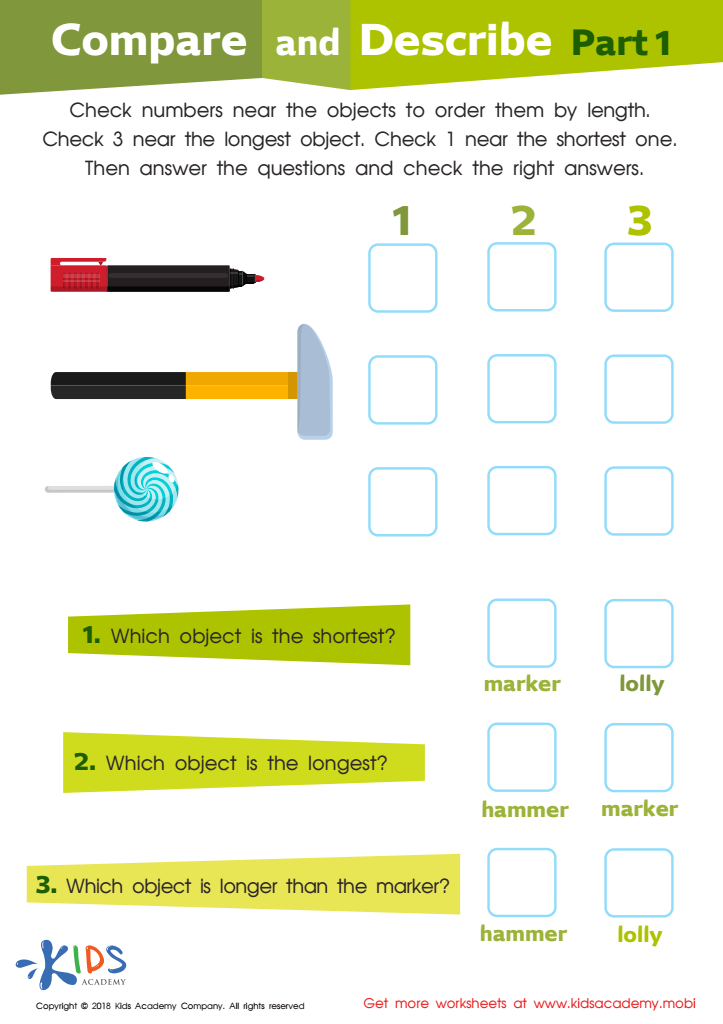
Compare and Describe: Part 1 Worksheet








Visual perception plays a critical role in a child's ability to understand and perform well in math, especially at the ages of 7-8. At this stage, children are transitioning from basic arithmetic to more complex concepts such as simple geometry and word problems. Good visual perception skills help them to accurately interpret shapes, patterns, and spatial relationships, which are fundamental in understanding these mathematical concepts.
For example, being able to visually differentiate between different coins or geometric shapes aids in basic calculations and problem-solving. Visual perception also helps children understand graphs, number lines, and the layout of math problems on a page—skills that are essential for solving math problems more efficiently. Additionally, children with well-developed visual perception skills can better grasp the concept of place value, which is crucial for more advanced arithmetic, such as addition and subtraction of larger numbers.
Parents and teachers need to recognize the importance of visual perception to offer targeted support that enhances these skills, thus facilitating a smoother learning curve. Simple activities involving puzzles, drawing shapes, or playing visual-based games can significantly boost a child's visual perception abilities, leading to improved math performance and a stronger foundation for future learning. Ignoring this aspect may result in unnecessary struggles and a lack of confidence in math.








