Understanding measurements Easy Measurement Worksheets for Ages 7-8
9 filtered results
-
From - To
Welcome to our "Understanding Measurements" worksheets designed specifically for children ages 7-8! These engaging and easy-to-follow worksheets help young learners grasp the essential concepts of measurements through interactive activities. Students will explore various units of measurement, including length, weight, and volume, while developing their analytical and problem-solving skills. Ideal for at-home practice or classroom settings, our resources reinforce learning through fun exercises and colorful illustrations. With a focus on real-world applications, these worksheets make measurement concepts relatable and enjoyable, ensuring your child builds a solid foundation for future math success. Start measuring fun today!
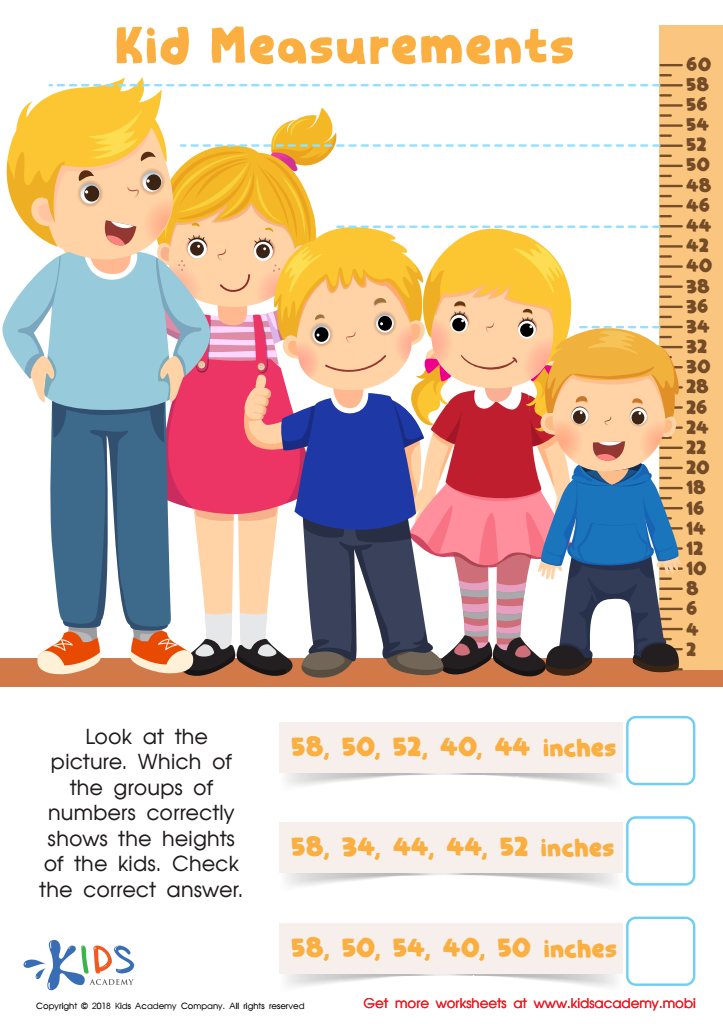
Kids Measurements Worksheet
 Assign to My Students
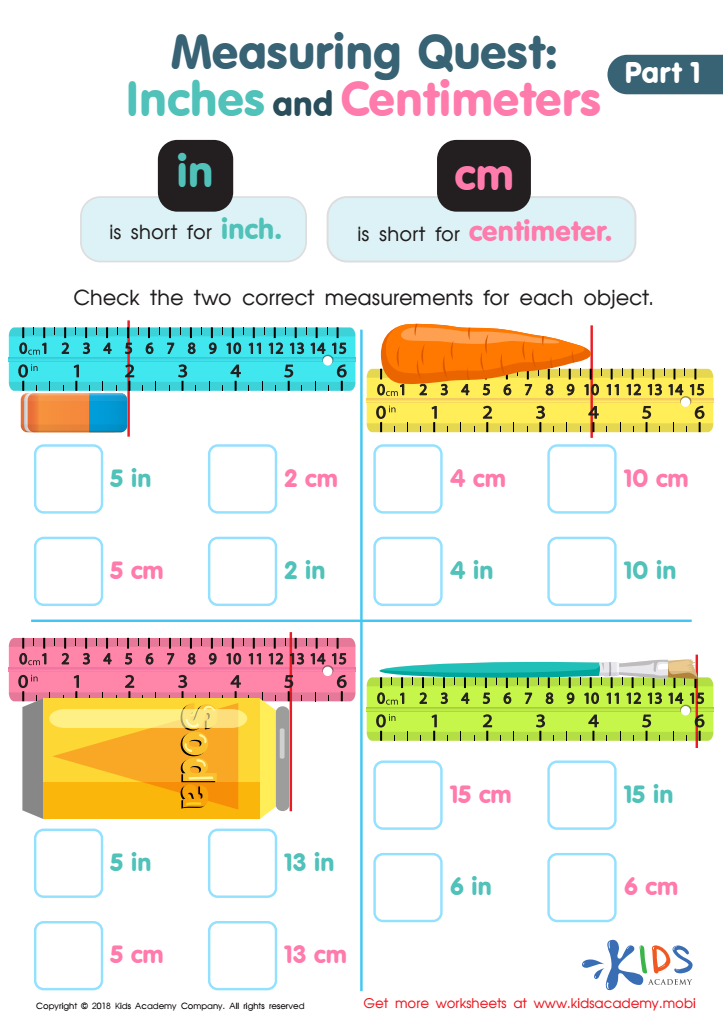
Measuring Quest: Inches and Centimeters Worksheet
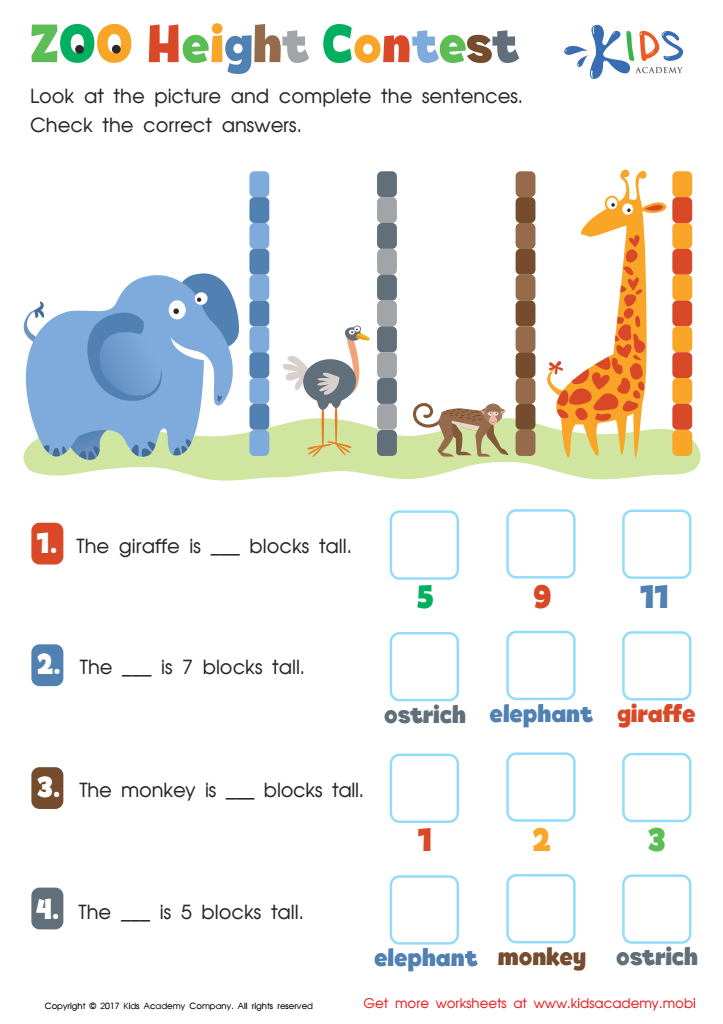
Zoo Height Contest Worksheet
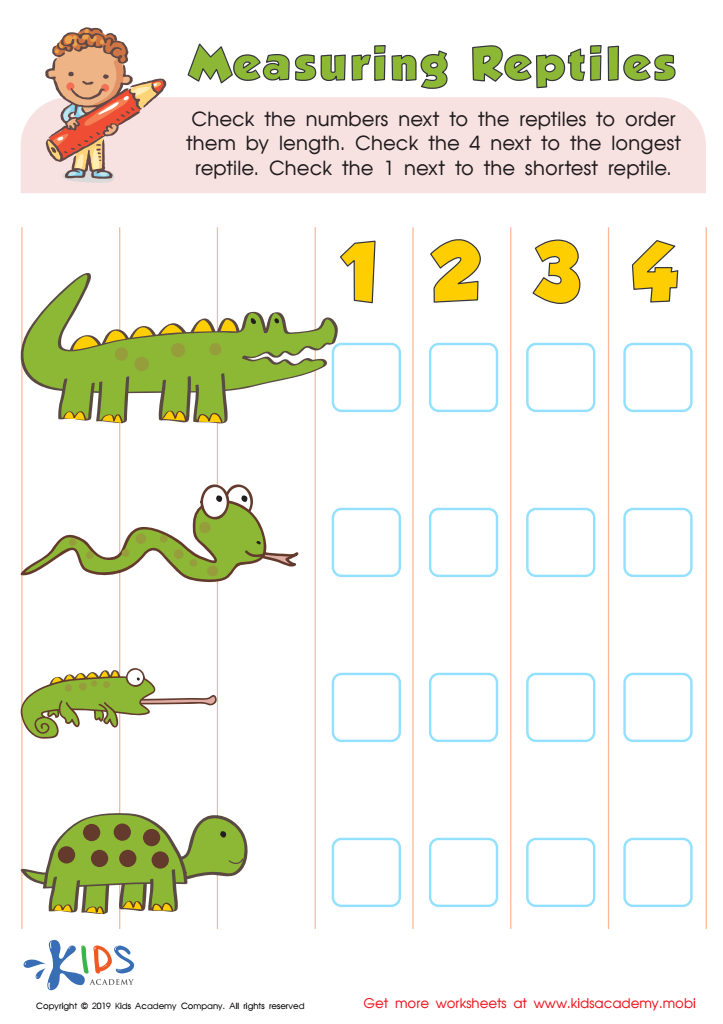
Measuring Reptiles Worksheet
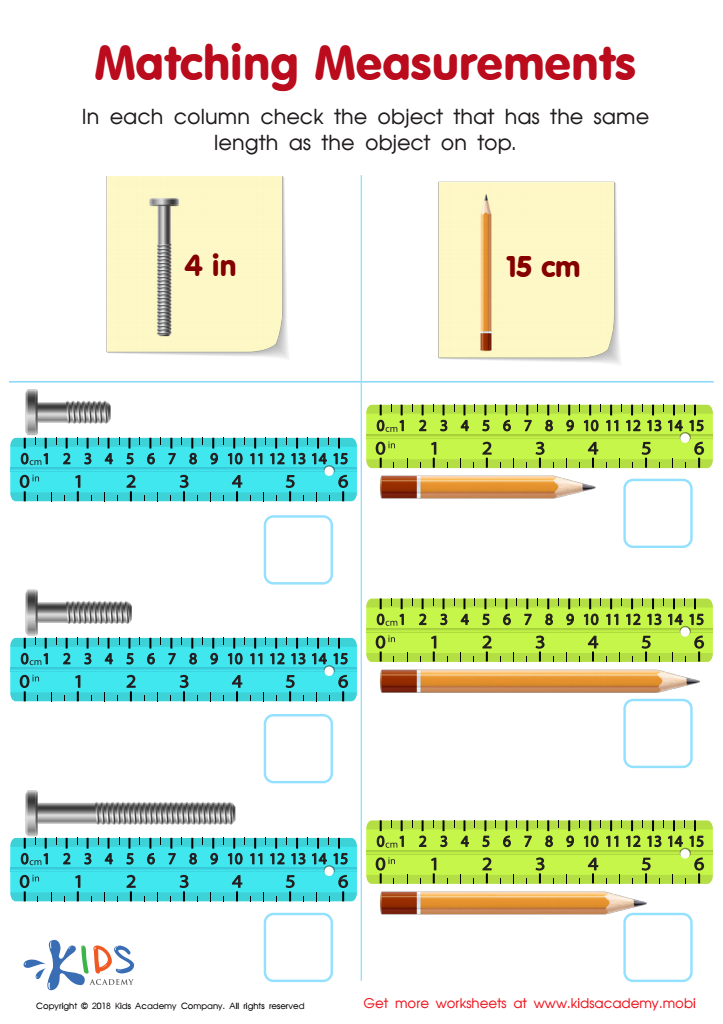
Matching Measurements Worksheet
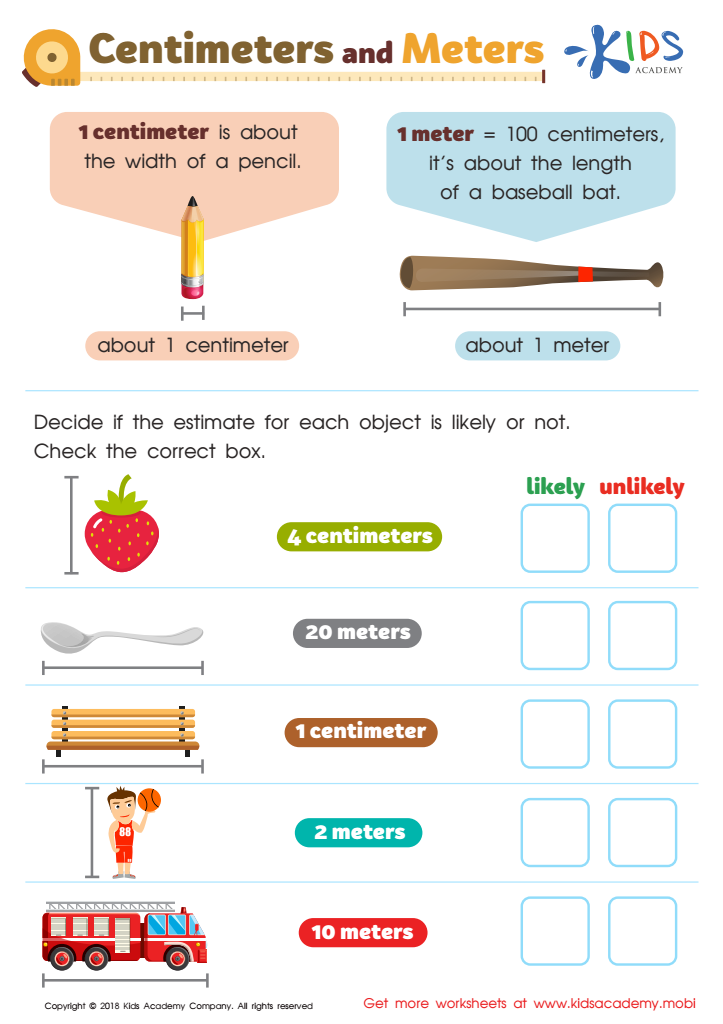
Centimeters and Meters Worksheet
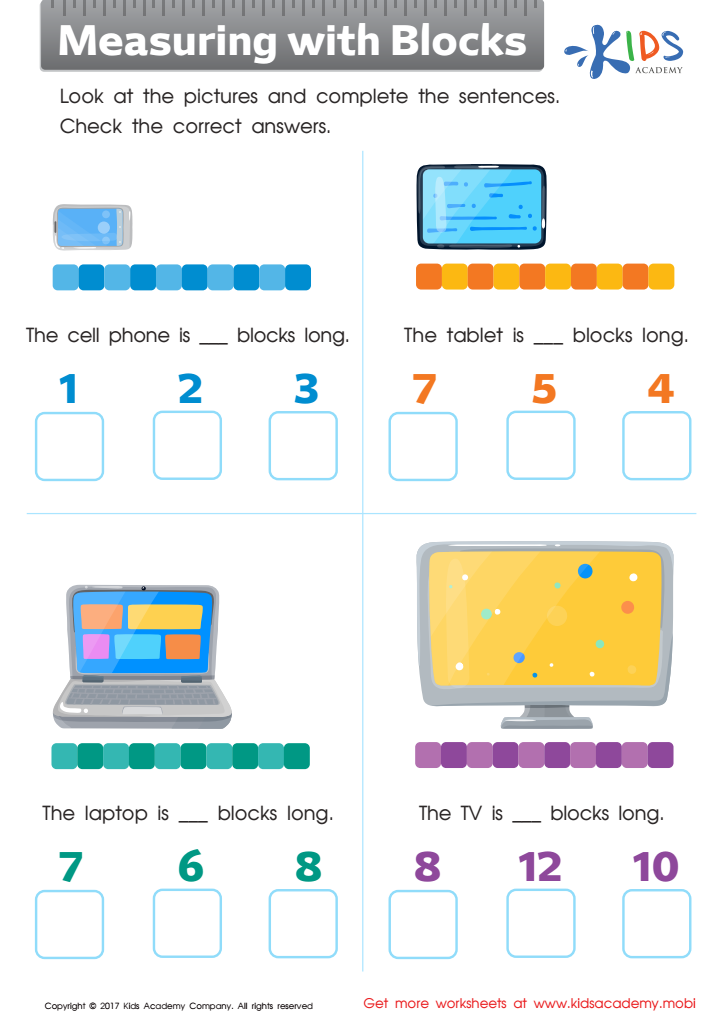
Measuring with Blocks Worksheet
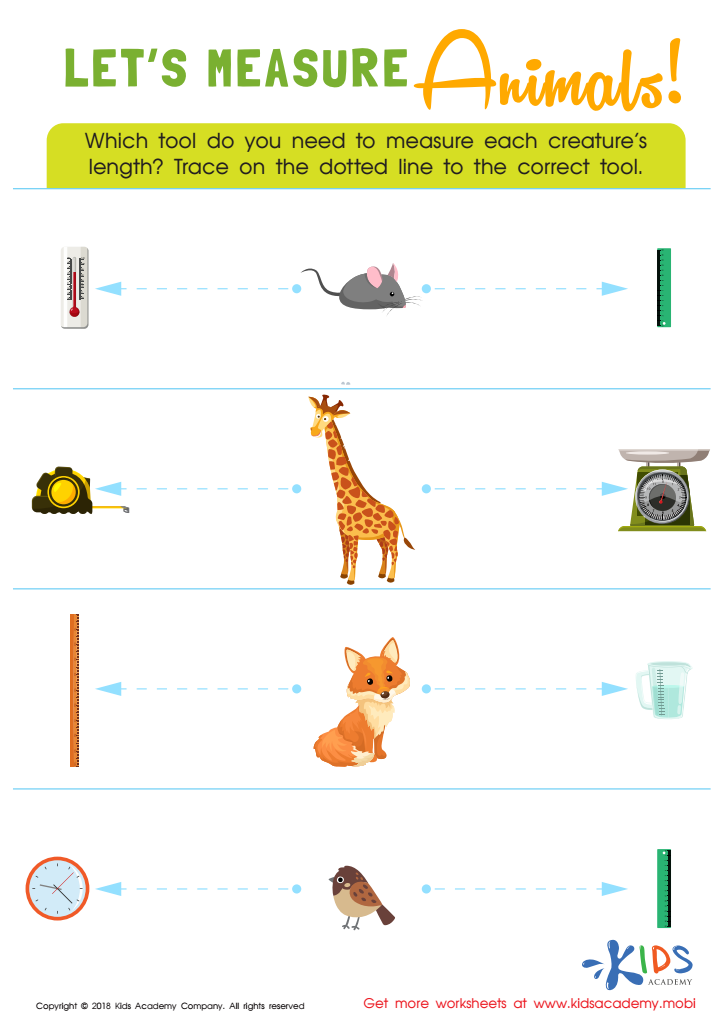
Let's Measure Animals! Worksheet
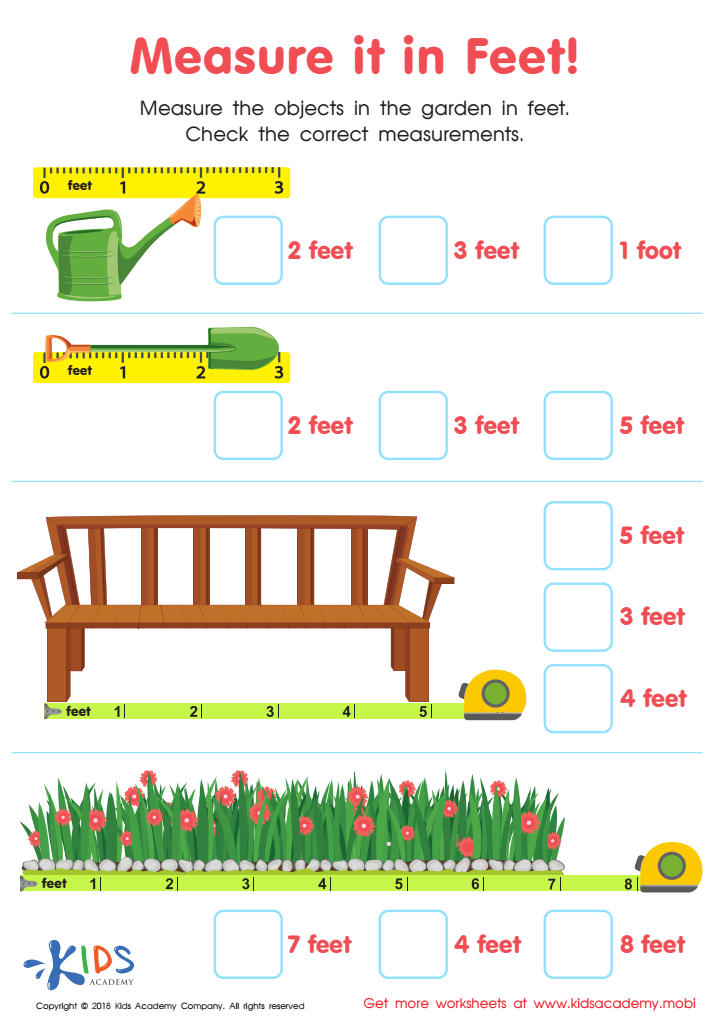
Measure it in Feet Worksheet






Understanding measurements is a fundamental skill that shapes a child’s mathematical foundation and critical thinking abilities, especially for ages 7-8. At this age, children are naturally curious and eager to explore their surroundings, making it the perfect time to introduce measurement concepts. Grasping basic measurements, including length, weight, and volume, enhances their comprehension of both math and real-world applications.
Parents and teachers should care about easy measurement learning because it promotes everyday problem-solving skills. For instance, measuring ingredients in cooking or understanding the lengths of objects helps children connect math with daily activities. This fosters a sense of practical applicability, reinforcing the idea that math isn't just an abstract subject but a useful tool in life.
Moreover, building measurement skills builds confidence and encourages perseverance. As children tackle measurement-related tasks, they develop spatial awareness and logical reasoning, foundational skills for future learning, particularly in advanced math and science. Understanding measurements also emphasizes the importance of precision and estimation, critical in fostering attention to detail. By nurturing these skills early on, parents and teachers equip children with the competencies they need for academic success and everyday life challenges.








