Interpreting data Easy Math Worksheets for Ages 7-9
3 filtered results
-
From - To
Introduce young learners to the essential skill of interpreting data with our Easy Math Worksheets for Ages 7-9. Carefully designed to engage children, these fun and educational worksheets will guide them through reading graphs, understanding charts, and deciphering tables. Our activities use relatable themes and clear visuals to help kids grasp key concepts effortlessly. Enhance their analytical thinking and boost their confidence in handling data as they learn step-by-step. Ideal for both classroom use and at-home practice, these worksheets offer a great way to strengthen foundational math skills in a fun and interactive manner.
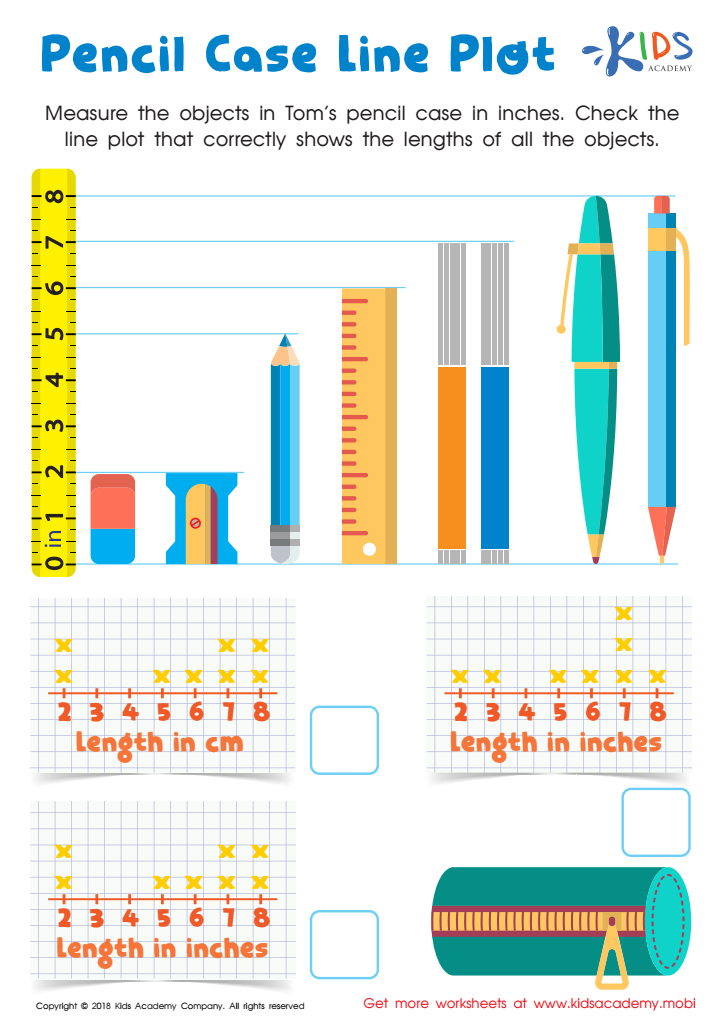
Pencil Case Line Plot Worksheet
 Assign to My Students
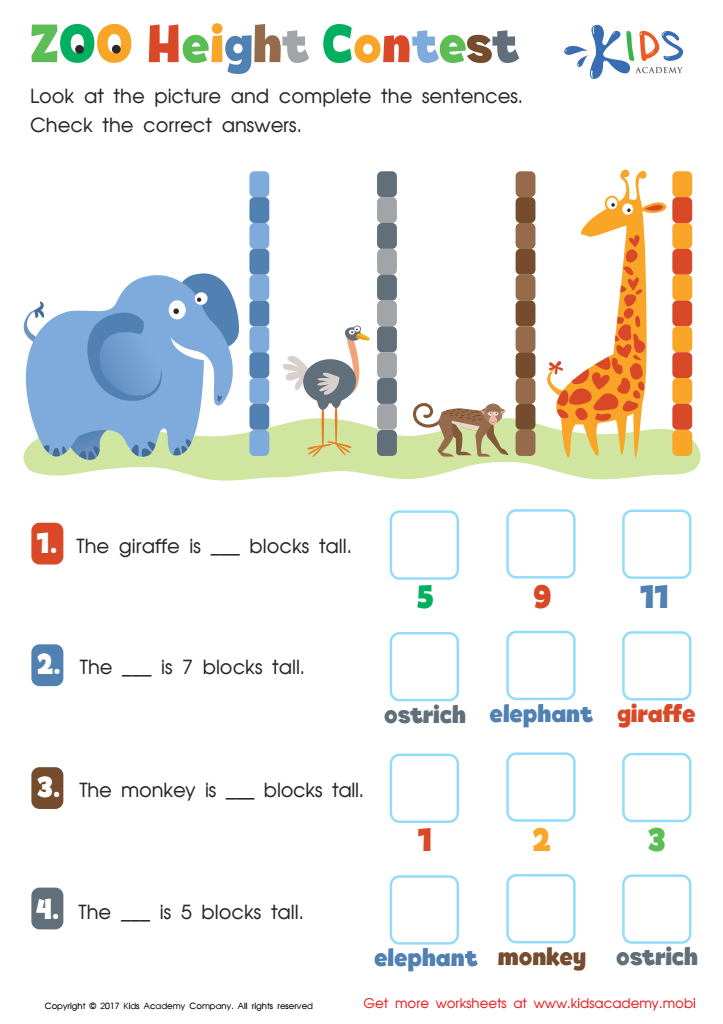
Zoo Height Contest Worksheet
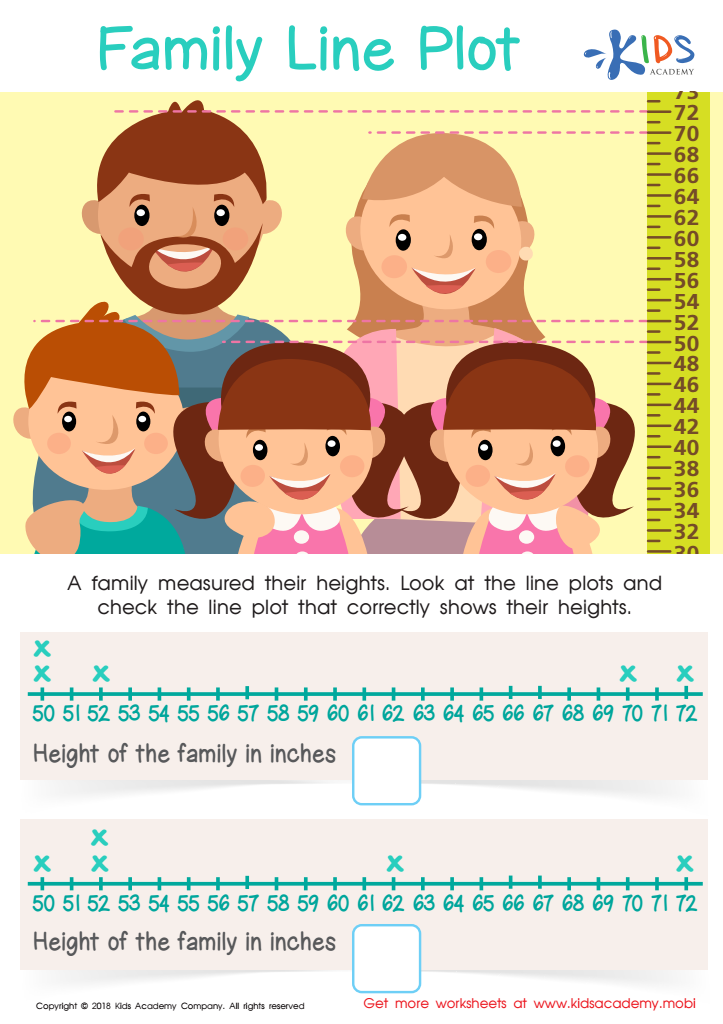
Family Line Plot Worksheet








Interpreting data is a crucial foundational skill for young learners, and parents and teachers should pay special attention to teaching this aspect of mathematics to children ages 7-9. At this stage, students are developing cognitive skills and introducing them to basic data interpretation fosters critical thinking and problem-solving abilities. Consistent engagement with concepts like reading charts, graphs, and tables enhances their ability to understand the world around them and make informed decisions.
Building competency in interpreting data sets the stage for more advanced math and science topics that students will encounter later in their educational journey. Through activities and exercises, children learn to identify patterns, measure trends, and draw conclusions based on the data presented. Such skills are not only valuable academically but also in everyday life scenarios such as understanding weather reports, sports statistics, or simple budgeting.
Moreover, interpreting data encourages attention to detail and patience, skills that contribute to overall academic success. By integrating data interpretation exercises into the curriculum, educators can make math engaging and accessible, often using real-life examples that are relevant to the students' lives. Parents can reinforce these skills at home with simple projects, creating a consistent and supportive learning environment. Thus, caring about and prioritizing data interpretation for young learners is crucial for their holistic development and future academic achievements.








