Fine Motor Skills Easy Geometry Worksheets for 7-Year-Olds
6 filtered results
-
From - To
Discover our engaging Fine Motor Skills Easy Geometry Worksheets designed specifically for 7-year-olds! These worksheets combine fun and learning, helping young learners develop essential fine motor skills through exciting geometric activities. Kids will enjoy tasks like tracing shapes, coloring patterns, and connecting dots, all while exploring basic geometric concepts. Our worksheets not only boost hand-eye coordination and dexterity but also encourage creativity and critical thinking. Perfect for home or classroom use, these resources provide a delightful way for children to enhance their motor skills while grasping the fundamentals of geometry. Start the adventure towards mastering both geometry and fine motor skills today!
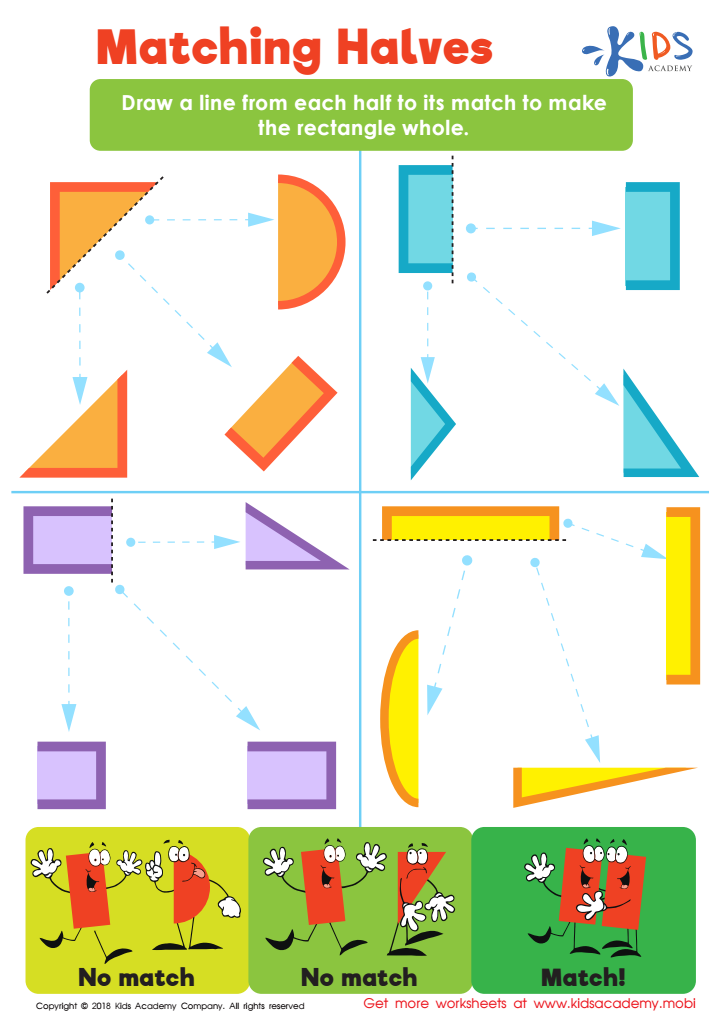
Matching Halves Worksheet
 Assign to My Students











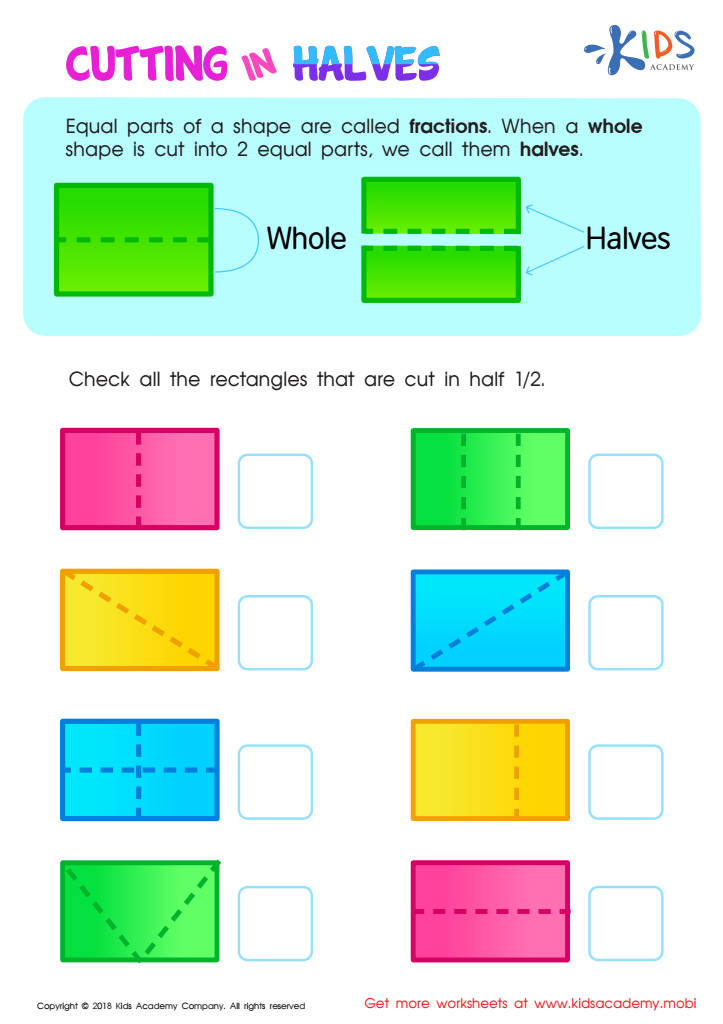
Cutting in Halves Worksheet
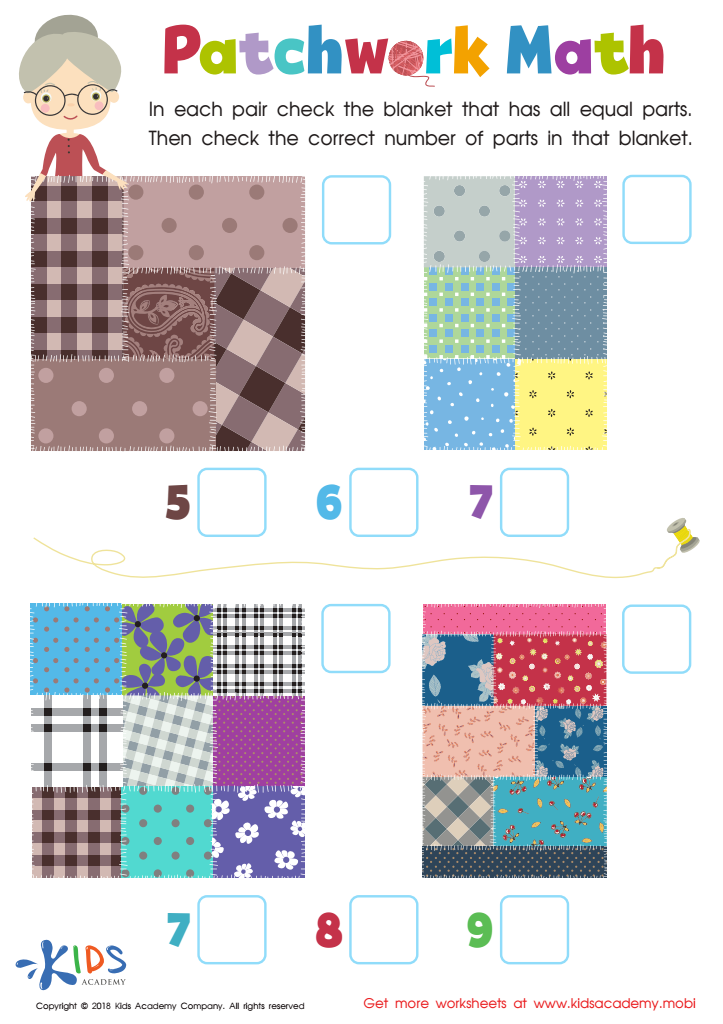
Patchwork Math Worksheet
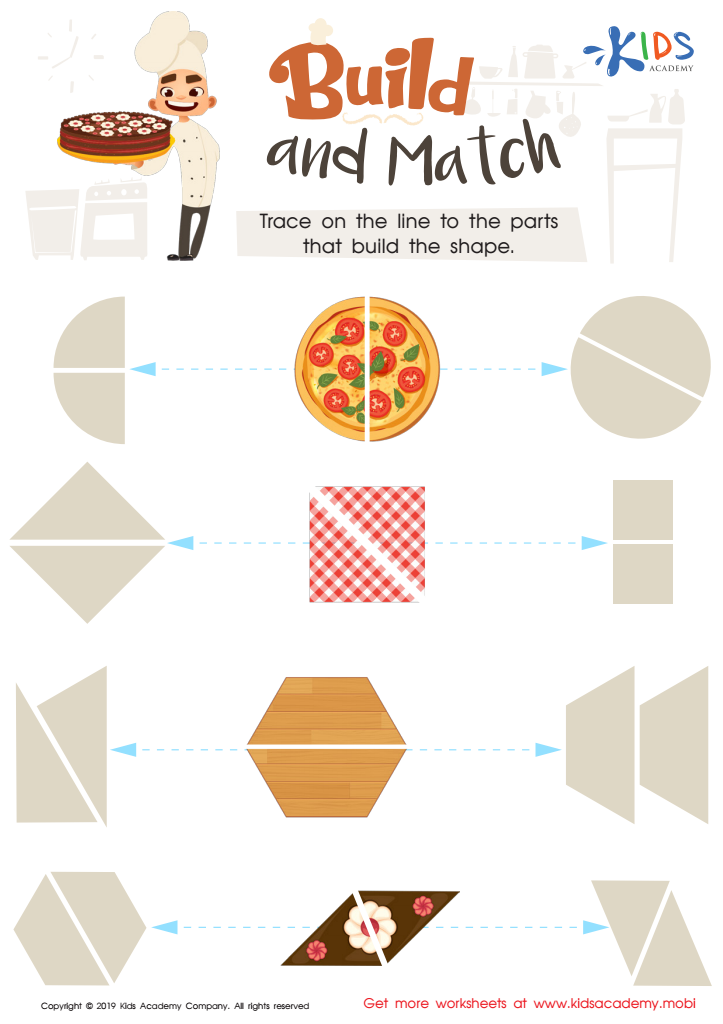
Build and Match Worksheet
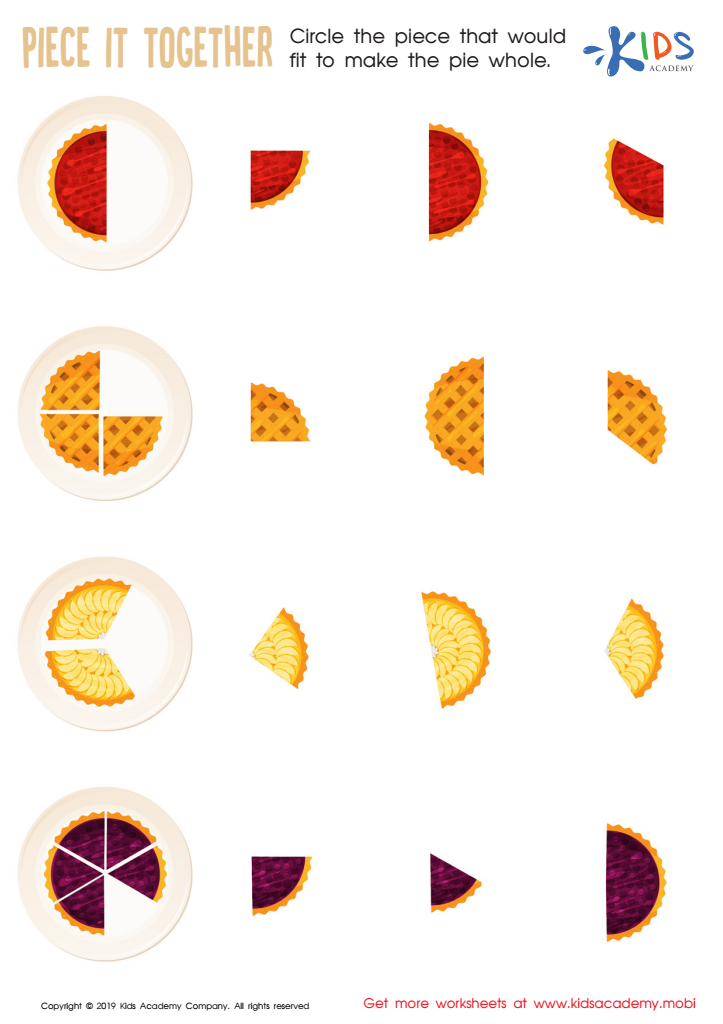
Piece it together Worksheet
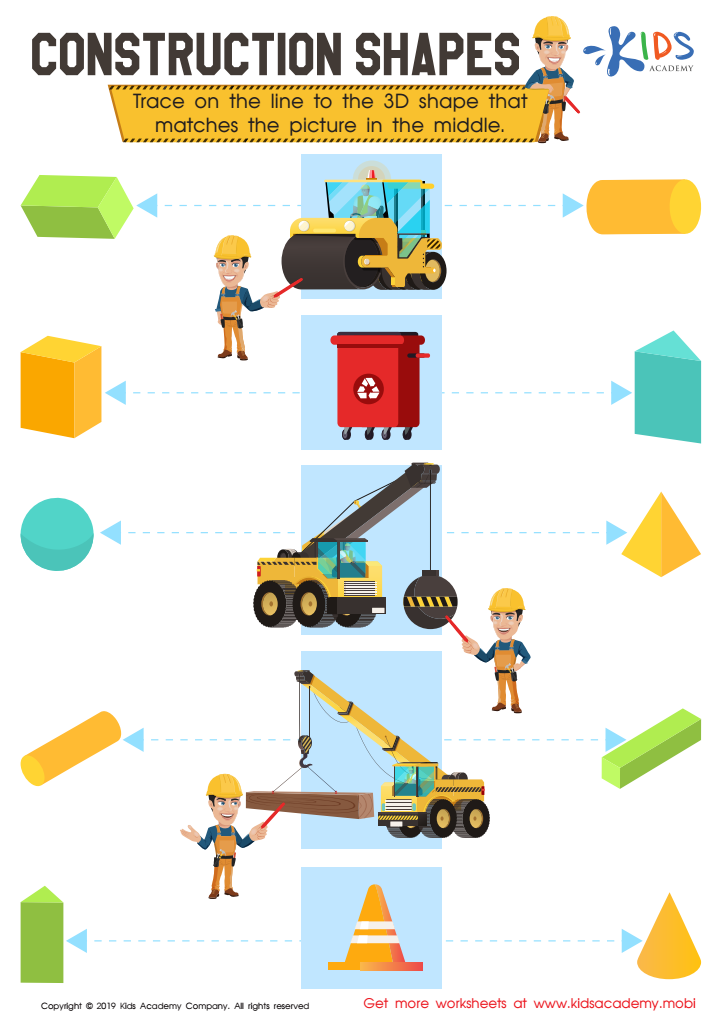
Construction Shapes Worksheet








Fine motor skills and geometry are crucial areas of development for 7-year-olds, and both have significant implications for a child’s overall learning and daily life. Fine motor skills refer to the ability to use small muscles in the hands and fingers to perform tasks such as writing, cutting, and manipulating small objects. Heightened fine motor skills enhance children’s ability to engage in activities that require precision, such as drawing shapes, crafting, and even typing—all of which are foundational for academic success.
In conjunction, geometry plays an important role in helping children understand the world around them. Recognizing shapes, understanding spatial relationships, and developing problem-solving abilities form a pivotal part of their cognitive development. Research indicates that mastery of these concepts in early education contributes to greater success in mathematics later on.
Therefore, both parents and teachers should focus on integrating fine motor skill activities alongside geometric learning. Engaging young learners in hands-on mathematics photography, puzzles, or art projects fosters a love for learning and supports essential cognitive and physical skills. This holistic approach not only prepares children for academic challenges but also enriches their creative thinking and everyday interactions in their world.








