Comparing lengths Easy Measurement Worksheets for 7-Year-Olds
5 filtered results
-
From - To
Discover our "Comparing Lengths Easy Measurement Worksheets" designed specifically for 7-year-olds! These engaging and interactive worksheets help young learners understand measurement concepts through fun activities. Kids will practice comparing lengths using various tools and visual aids, fostering essential math skills early on. With a wide range of exercises, including real-life examples and hands-on tasks, these worksheets make learning measurement enjoyable and effective. Perfect for home or classroom use, our resources support diverse learning styles while promoting confidence and independence in math. Equip your child with the tools to master comparing lengths and develop a strong foundation in measurement today!
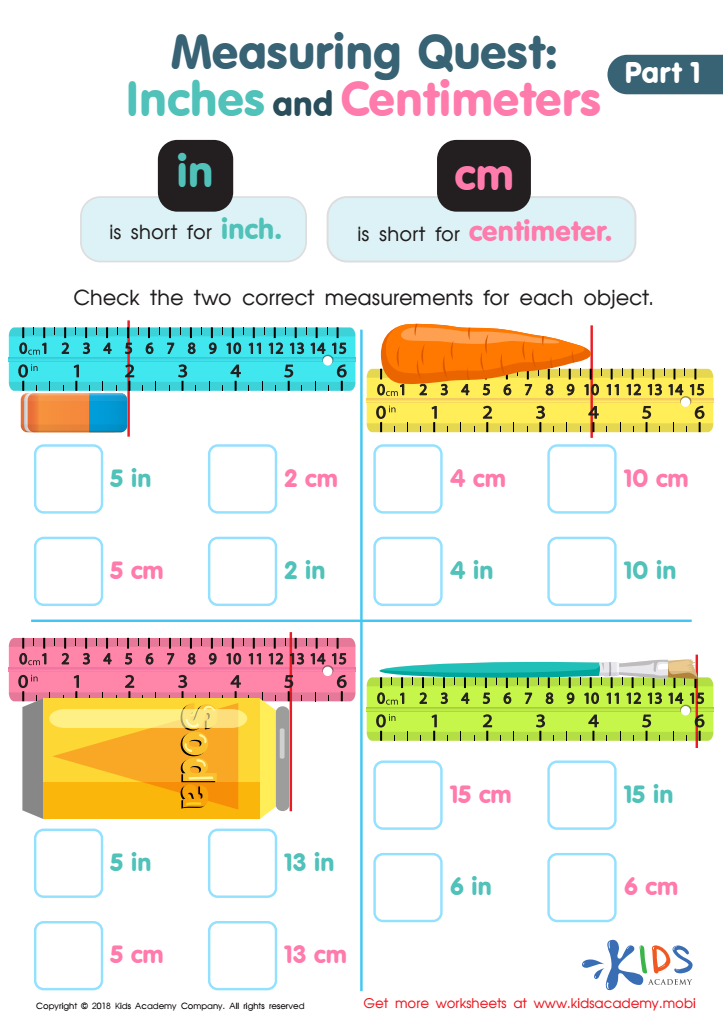
Measuring Quest: Inches and Centimeters Worksheet
 Assign to My Students
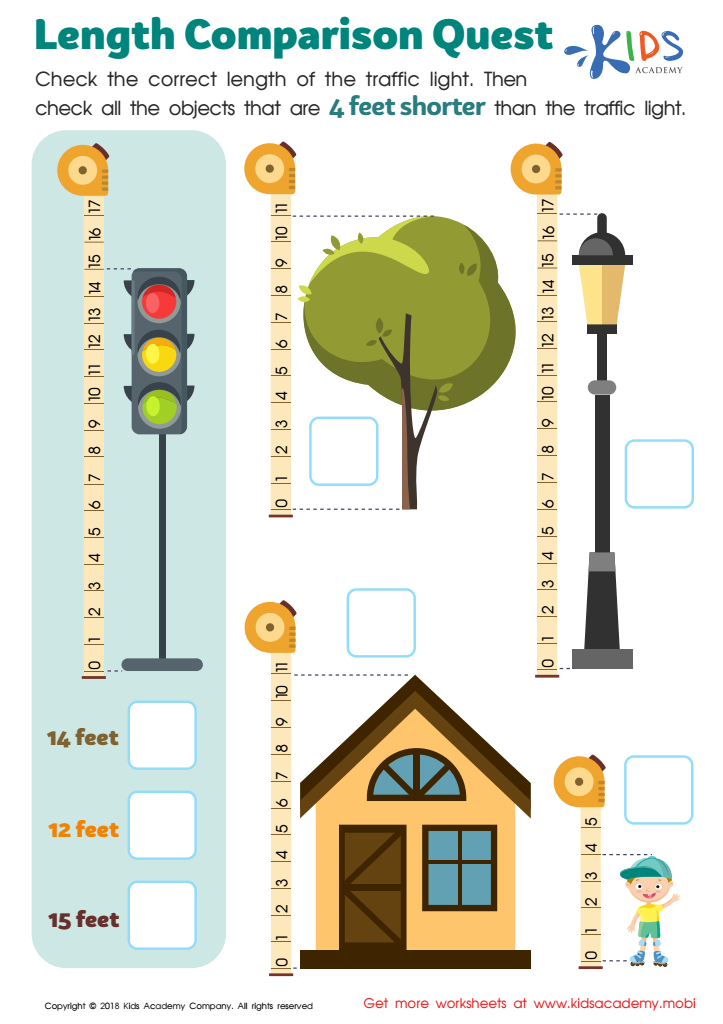
Length Comparison Quest Worksheet
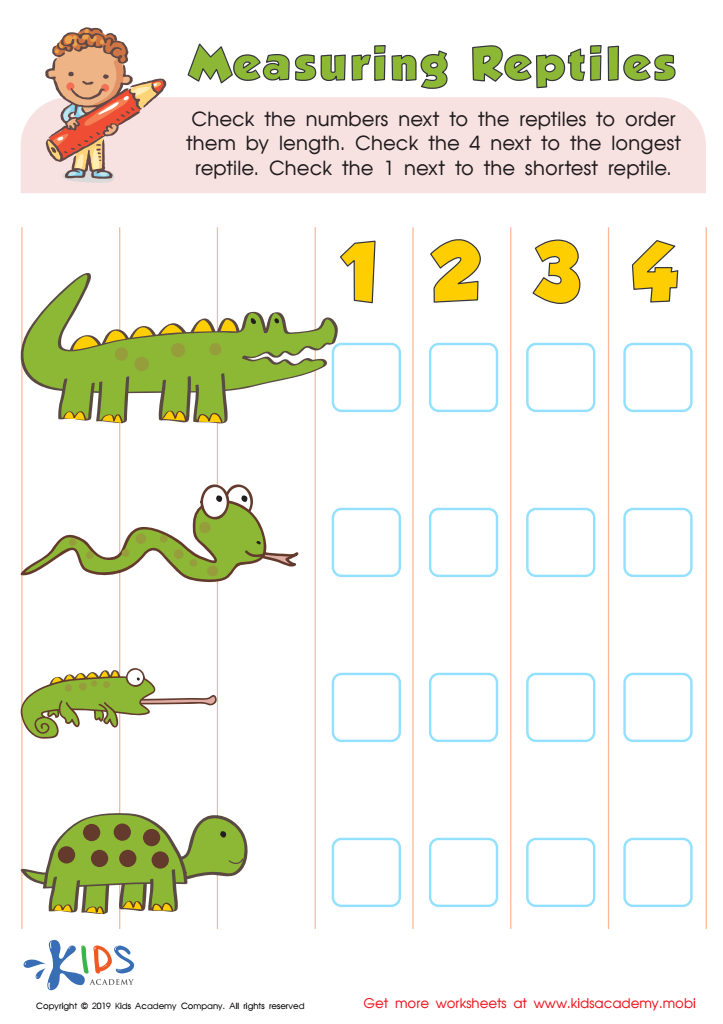
Measuring Reptiles Worksheet
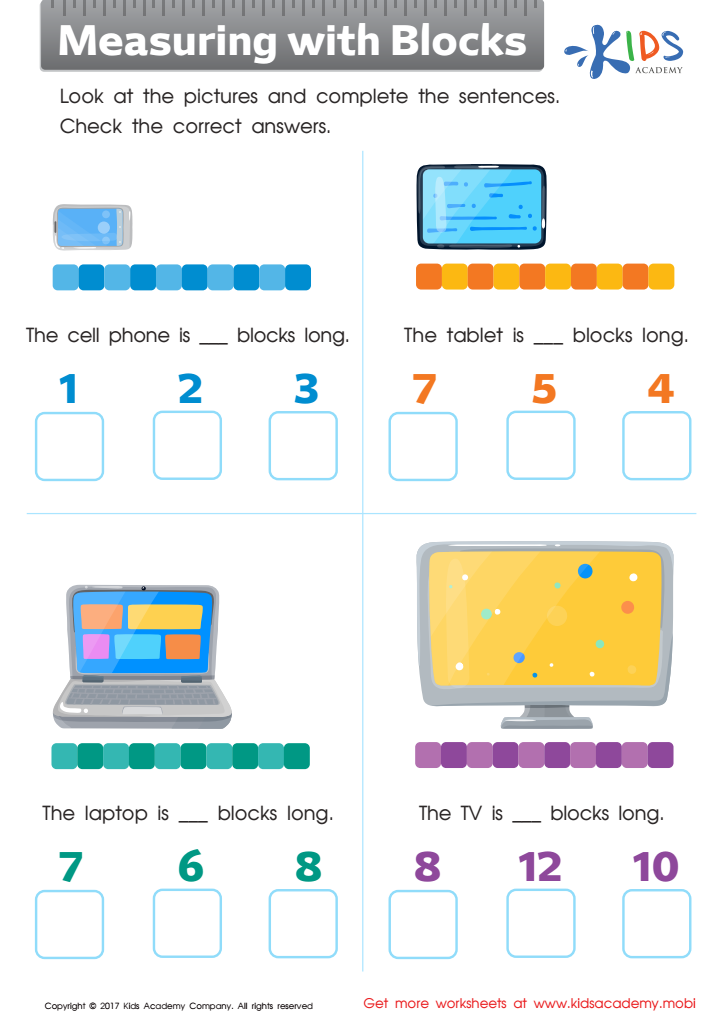
Measuring with Blocks Worksheet
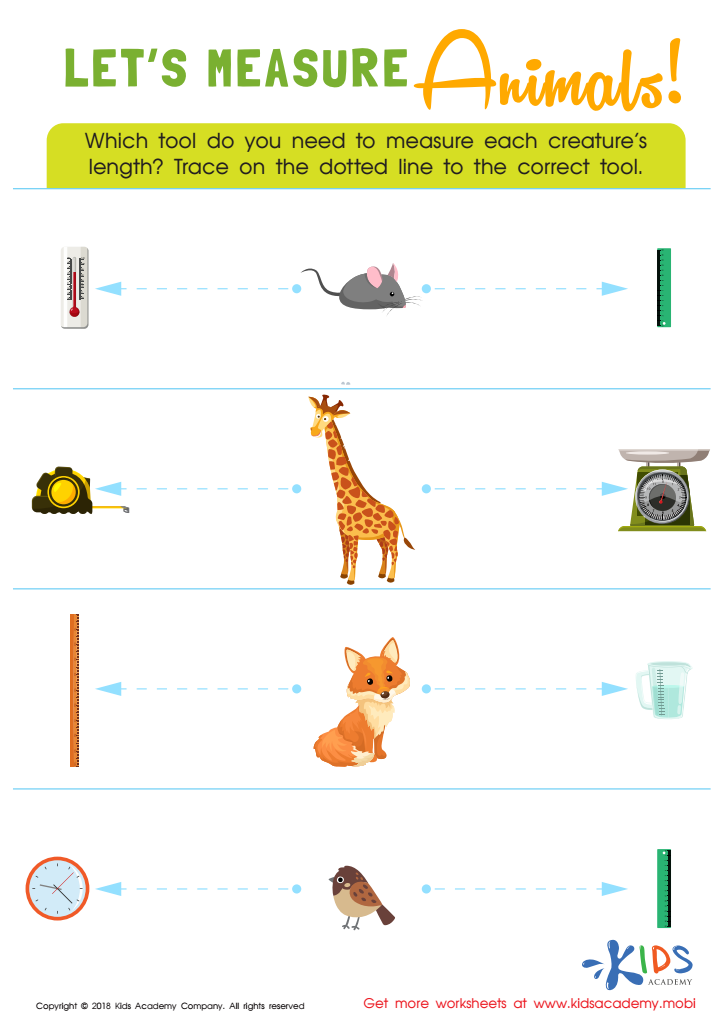
Let's Measure Animals! Worksheet








Teaching 7-year-olds to compare lengths using easy measurement concepts is crucial for several reasons. First, it fosters foundational math skills, helping children understand sizes, distances, and the idea of measurement, which are essential for later mathematical learning. By engaging with comparisons, children develop their critical thinking and problem-solving skills, as they learn to visualize and relate different lengths to one another.
Moreover, measurement activities are often hands-on and can be made enjoyable through games and practical applications. Practicing comparison in real-life scenarios—like measuring the height of plants, comparing the lengths of different objects, or even discussing heights of family members—makes learning more relatable and engaging. This encourages a love for learning and helps them grasp mathematical concepts intuitively.
Additionally, learning measurement fosters spatial awareness, which is vital not only for mathematics but also for various real-world situations, such as cooking, construction, or even art. By incorporating comparative lengths into daily learning, teachers and parents can promote cooperation, communication, and teamwork when children work together on projects. Ultimately, understanding measurement prepares children for more sophisticated math concepts they will encounter later, ensuring a solid educational foundation.








