Understanding times tables Easy Basic Times Tables up to 12 Worksheets for Ages 8-9
3 filtered results
-
From - To
Discover the joy of mastering math with our "Understanding Times Tables" worksheets, specifically designed for ages 8-9. These printable materials simplify basic times tables up to 12, making learning both fun and effective. Each worksheet offers engaging exercises and colorful illustrations to help young learners easily grasp multiplication concepts. Our expertly crafted resources not only enhance math skills but also boost confidence. Perfect for both classroom use and home practice, these worksheets provide comprehensive support, ensuring your child becomes proficient in times tables effortlessly. Download and start the journey toward mathematical success with Kids Academy today!
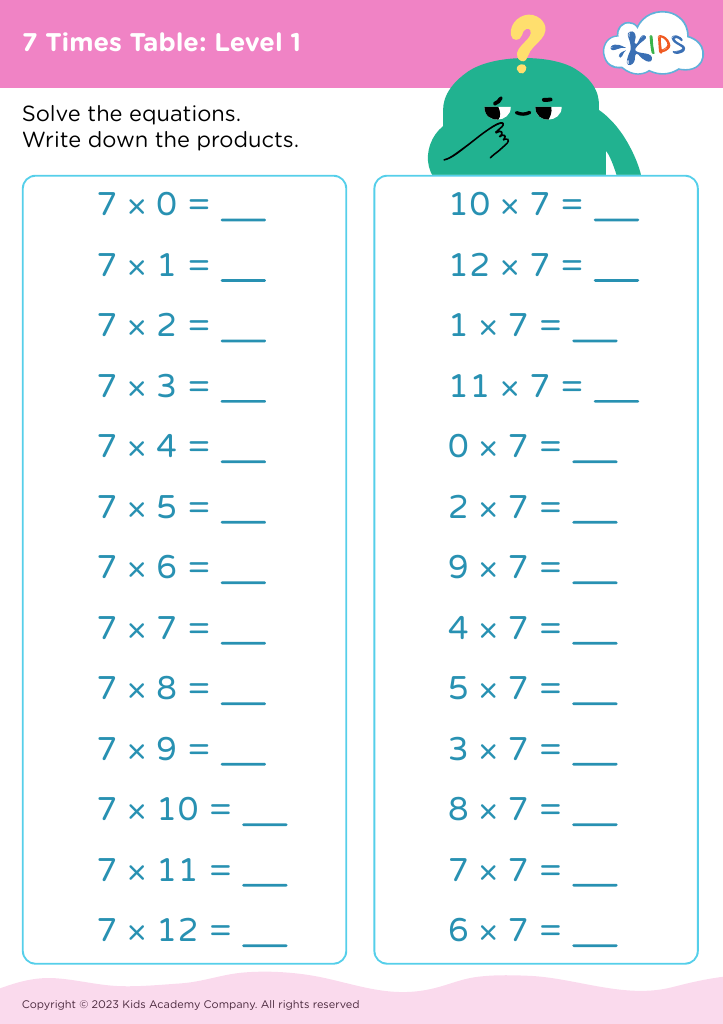
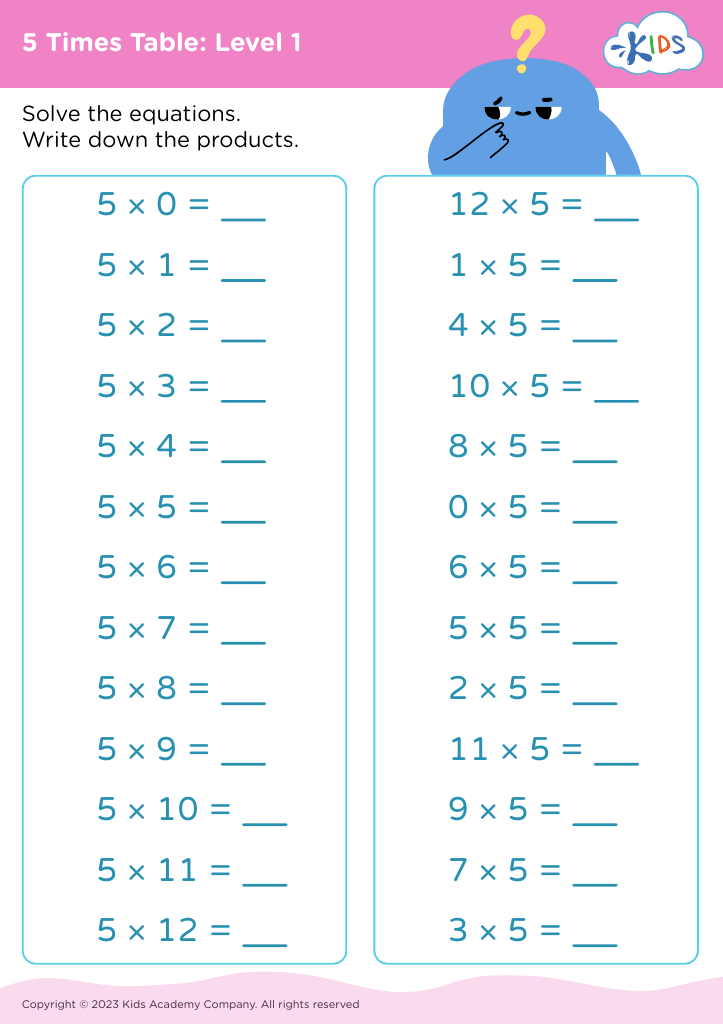
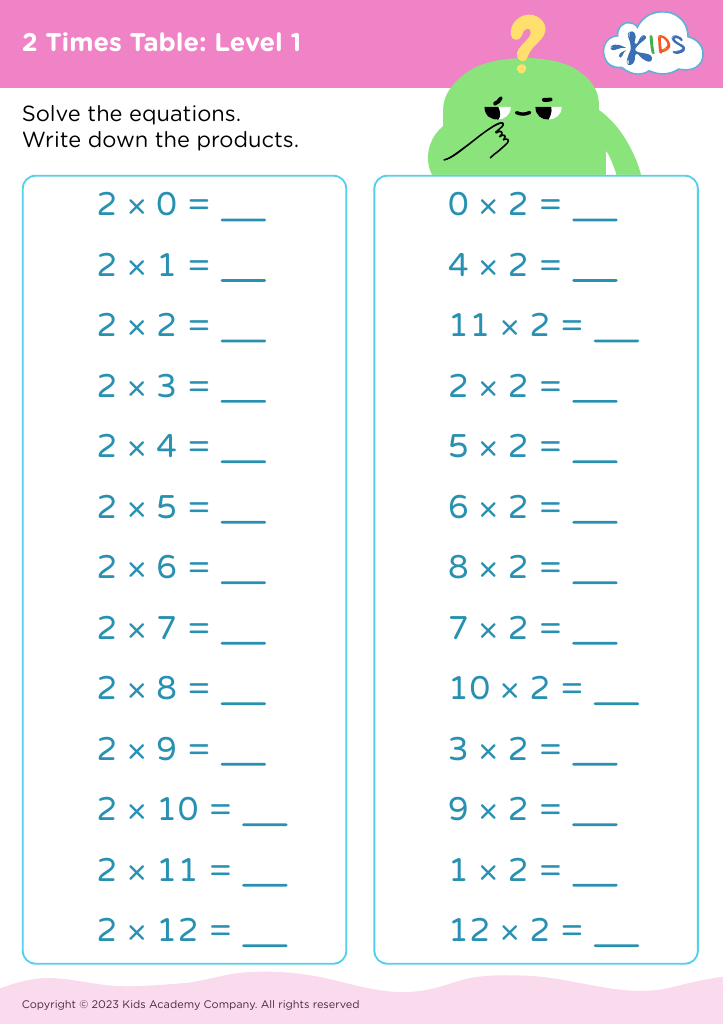


Understanding basic times tables up to 12 is essential for children aged 8-9 because it constitutes the foundation of arithmetic, which is vital for their future academic success. Mastering these early math skills enhances a child's ability to perform more complex mathematical operations, such as division, fractions, and algebra. For parents and teachers, ensuring proficiency in times tables can significantly alleviate the frustration and anxiety children might encounter during more advanced math lessons.
Seeing times tables as building blocks makes learning easier and more memorable—much like learning the alphabet before reading. When children effortlessly recall multiplication facts, they boost their confidence, enabling them to tackle new challenges with greater self-assurance. Additionally, times tables are practical life skills used in various daily activities, including budgeting allowance, cooking, and even playing certain games.
For educators, structured times table practice promotes cognitive development and encourages pattern recognition, problem-solving, and logical thinking. Parents can engage their children through interactive, playful, and positive reinforcement at home, cultivating a supportive learning environment. Ultimately, a solid grasp of times tables ensures children are well-equipped for their academic journey and everyday life, offering benefits that extend far beyond the classroom.








