Understanding life cycles Easy Reading Worksheets for Ages 8-9
3 filtered results
-
From - To
Explore the fascinating world of life cycles with our Easy Reading Worksheets designed for children aged 8-9! These engaging activities introduce key concepts, such as the various stages of different organisms from plants to animals, in an age-appropriate and fun way. Each worksheet promotes reading comprehension, critical thinking, and interaction, making it ideal for both home and classroom use. Your students will learn to identify and describe life cycles through colorful illustrations, simple texts, and hands-on tasks. Enrich their learning experience with our carefully crafted resources that make science accessible and enjoyable. Perfect for emerging readers and curious minds!
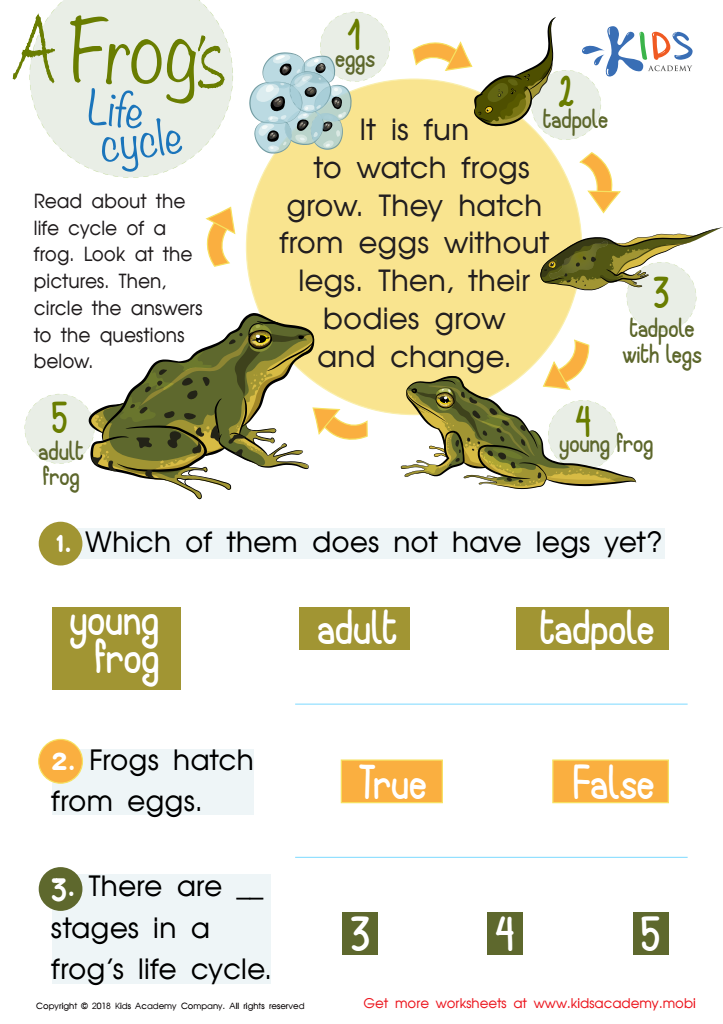
A Frog’s Life Cycle Worksheet
 Assign to My Students
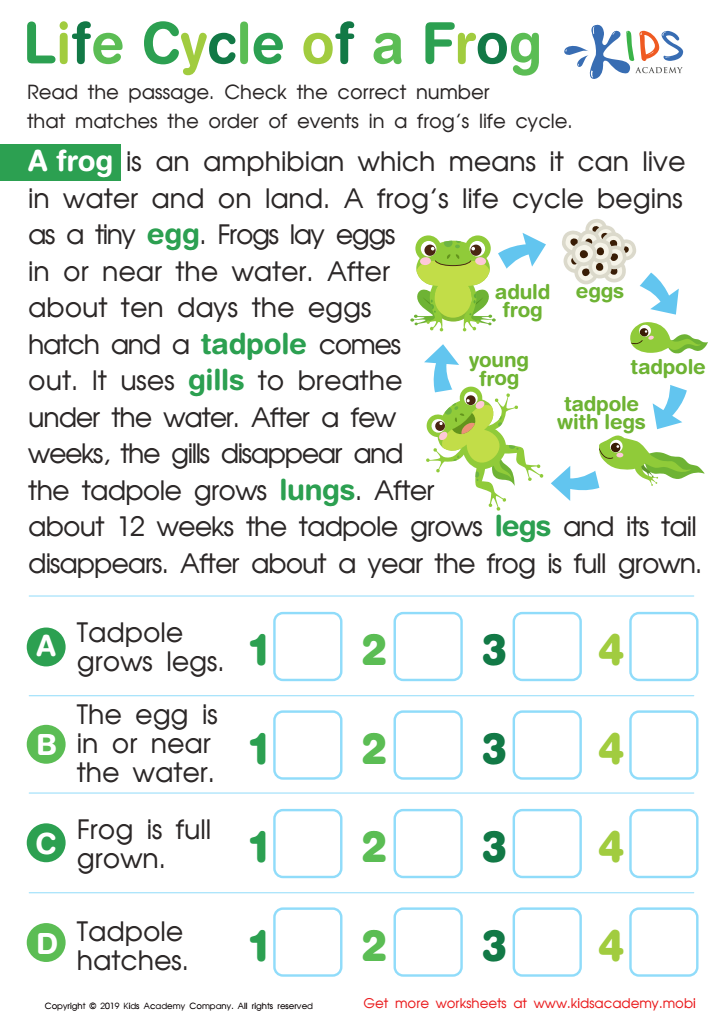
Life Cycle of a Frog Worksheet
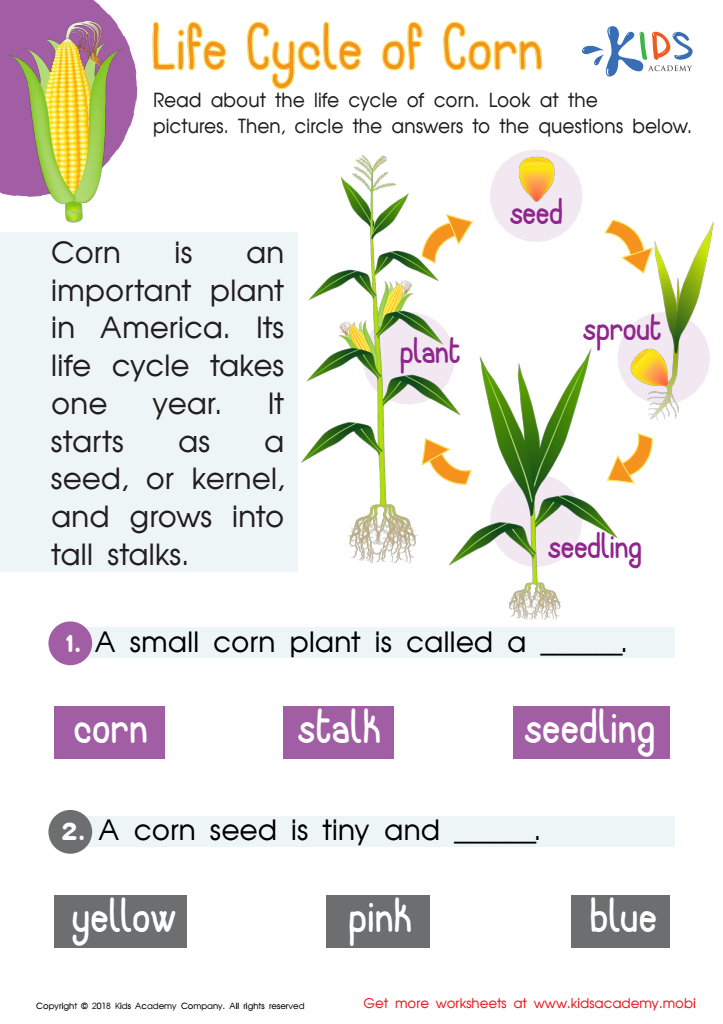
Life Cycle of Corn Worksheet



.jpg)
Understanding life cycles is essential for children aged 8-9 as it lays the foundation for their scientific knowledge and curiosity. Life cycles refer to the stages that living things go through from birth to maturity and eventually to death. By learning about different life cycles—such as that of insects, plants, and mammals—children gain a deeper appreciation for nature and the interconnectedness of all living beings.
Parents and teachers should care about this topic because it helps develop critical thinking and observation skills. Educators can create engaging activities, such as observing butterfly metamorphosis or planting seeds, to make the concept relatable and fun. When kids understand life cycles, they're empowered to ask questions, explore ecosystems, and appreciate biodiversity.
Moreover, learning about life cycles promotes empathy and responsibility towards the environment. Children become more aware of how their choices impact the world, fostering a sense of stewardship for nature. In addition, understanding these concepts aligns with key educational standards, ensuring that children are well-prepared for future learning in science and beyond. Ultimately, teaching life cycles enriches a child's education and helps them become informed, compassionate individuals.