Understanding life cycles Easy Reading Non-Fiction Worksheets for Ages 8-9
3 filtered results
-
From - To
Discover engaging and educational non-fiction worksheets with "Understanding Life Cycles." Perfect for children ages 8-9, these high-quality learning resources provide an easy introduction to the fascinating stages of life in plants, animals, and insects. Each worksheet is designed to boost reading comprehension and science understanding while making learning fun and interactive. With clear explanations and beautiful illustrations, kids will explore life cycles in a way that’s both informative and enjoyable. Ideal for classroom use or at-home learning, these worksheets make complex concepts accessible for young learners, helping them grasp the wondrous processes of life.
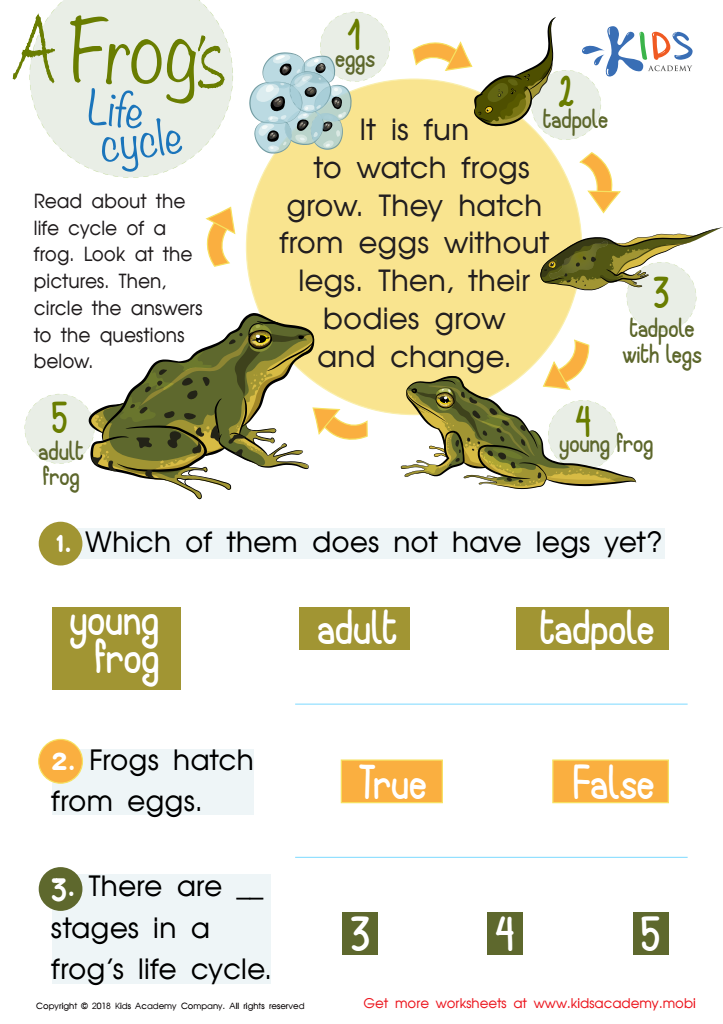
A Frog’s Life Cycle Worksheet
 Assign to My Students
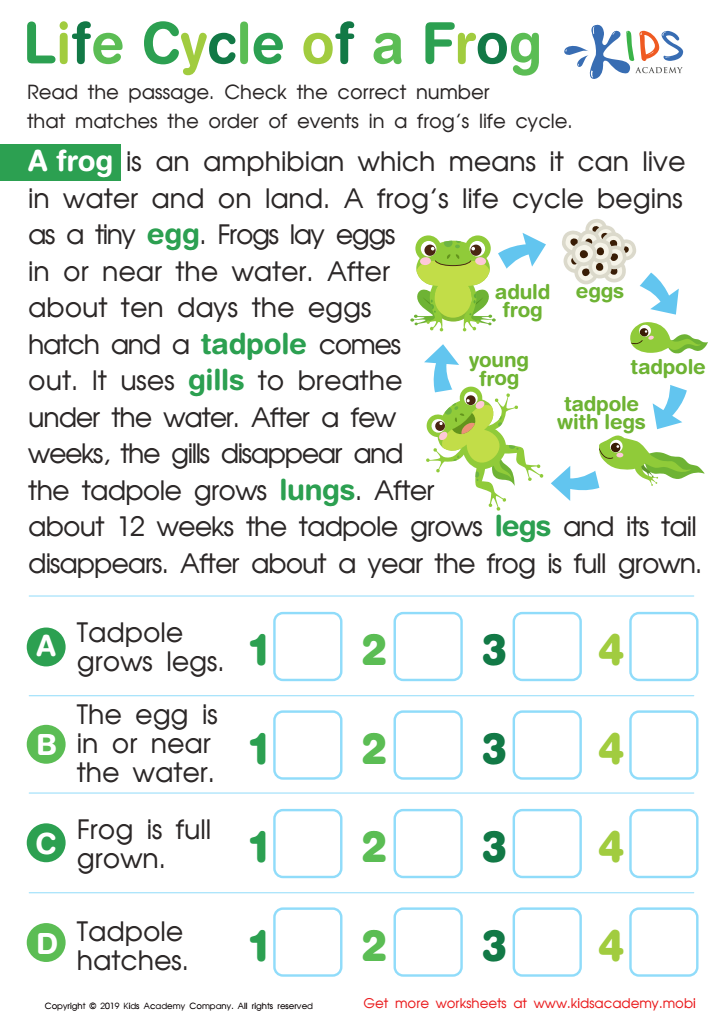
Life Cycle of a Frog Worksheet
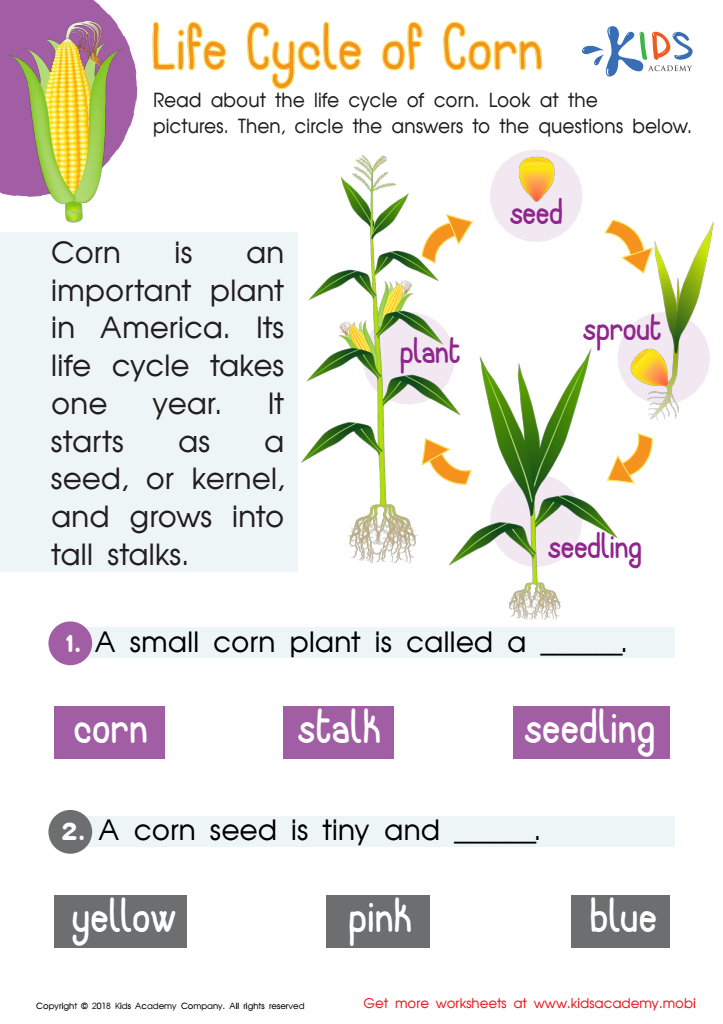
Life Cycle of Corn Worksheet








Understanding life cycles is essential for children aged 8-9 as it nourishes their curiosity about the world and helps them make sense of natural processes. When parents and teachers incorporate easy-reading non-fiction books on this topic, they provide young readers with accessible and engaging explanations that promote scientific literacy. This foundational knowledge supports later learning in science, biology, and environmental studies.
Life cycles demonstrate fundamental biological concepts such as growth, development, and reproduction, helping kids understand how living things, including humans, change and grow. Engaging with this topic enhances cognitive skills by encouraging observation, inquiry, and critical thinking. It also fosters emotional growth by helping children develop empathy and respect for living things.
Moreover, learning about various life cycles, from frogs and butterflies to plants and humans, can inspire a lifelong love of nature and conservation. Children learn early on the importance of preserving the ecosystems that support life cycles, promoting environmental awareness and responsibility.
By prioritizing easy-reading non-fiction books, parents and teachers can ensure that children grasp these complex ideas in a way that's both enjoyable and suitable for their reading level, making learning a positive and impactful experience.







