Understanding life cycles Easy Science Worksheets for Ages 8-9
3 filtered results
-
From - To
Explore the fascinating world of life cycles with our engaging Easy Science Worksheets designed for ages 8-9! This curated collection offers students hands-on activities and interactive exercises that simplify the concepts of life cycles in nature. Kids will have the opportunity to learn about the stages of development in various organisms, including plants and animals. Our worksheets promote critical thinking and observation skills, making science fun and accessible. Perfect for classrooms or homeschooling, these resources help reinforce understanding through illustrations and real-world examples. Dive into the amazing processes of growth and transformation, ensuring a foundational knowledge of biology. Start exploring today!
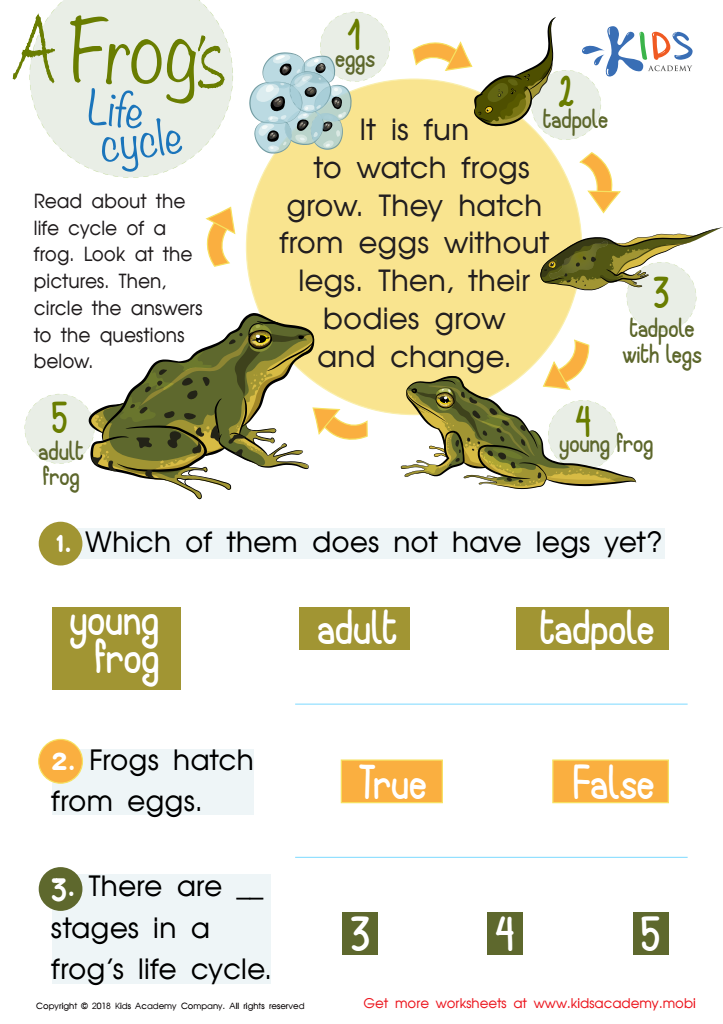
A Frog’s Life Cycle Worksheet
 Assign to My Students
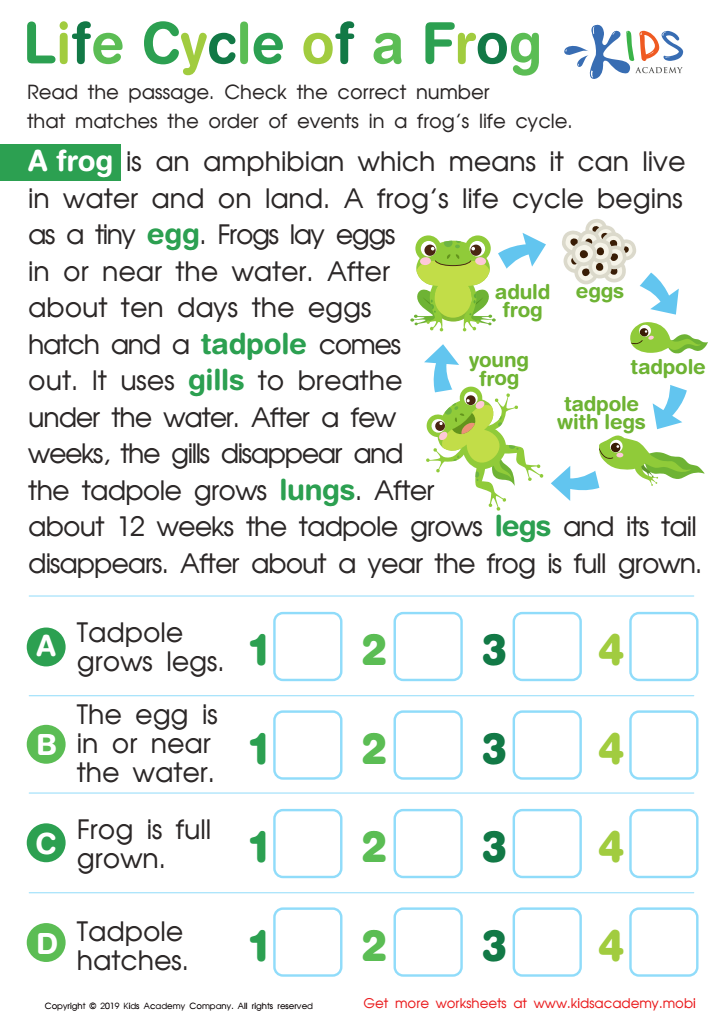
Life Cycle of a Frog Worksheet
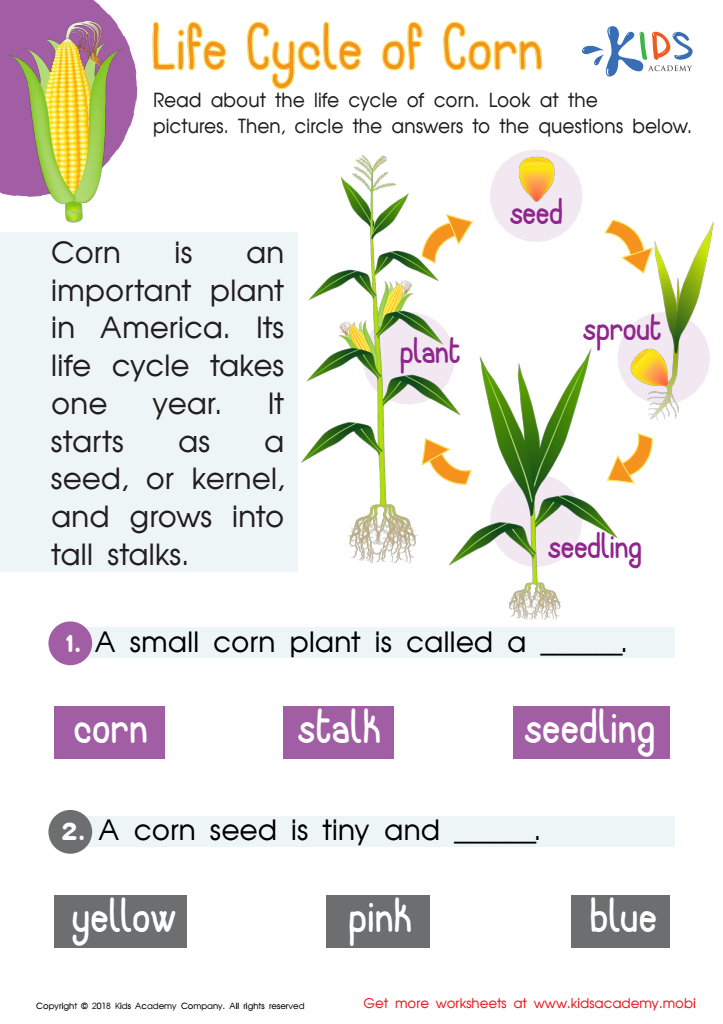
Life Cycle of Corn Worksheet





.jpg)


Understanding life cycles is crucial for young learners, especially those aged 8-9, as it lays the foundation for their comprehension of biology and ecology. At this age, children are naturally curious about the world around them, and introducing them to the concept of life cycles allows them to explore how living organisms grow, reproduce, and evolve. This knowledge fosters an appreciation for nature and encourages students to observe and care for their environment.
For parents and teachers, promoting an understanding of life cycles can enhance children's critical thinking and inquiry skills. Through hands-on activities such as observing caterpillars turning into butterflies or planting seeds and watching them grow, students develop patience and a sense of responsibility. Additionally, learning about life cycles supports cross-curricular connections, integrating science with math, art, and literacy.
Moreover, discussing life cycles can lead to important conversations about sustainability and the impact of human activity on ecosystems, empowering children to become conscious stewards of the planet. Ultimately, enabling kids to understand life cycles equips them with knowledge that is essential not only for their academic growth but also for their development as informed, caring individuals within their communities.