Data interpretation Easy Math Worksheets for 8-Year-Olds
8 filtered results
-
From - To
Unlock the world of data interpretation for 8-year-olds with our engaging and straightforward math worksheets. Designed to boost analytical skills, these worksheets help young learners grasp essential concepts through fun activities and age-appropriate challenges. Our carefully crafted exercises ensure a supportive and enjoyable learning experience, enhancing their ability to interpret graphs, charts, and tables. Ideal for classrooms and at-home practice, these worksheets support skill-building in a fundamental area of math. Visit our page to download and transform your child’s data interpretation abilities effortlessly. Empower your young mathematician today with the tools they need for success!
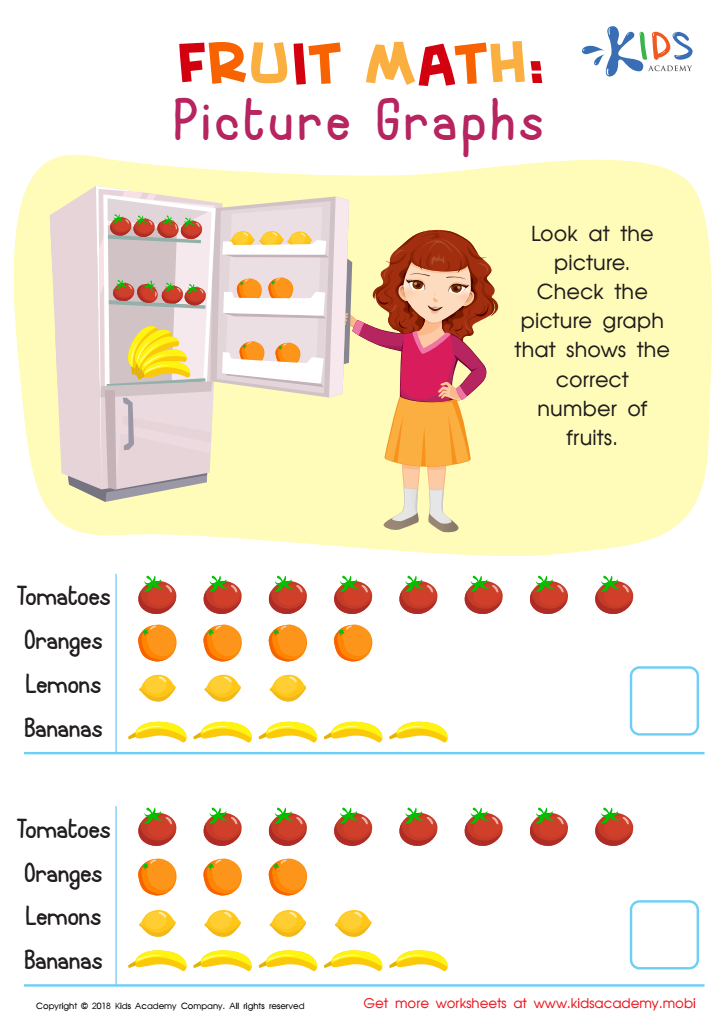
Fruit Math: Picture Graphs Worksheet
 Assign to My Students
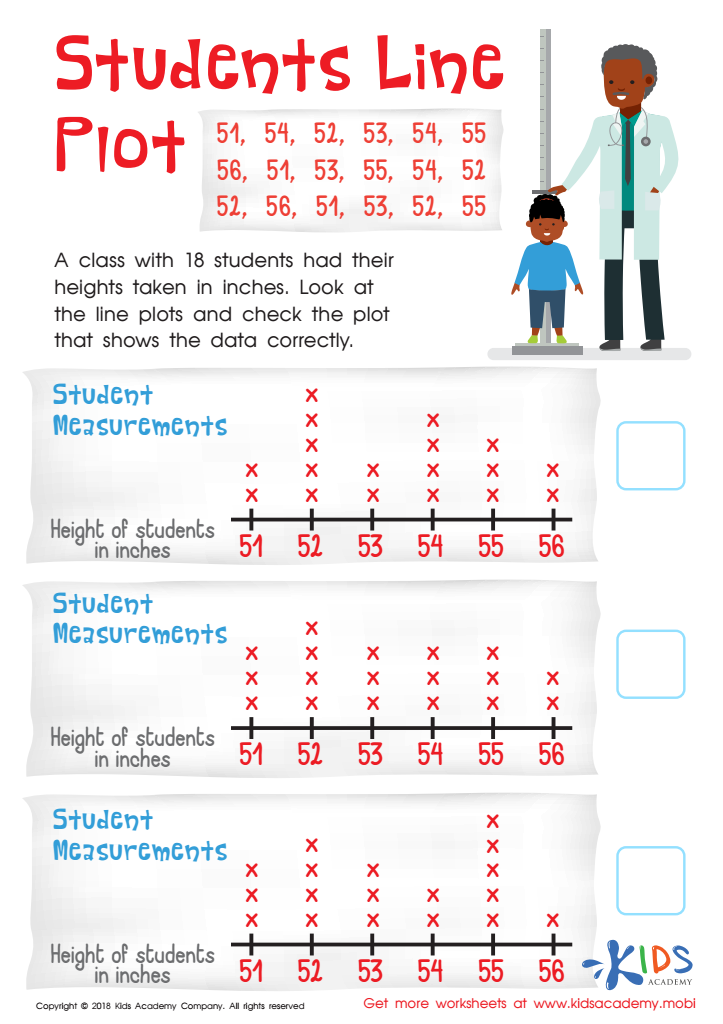
Students Line Plot Worksheet
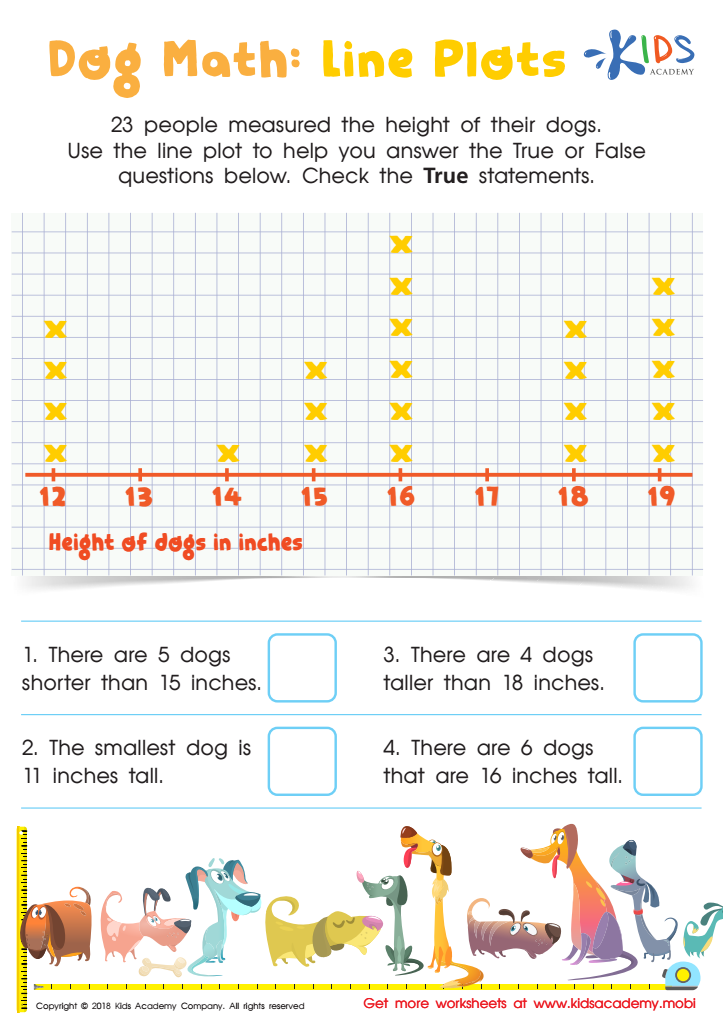
Dog Math: Line Plots Worksheet
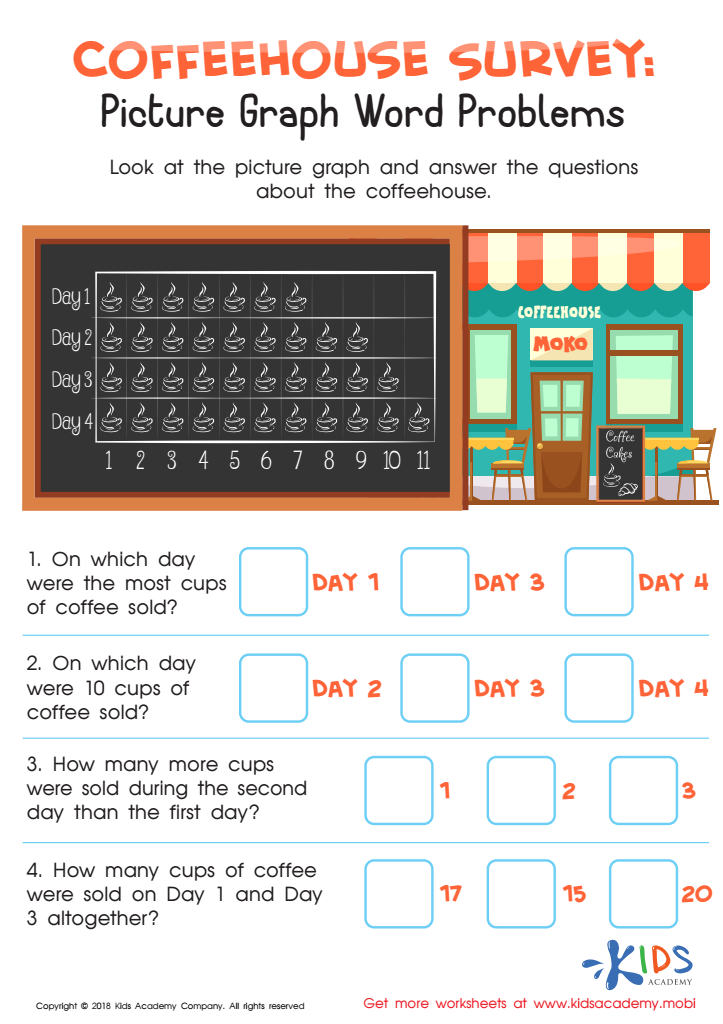
Coffeehouse Survey: Picture Graph Word Problems Worksheet

Aircraft Carrier Picture Graphs Worksheet
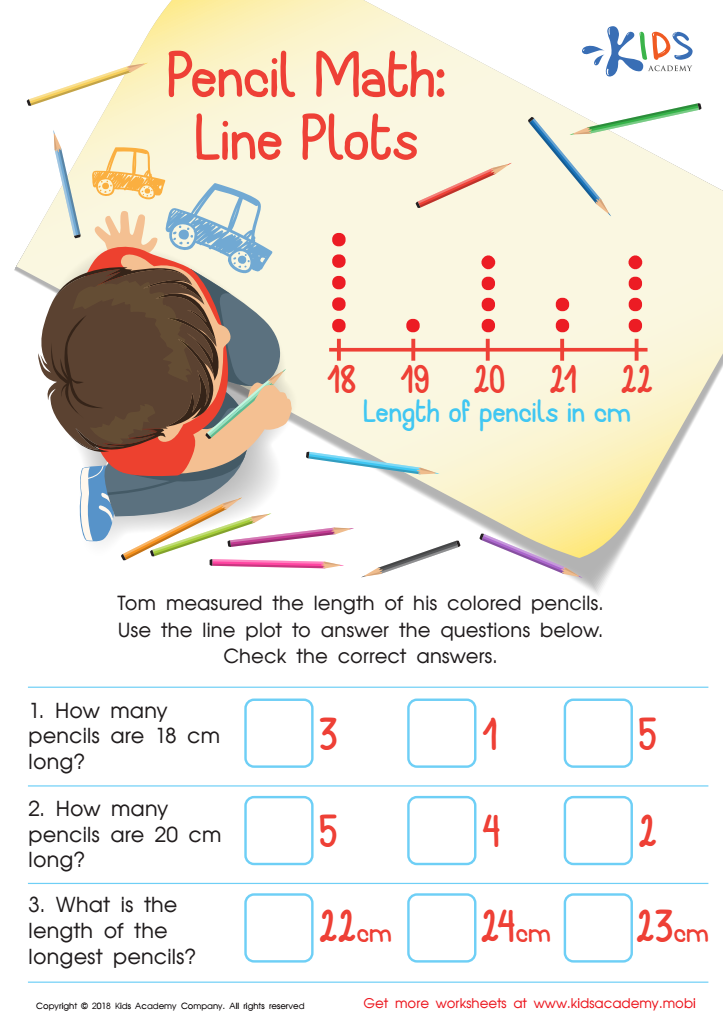
Pencil Math: Line Plots Worksheet
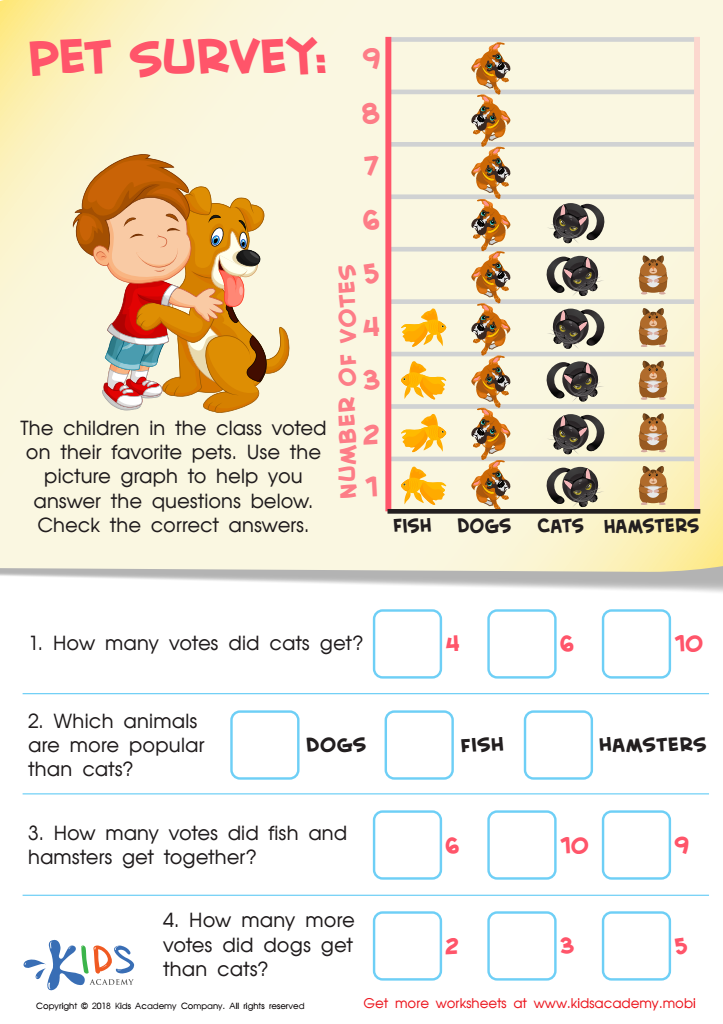
Pet Survey Worksheet
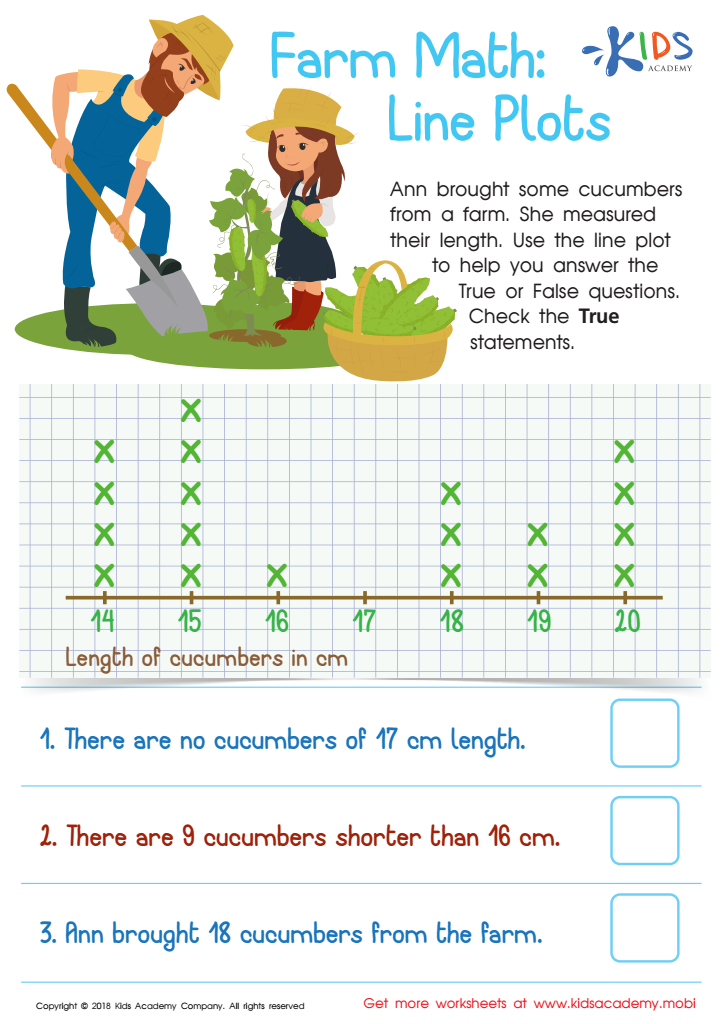
Farm Math: Line Plots Worksheet








Data interpretation is a crucial skill for young learners, particularly for 8-year-olds who are at a formative stage in their cognitive and academic development. By understanding and interpreting data, children not only enhance their mathematical abilities but also develop critical thinking and analytical skills. This is central to problem-solving and decision-making, skills foundational for lifelong learning. When 8-year-olds interpret data, they learn how to read charts, graphs, and tables, translating numerical data into understandable information. This skill is applicable in daily life, helping them make sense of the world around them.
For parents and teachers, emphasizing data interpretation at an early age sets children up for future academic success. Many careers increasingly rely on data literacy, and introducing these concepts early plays a critical role in bridging the gap between foundational math and these more advanced competencies. Additionally, engaging activities for 8-year-olds revolving around easy math and data interpretation can make learning enjoyable and less intimidating, establishing a positive relationship with numbers.
Moreover, early exposure to various forms of data representation fosters a better understanding of subjects like science and social studies, where data interpretation plays a significant role. Data literacy nurtures inquisitive minds, making young learners adept at questioning, hypothesizing, and drawing evidence-based conclusions, resulting in a well-rounded and holistic educational experience.








