Comparing lengths Easy Measurement Worksheets for 8-Year-Olds
3 filtered results
-
From - To
"Comparing Lengths Easy Measurement Worksheets for 8-Year-Olds" are designed to make learning fun and effective. These engaging worksheets help children develop essential measurement skills by comparing the lengths of various objects. Featuring vibrant illustrations and simple instructions, each activity fosters critical thinking and problem-solving. Perfect for classroom or at-home practice, these worksheets align with educational standards, ensuring your child grasps fundamental concepts of measurement. Boost your 8-year-old's confidence and competence in math with our delightful range of worksheets, making learning an enjoyable experience. Download now for a fun and interactive way to learn measurement basics!
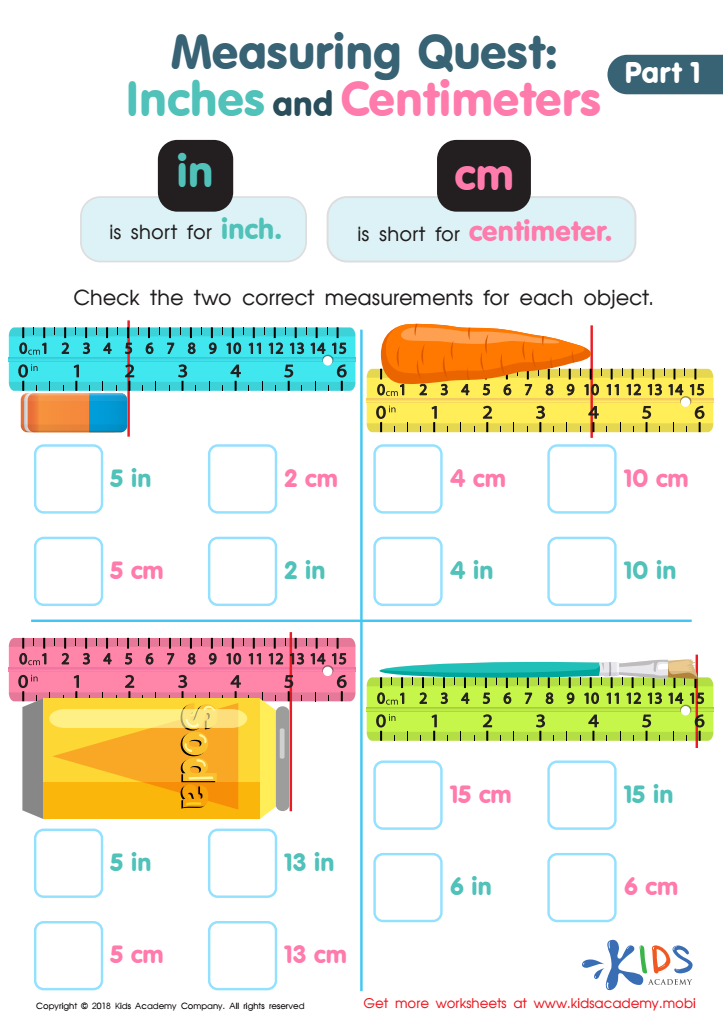
Measuring Quest: Inches and Centimeters Worksheet
 Assign to My Students
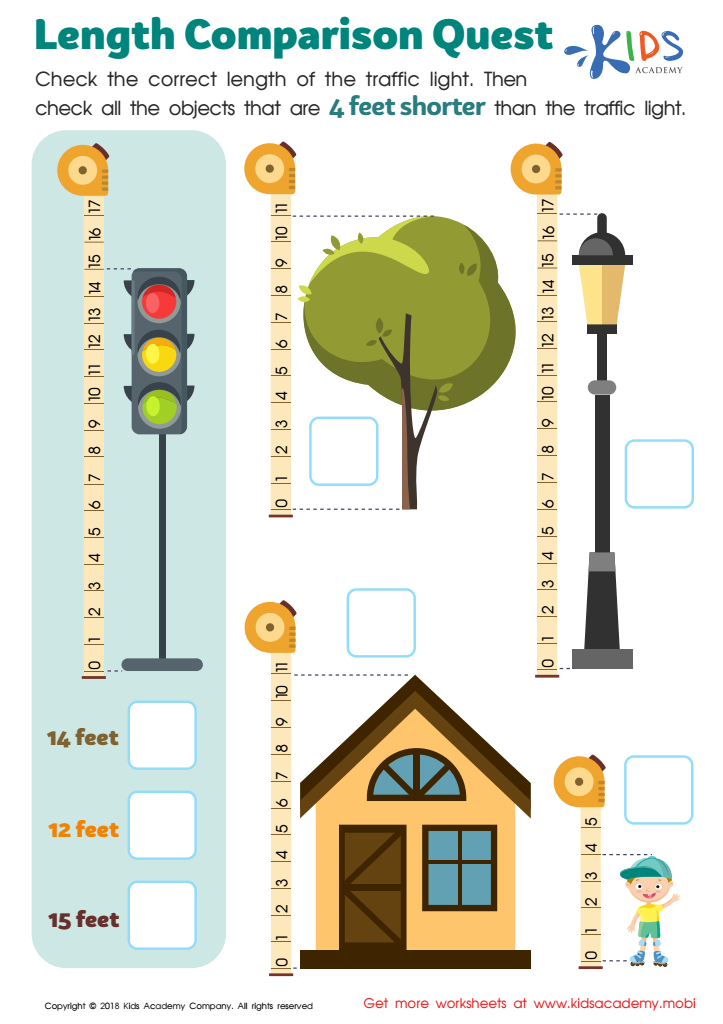
Length Comparison Quest Worksheet
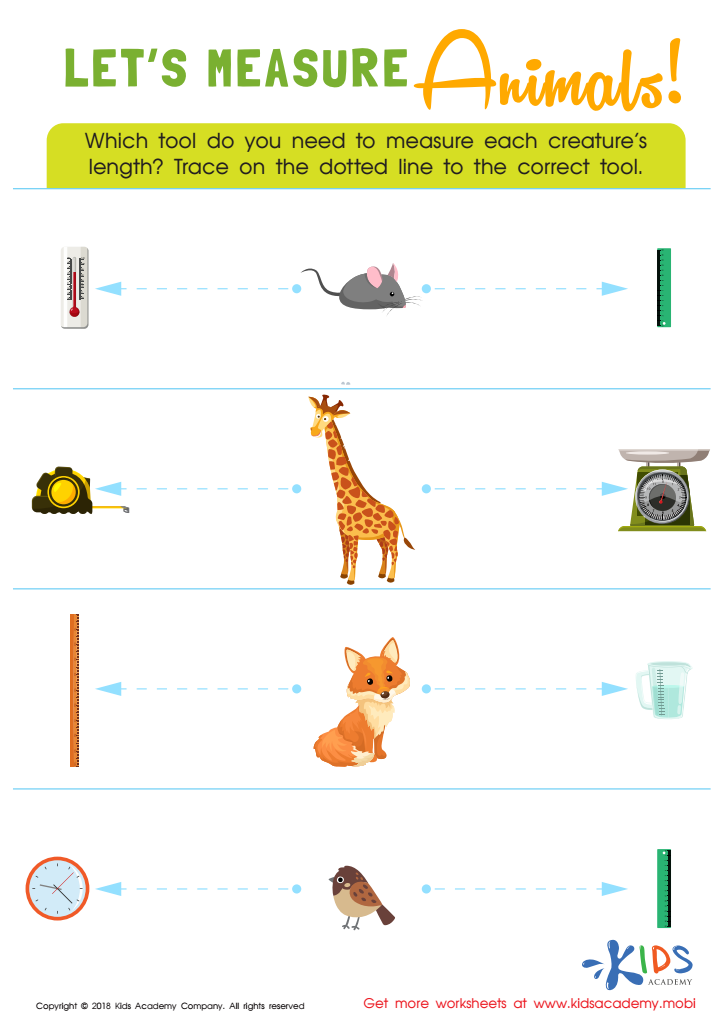
Let's Measure Animals! Worksheet








Comparing lengths and understanding basic measurement concepts are fundamental skills for 8-year-olds that serve as a foundation for more advanced math and science topics. For parents and teachers, emphasizing these principles is crucial for several reasons.
Firstly, developing measurement skills enhances a child's spatial awareness and analytical thinking. When children learn to measure and compare lengths, they are practicing critical thinking and problem-solving skills, which are applicable in various real-life situations. This is essential for daily activities, such as cooking or crafting, where accurate measurements are necessary.
Secondly, measurements are a key component of the mathematics curriculum. Early exposure to measuring concepts lays the groundwork for understanding more complex topics like geometry, algebra, and data analysis later in their education. It provides a hands-on, engaging way to introduce mathematical principles, making the learning process enjoyable and tangible.
Furthermore, measurement activities enhance motor skills and coordination. Using rulers, tapes, or other measurement tools helps students develop fine motor skills, which are important for writing and everyday tasks.
In summary, teaching children about comparing lengths and measurements fosters critical thinking, strengthens mathematical foundations, and aids in practical skill development, making it a crucial aspect of early education. Encouraging curiosity and competence in these areas will benefit their overall academic growth and everyday life skills.








