Understanding life cycles Easy Reading Worksheets for 8-Year-Olds
3 filtered results
Difficulty Level
Grade
Age
-
From - To
Subject
Activity
Standards
Explore our "Understanding Life Cycles" easy reading worksheets, specially designed for 8-year-olds! These engaging activities help young learners delve into the fascinating world of life cycles, from plants to animals. Each worksheet features age-appropriate texts that promote comprehension and critical thinking, complemented by colorful illustrations that enhance understanding. Students will enjoy interactive tasks that promote learning while developing their reading skills. Ideal for classroom or homeschooling, our resources aim to make learning about life cycles both fun and educational. Dive into this exciting subject and inspire curiosity about nature's processes with our comprehensive worksheets! Perfect for budding scientists and eager readers!
Favorites
With answer key
Interactive
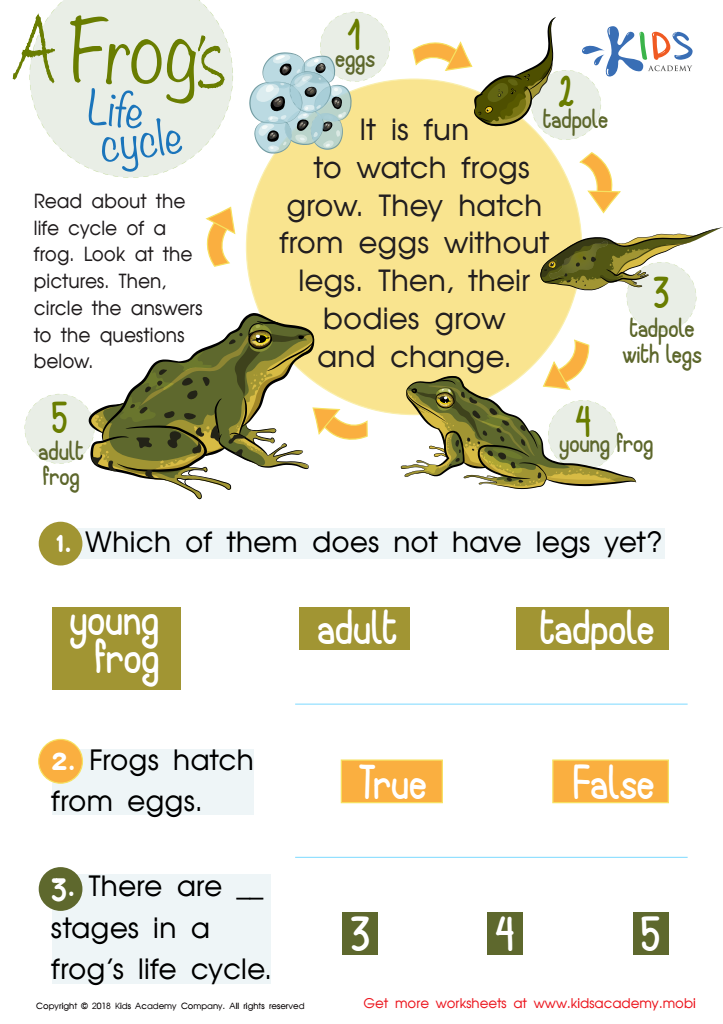
A Frog’s Life Cycle Worksheet
Encourage your kids to learn about frogs! Ask them to tell you some features, then read and discuss the text that explains the frog's life cycle. Show them the pictures to help them visualize it. Finish by helping them answer the questions at the bottom of the worksheet.
 Assign to My Students
A Frog’s Life Cycle Worksheet
Worksheet
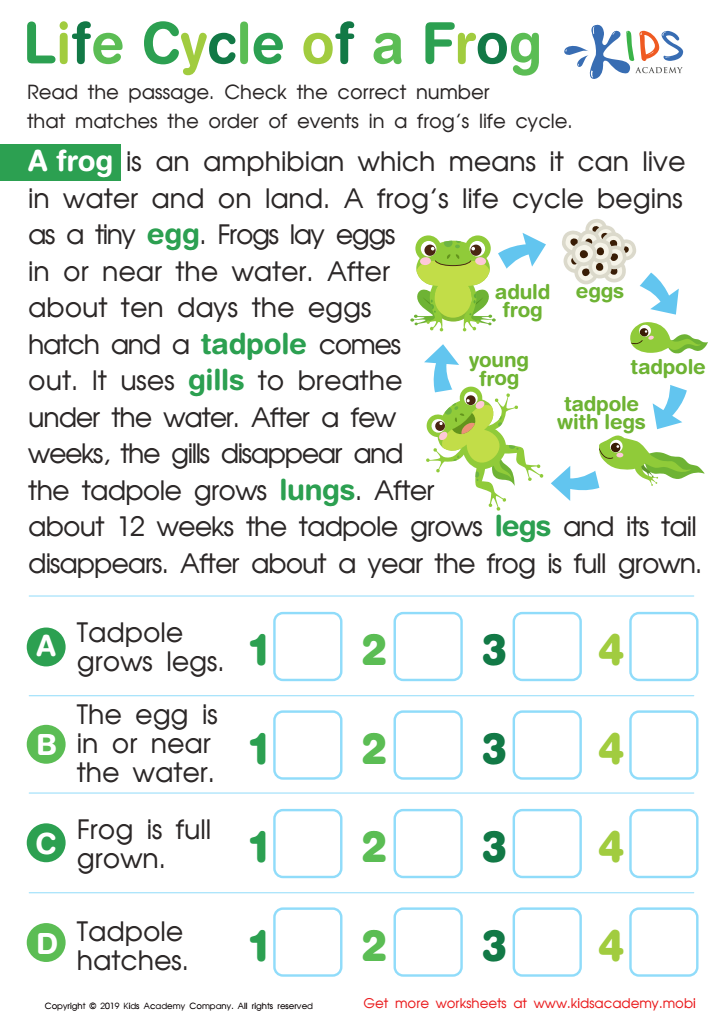
Life Cycle of a Frog Worksheet
Teach your kids to read and open their eyes to new knowledge. Frogs have fascinating life cycles. Show them the worksheet with pictures and guide them as they read the passage about it. Encourage them to check the number that matches the frog's life cycle order.
Life Cycle of a Frog Worksheet
Worksheet
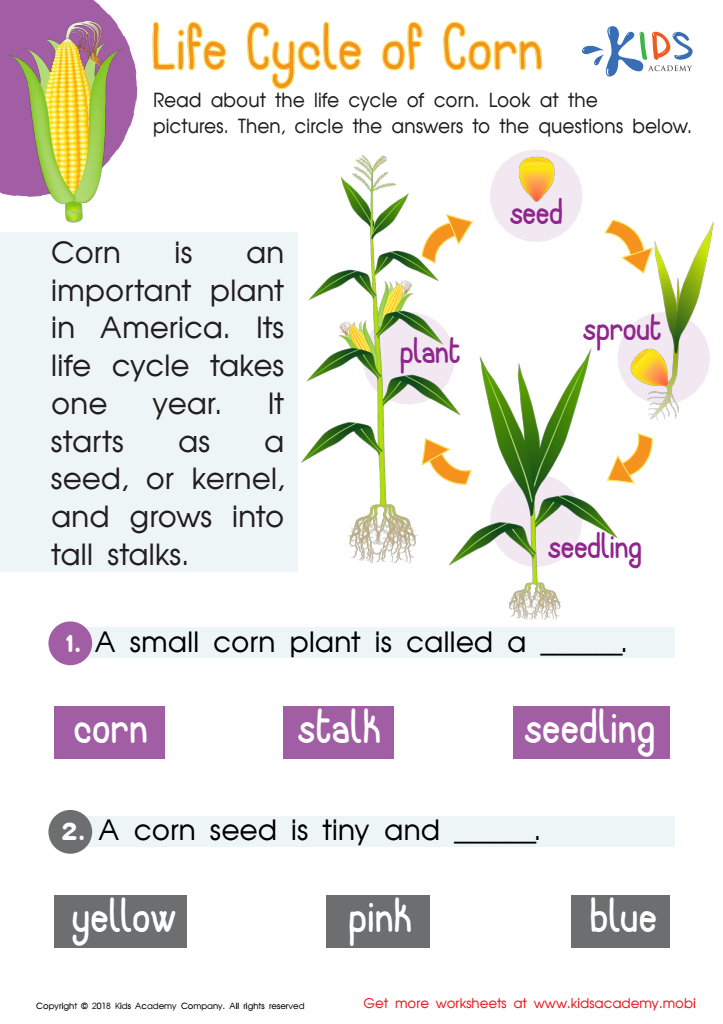
Life Cycle of Corn Worksheet
Help your kids learn about corn! Ask them what foods it's used to make. Read this worksheet and look at the pictures to learn the life cycle of corn. Then, have them circle the answers to the questions at the bottom. Corn is an important crop for farmers, used to make many foods we eat today.
Life Cycle of Corn Worksheet
Worksheet
Join Kids Academy for Free
Who is primarily going to use this learning content?







Understanding life cycles is important for both parents and teachers because it helps children learn about how living things grow and change over time. When kids understand life cycles—from the tiniest egg to a full-grown animal or plant—they develop a deeper respect for nature. This knowledge encourages curiosity and wonder about the world around them.
For example, when children learn how butterflies change from caterpillars into beautiful butterflies, they see real-life magic in growth and transformation. This can inspire creativity and a love for science. Additionally, understanding life cycles helps kids learn about responsibility. For instance, taking care of a living thing, like a plant or a pet, shows them the importance of nurturing life and being accountable for their actions.
Parents and teachers can use fun activities like gardening or observing insects to make learning exciting. Engaging in discussions about what kids observe helps them practice thinking and problem-solving skills. Ultimately, encouraging an understanding of life cycles helps children become more compassionate and respectful individuals. It also lays a foundation for scientific knowledge that will benefit them in school and beyond, making it a crucial part of their early education.