Understanding life cycles Easy Science Worksheets for 8-Year-Olds
3 filtered results
-
From - To
Explore the fascinating world of life cycles with our "Understanding Life Cycles" easy science worksheets designed specifically for 8-year-olds! These engaging resources introduce young learners to the different stages of various life cycles, from butterflies and frogs to plants and animals. Each worksheet is crafted to enhance their observational skills, critical thinking, and comprehension of biological processes. Featuring vibrant illustrations and interactive activities, these worksheets make learning science fun and easy. Perfect for classroom use or homeschooling, our materials help kids grasp essential concepts while fostering a lifelong love for science. Start your journey into the wonders of life cycles today!
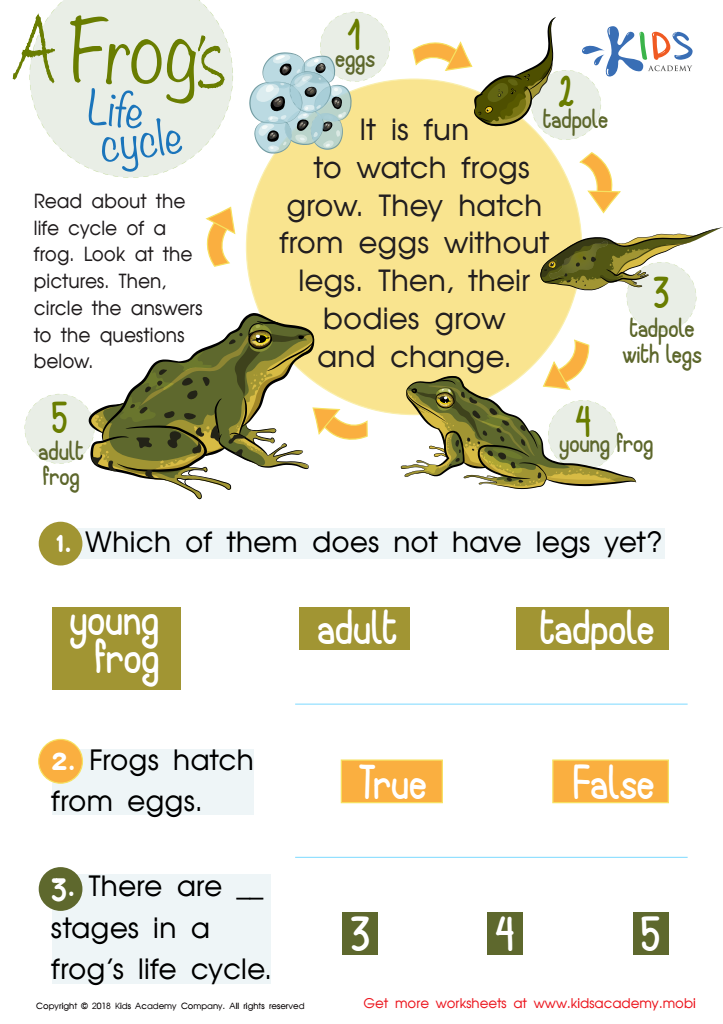
A Frog’s Life Cycle Worksheet
 Assign to My Students
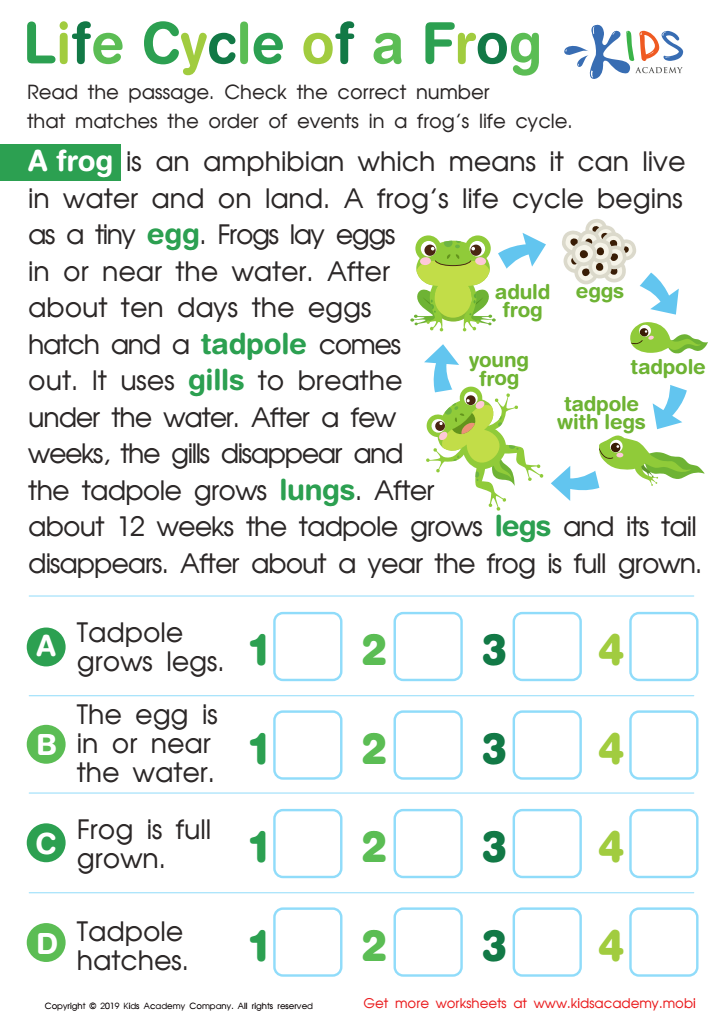
Life Cycle of a Frog Worksheet
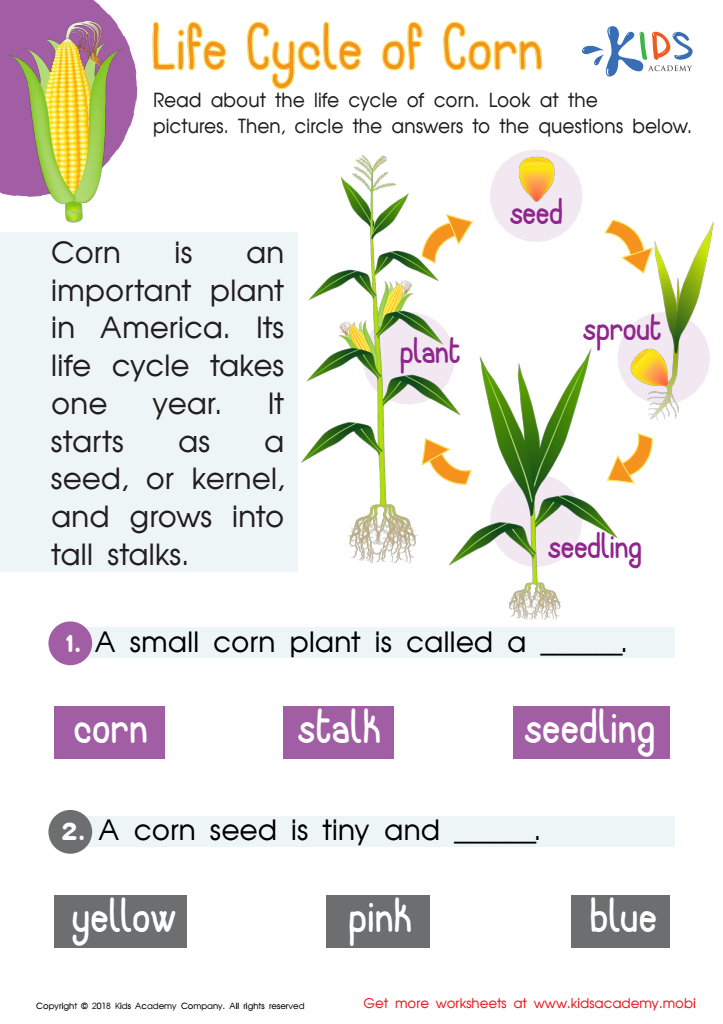
Life Cycle of Corn Worksheet




.jpg)


Understanding life cycles is crucial for both parents and teachers of 8-year-olds because it fosters a deeper appreciation for nature and the interconnectedness of living organisms. At this age, children are naturally curious about the world around them. Introducing them to concepts of life cycles—such as those of butterflies, plants, and frogs—provides valuable learning experiences that can spark interest in science and biology.
Knowledge of life cycles promotes critical thinking and problem-solving skills. Children learn to observe, ask questions, and seek answers, which enhances their ability to engage with scientific concepts. This foundational knowledge encourages them to think about ecosystems, environmental conservation, and the importance of biodiversity.
Moreover, understanding life cycles can nurture empathy and responsibility as children learn about growth, change, and even the fragility of life. It allows them to reflect on their own lives and the changes they experience. Providing lessons on biological processes can also lead to discussions about habitats, food chains, and the impact of human actions on nature, thus fostering a sense of stewardship for the environment.
Overall, teaching life cycles equips children with the knowledge and skills needed to navigate the complexities of life and biodiversity, preparing them to be informed and responsible citizens.