
Animal recognition Easy Addition & Subtraction Worksheets for 9-Year-Olds
3 filtered results
Difficulty Level
Grade
Age
-
From - To
Subject
Activity
Standards
Discover our fun "Animal Recognition Easy Addition & Subtraction Worksheets" tailored for 9-year-olds! These engaging worksheets integrate basic math skills with exciting animal themes, making learning enjoyable. Ideal for reinforcing addition and subtraction concepts, they encourage critical thinking as students identify and categorize various animals. With colorful graphics and interactive exercises, your child will develop their mathematical abilities while learning about the animal kingdom. Perfect for classroom use or at-home practice, these worksheets enhance cognitive skills and stimulate a love for learning. Bring math to life today and watch your young learner thrive! Printable and easy to use - start exploring!
Favorites
With answer key
Interactive
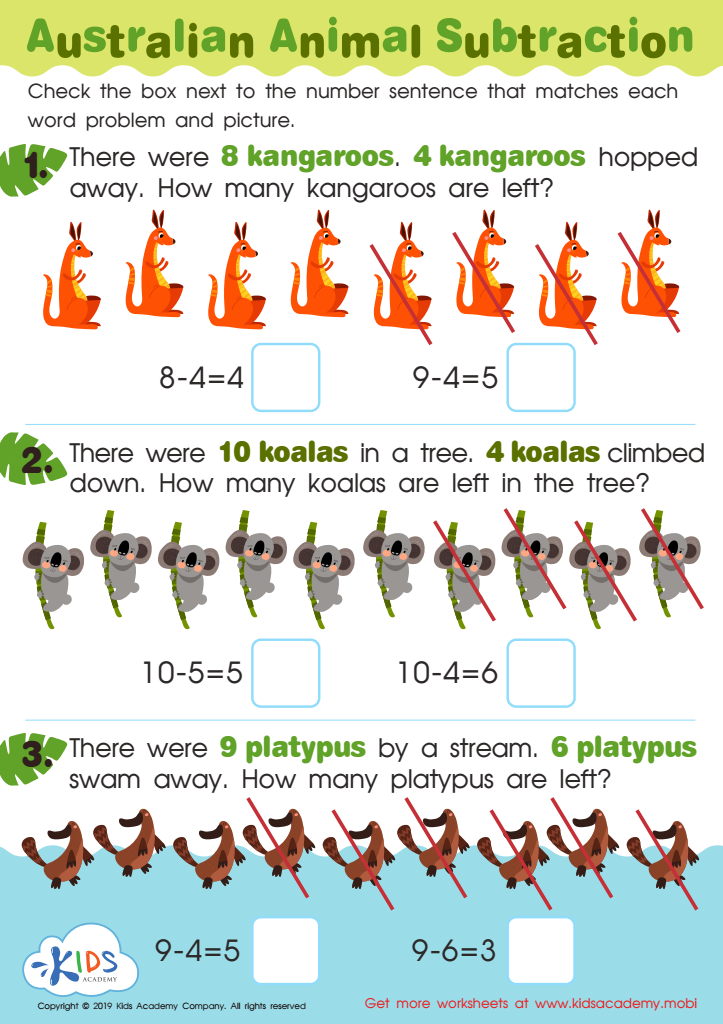
Australian Animal Subtraction Worksheet
Test your child's wildlife knowledge. Ask them to name animals indigenous to Australia or other countries. Show them the animals in this worksheet and have them match each word problem and picture with the correct number sentence.
 Assign to My Students
Australian Animal Subtraction Worksheet
Worksheet
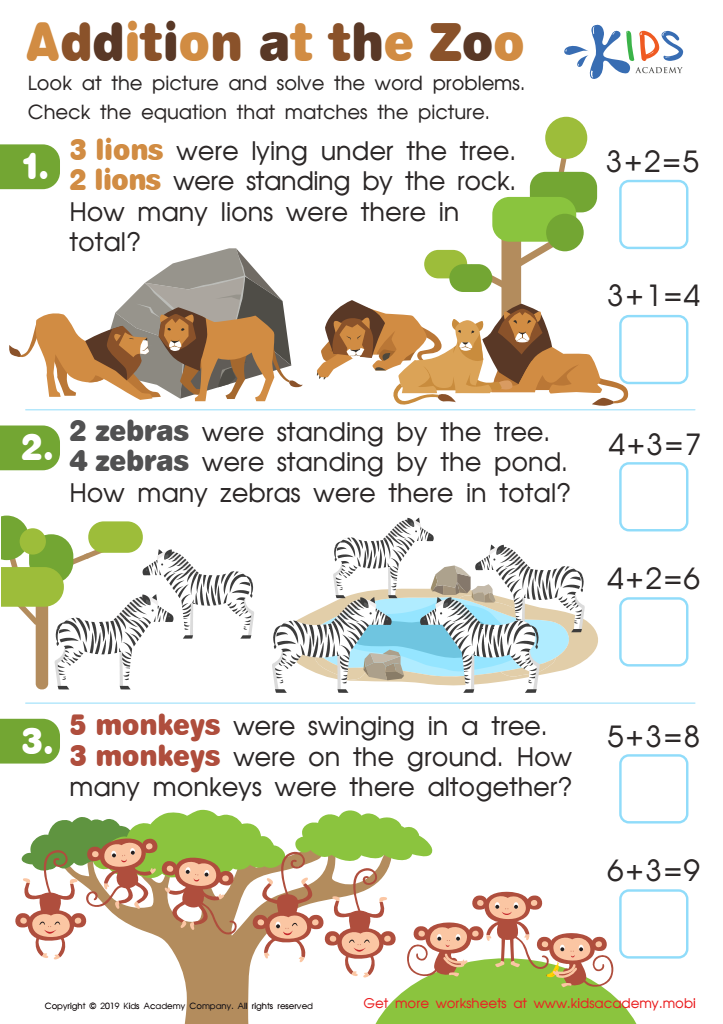
Addition at the Zoo Worksheet
Visit the zoo with your kids and point out all the different animals. Ask them to name their favorites and identify animals on a worksheet. Challenge them to solve word problems related to the pictures. Ask them for the equation that fits the picture and check the answer.
Addition at the Zoo Worksheet
Worksheet
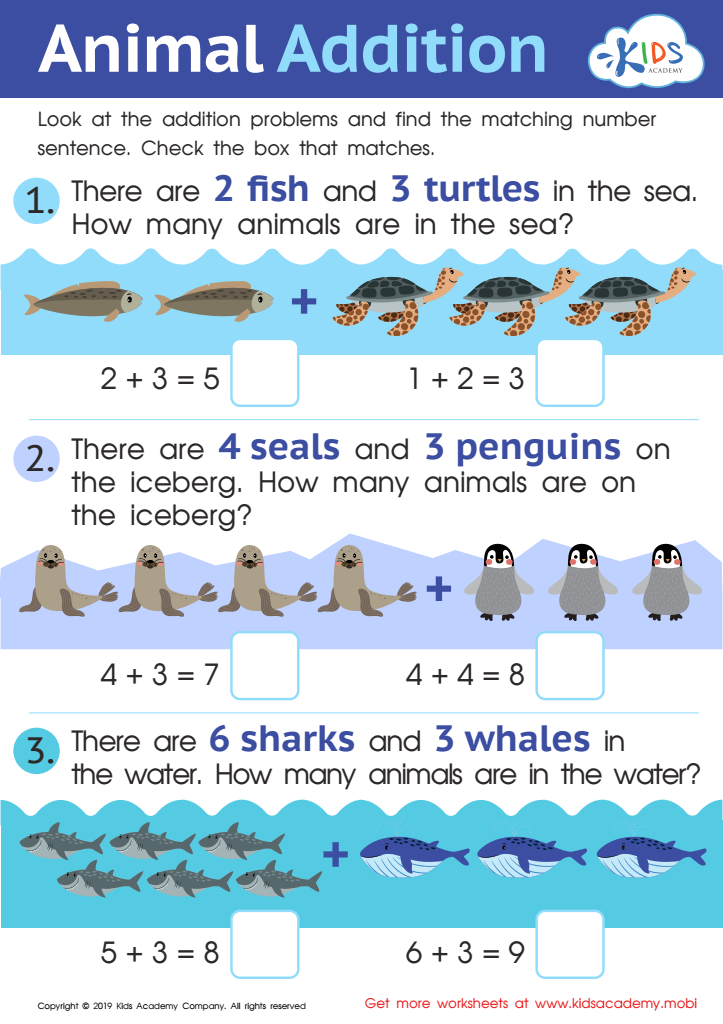
Animal Addition Worksheet
Get your kids learning addition and subtraction with this fun worksheet! Show them that solving equations can be enjoyable and help them match number sentences to the correct boxes. By doing this together, you'll create a positive learning experience that your kids won't forget.
Animal Addition Worksheet
Worksheet
Join Kids Academy for Free
Who is primarily going to use this learning content?








Parents and teachers should care about integrating animal recognition into math activities, such as easy addition and subtraction for 9-year-olds, for several compelling reasons. First, the use of animals captures children's natural curiosity and interest, making learning more engaging and relatable. This thematic approach helps in solidifying foundational math concepts while keeping students motivated.
Moreover, recognizing animals can enhance cognitive skills, including critical thinking and problem-solving, as students categorize animals based on different attributes (e.g., appearance, habitat). Incorporating interactive activities, like counting the number of legs or the number of animals in visual scenes, strengthens their ability to perform basic arithmetic operations in a fun context.
Additionally, linking math to real-world concepts, such as wildlife, fosters environmental awareness and encourages empathy towards living beings. This not only benefits their learning in a mathematical context but also promotes a holistic educational experience. Ultimately, teaching easy addition and subtraction through animal recognition engages students, boosts their confidence in math, and encourages experiential learning, making it a vital consideration for parents and educators in their teaching strategies.








