Understanding times tables Easy Basic Times Tables up to 12 Worksheets for 9-Year-Olds
3 filtered results
-
From - To
Mastering times tables is a critical step in a child’s math education. At Kids Academy, our "Understanding Times Tables: Easy Basic Times Tables up to 12 Worksheets for 9-Year-Olds" make learning these foundations fun and approachable. Designed specifically for 9-year-olds, these worksheets simplify complex concepts into engaging, digestible exercises. They feature vibrant visuals and practical examples, helping children understand and memorize times tables up to 12 effortlessly. By incorporating these worksheets into your child's study routine, you can enhance their speed, accuracy, and confidence in math, laying a solid groundwork for future success.
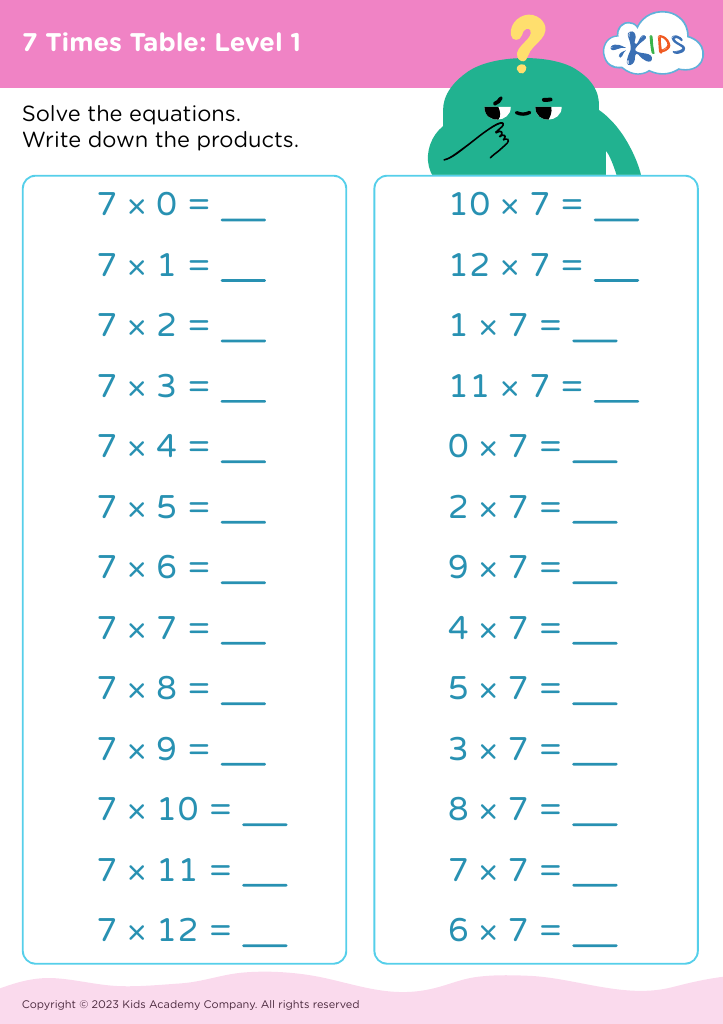
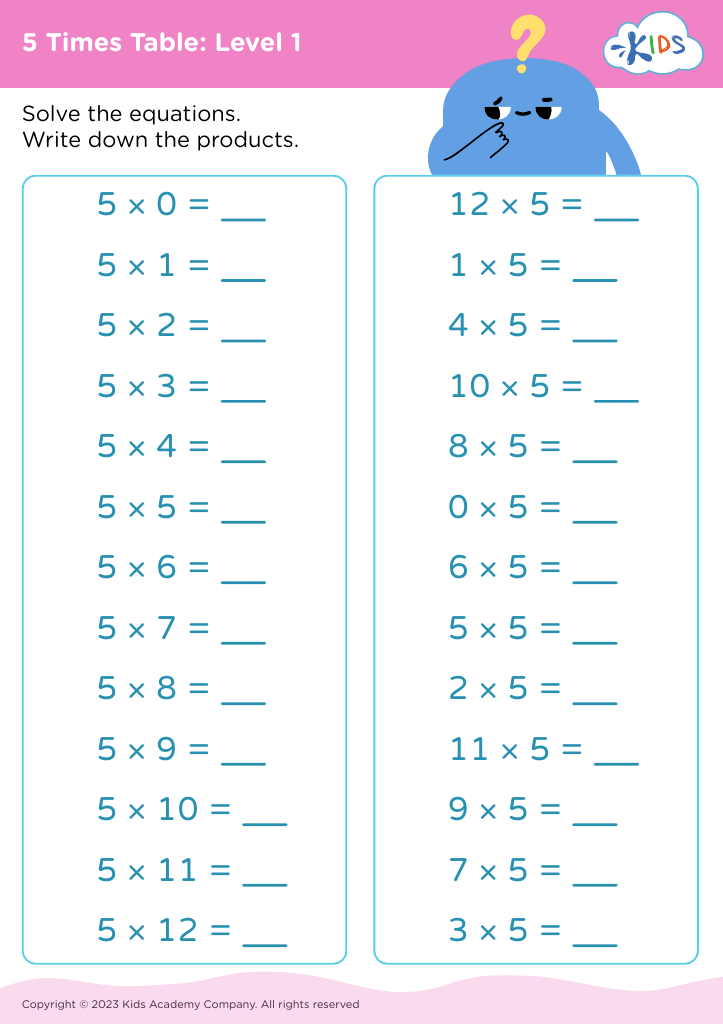
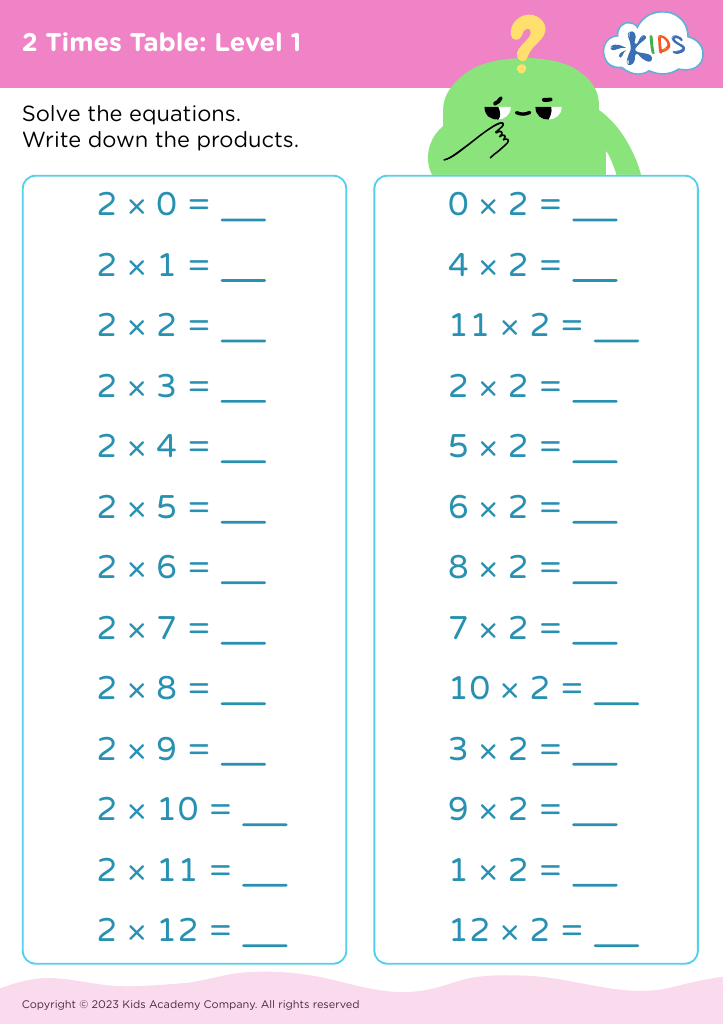


Understanding times tables up to 12 is crucial for 9-year-olds as it forms the backbone of their mathematical knowledge and sets the stage for more advanced concepts. Mastery of multiplication tables aids in the development of arithmetic fluency, which allows children to process numbers more quickly and efficiently. This skill is essential not just for academic success in subjects like math and science, but also in everyday activities that involve measurements, time management, and budgeting.
For parents, supporting their children in grasping times tables is vital because it encourages confidence in dealing with math, eliminating the anxiety often associated with the subject. For teachers, having students who are proficient in their times tables allows classroom time to focus on more complex problems rather than remedial rote learning. The ease with multiplication spills over to other topics such as division, fractions, and even algebra, making subsequent learning smoother and less frustrating.
Additionally, early proficiency in math has been linked to better analytical and problem-solving skills. By ensuring that children understand and are comfortable with the basic times tables, parents and teachers are laying a solid foundation that will help in academic achievement and practical life skills. Engaging these young minds with fun and interactive methods can make the learning process enjoyable, fostering a lifelong appreciation for math.








