Letter-sound correlation Easy Phonics Worksheets
4 filtered results
Difficulty Level
Grade
Age
-
From - To
Subject
Activity
Standards
Discover engaging and effective Letter-Sound Correlation Easy Phonics Worksheets designed to enhance early literacy skills. Tailored for young learners, these worksheets provide a fun and interactive way to reinforce the connection between letters and their corresponding sounds. Filled with vibrant illustrations and simple exercises, children will build their phonemic awareness, which is essential for reading success. Perfect for classroom use or at-home learning, these resources encourage creativity while helping kids master the foundational skills of phonics. Start your child's reading journey with our easy-to-use worksheets and watch them gain confidence as they sound out letters like a pro!
Favorites
With answer key
Interactive
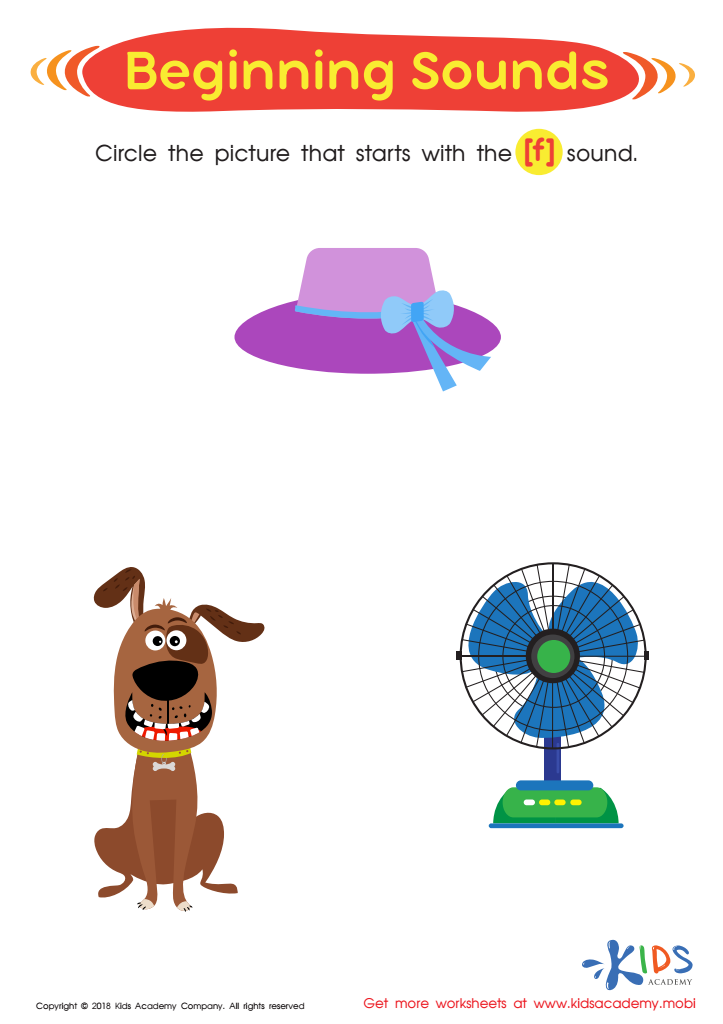
Beginning Sounds Assessment Printable
Test your child's knowledge of the alphabet. Ask them to recite the whole alphabet and the words for each letter. For example: A for apple, B for boy. Identify objects on this worksheet, then ask your child which one starts with the letter "f" and have them circle it.
 Assign to My Students
Beginning Sounds Assessment Printable
Worksheet
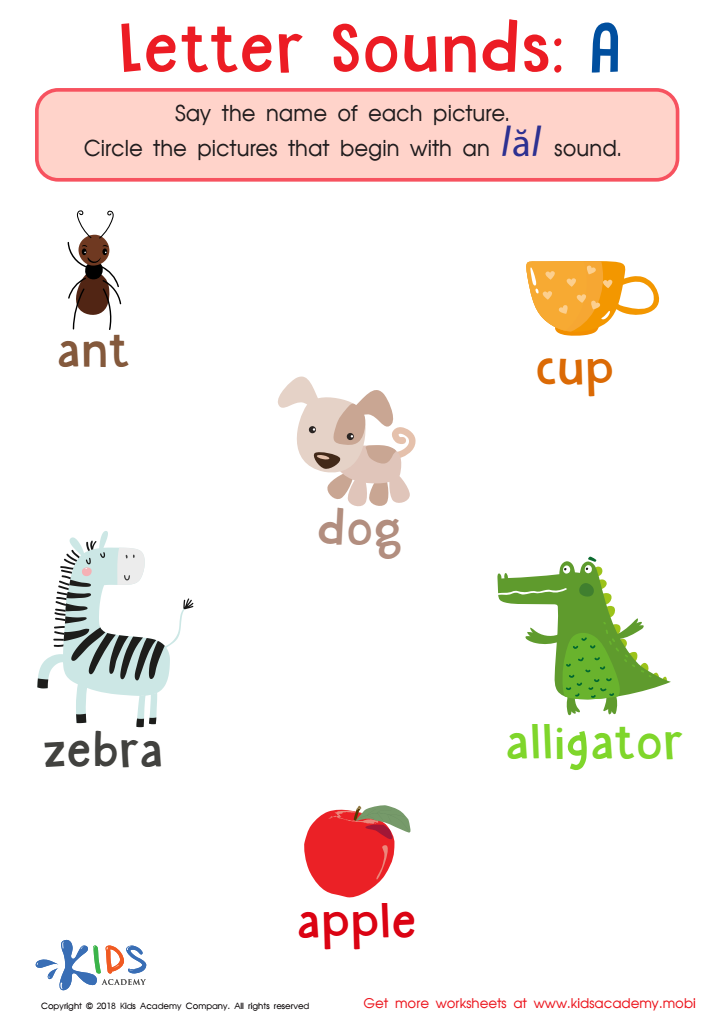
Letter A Sounds Worksheet
Encourage your new reader to practice the «ă» sound with this fun, free PDF worksheet. With the help of picture clues, they'll say the name of each word and trace circles around the items that start with «ă». This worksheet is an effective way to boost beginning sound skills while having fun!
Letter A Sounds Worksheet
Worksheet
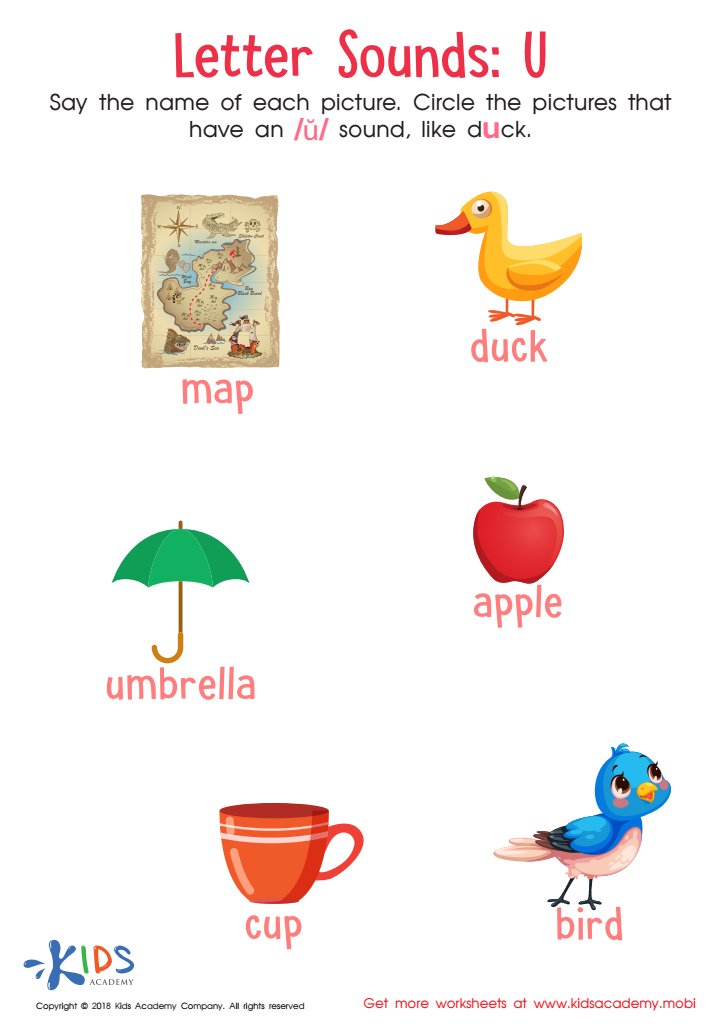
Letter U Sounds Worksheet
The letter U is special with multiple pronunciations. This worksheet helps kids identify the short «u» in words like duck and cup. Read the words aloud and listen closely to the sounds. Circle only words with the correct sound to complete the sheet. Kids will quickly know that words like "map" don't contain a U.
Letter U Sounds Worksheet
Worksheet
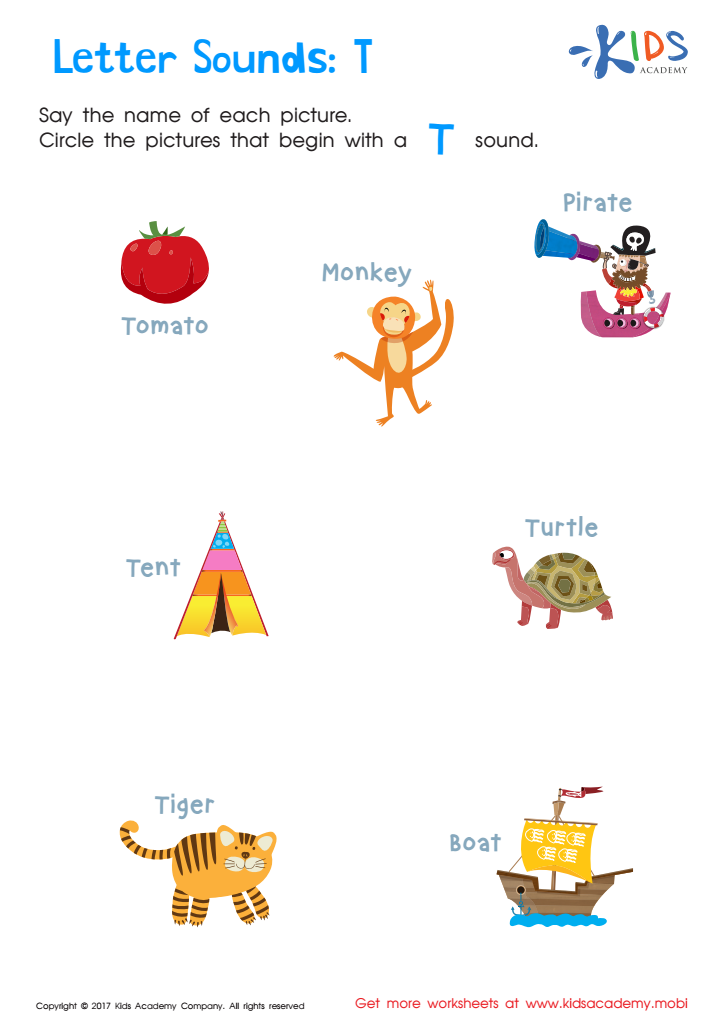
Letter T Sounds Worksheet
This worksheet is a fun way to help kids learn the t sound. It has familiar pictures and an easy-to-follow format, so kids can quickly recognize and learn the letter t.
Letter T Sounds Worksheet
Worksheet
Join Kids Academy for Free
Who is primarily going to use this learning content?








Understanding letter-sound correlation is essential for effective reading development, and both parents and teachers play a crucial role in this process. Easy Phonics, a systematic approach to phonics, highlights how specific letters or letter combinations correspond with sounds, enabling children to decode words more efficiently.
When caregivers prioritize letter-sound correlations, they empower children to confidently tackle new words independently, thus fostering autonomy in reading. This skill not only enhances reading fluency but also boosts comprehension, as students can focus on understanding the text rather than struggling with pronunciation.
Additionally, a solid phonics foundation positively impacts literacy overall. By recognizing patterns and making connections between letters and sounds, children develop stronger spelling, writing, and critical thinking skills. Teachers can integrate these essential concepts into their lesson plans, while parents can reinforce them at home through reading activities and games.
Ultimately, the emphasis on letter-sound correlation promotes a love for reading and lifelong learning. Children who grasp these fundamental concepts are better equipped for academic success and confident participation in conversations around literature, laying the groundwork for a rich and engaging educational experience. As such, both parents and teachers should actively support and nurture phonics learning in young readers.