Chess strategy understanding Easy Grade 1 Chess Worksheets
3 filtered results
-
From - To
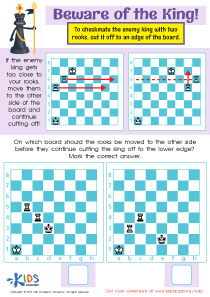
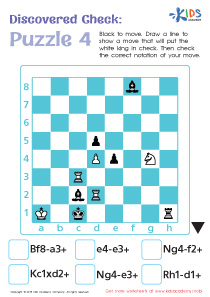
Unlock the world of chess for your first grader with our "Chess Strategy Understanding Easy Grade 1 Chess Worksheets." Designed specifically for young learners, these engaging worksheets introduce essential chess strategies in a fun and accessible way. Children will explore key concepts such as piece movement, capturing tactics, and basic gameplay strategies, all while sharpening their critical thinking skills. With colorful illustrations and clear instructions, our worksheets make learning chess enjoyable and interactive. Parents and educators can reinforce these skills, ensuring a solid foundation in chess for kids. Start your child's chess journey today!
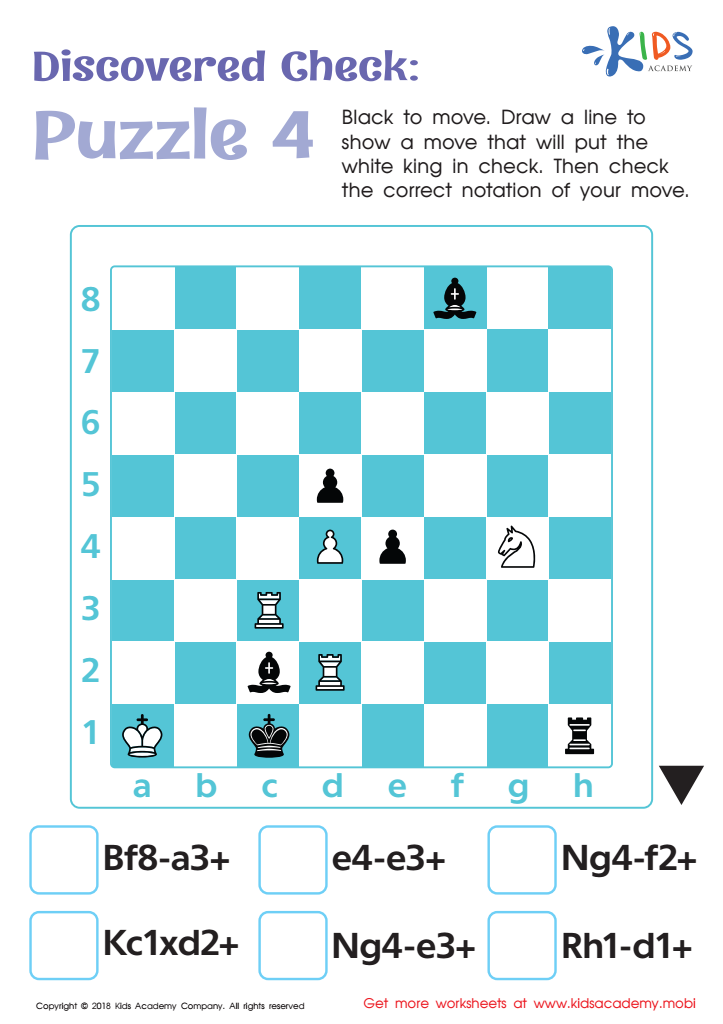
Discovered Check: Puzzle 4 Worksheet

Discovered Check: Puzzle 2 Worksheet
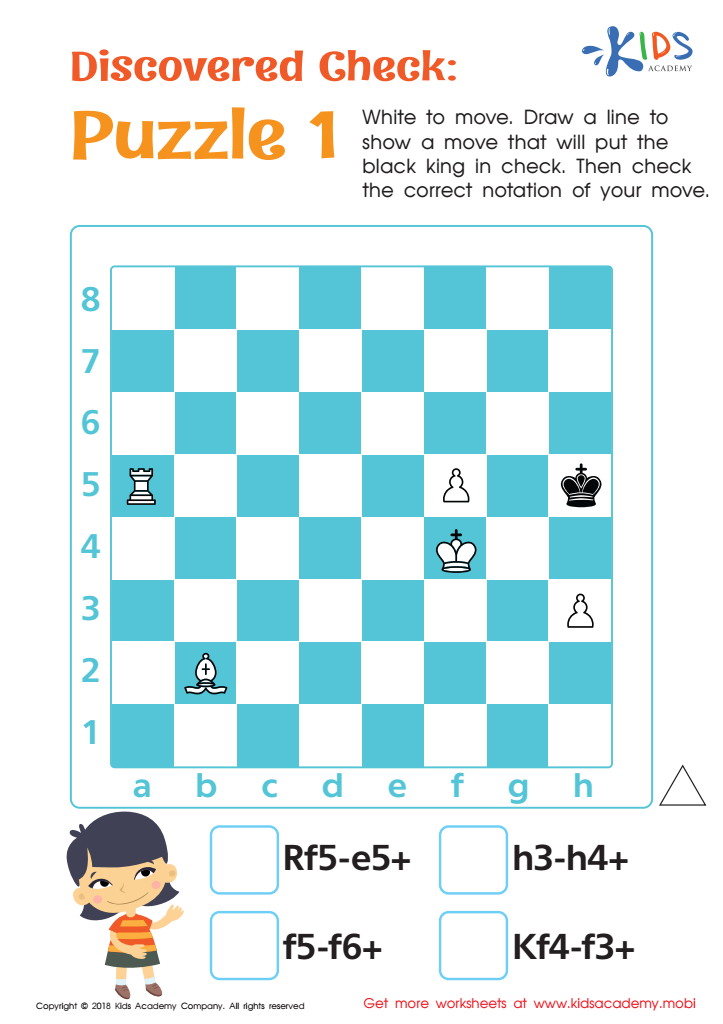
Discovered Check: Puzzle 1 Worksheet



Chess is more than just a game; it's a powerful tool for developing critical thinking skills in young children. For first graders, understanding simple chess strategies not only introduces them to the game but also fosters important cognitive abilities. By learning to recognize patterns and anticipate opponents' moves, children enhance their problem-solving skills and strategic thinking.
Parents and teachers should care about introducing chess because it encourages patience and focus. As children plan their next move and respond to changing game dynamics, they learn the importance of considering various options before making decisions. Chess also nurtures creativity, as players devise unique strategies and ideas to outsmart their opponents.
In a social context, chess can build relationships among peers, promoting sportsmanship and cooperation. It serves as a way for children to connect over a shared interest, fostering a sense of community.
Additionally, incorporating chess into educational settings supports the development of mathematical skills, improved concentration, and better emotional regulation. By emphasizing these qualities, parents and teachers can harness the benefits of chess to create well-rounded, resilient young learners equipped for future challenges. In turn, early engagement with chess can inspire a lifelong appreciation for the game and its strategic depth.