Understanding time Easy Grade 1 Worksheets
3 filtered results
-
From - To
Discover our "Understanding Time" Easy Grade 1 Worksheets designed to make learning about time fun and engaging for young students. These worksheets help first graders grasp essential concepts such as telling time, recognizing clock hands, and understanding both digital and analog formats. With colorful illustrations and interactive activities, students will master reading hours and half-hours while developing problem-solving skills. Perfect for parents and educators, these printable worksheets are an excellent resource for classroom use or home practice. Foster a love for learning and a strong foundation in time-telling skills with our engaging and age-appropriate materials today!
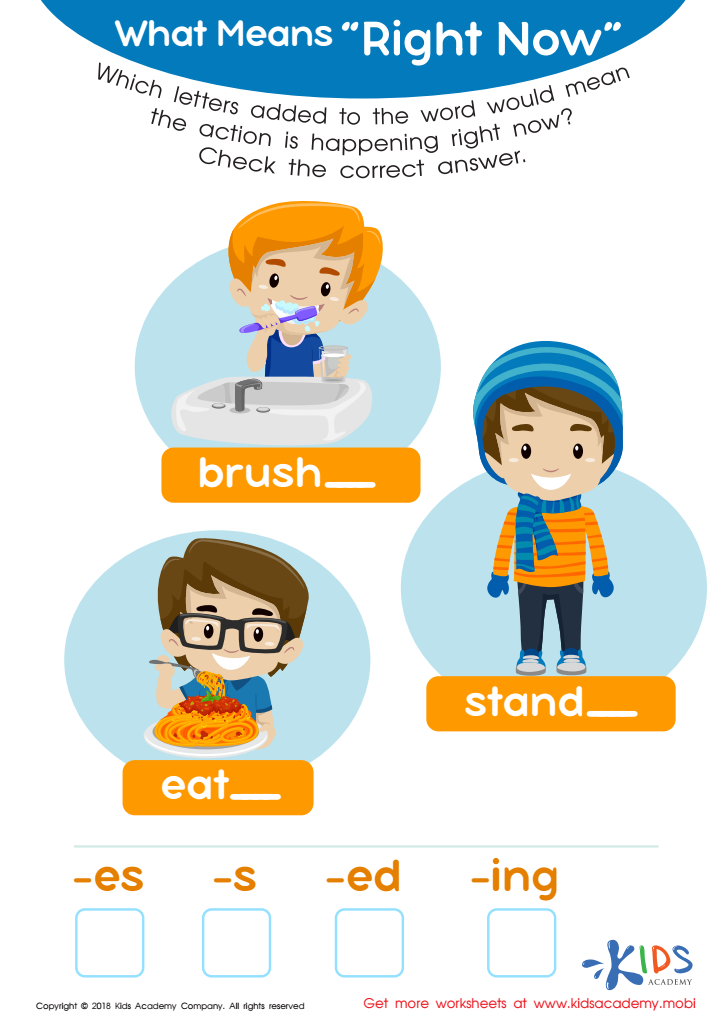
What Means "Right Now" Worksheet
 Assign to My Students
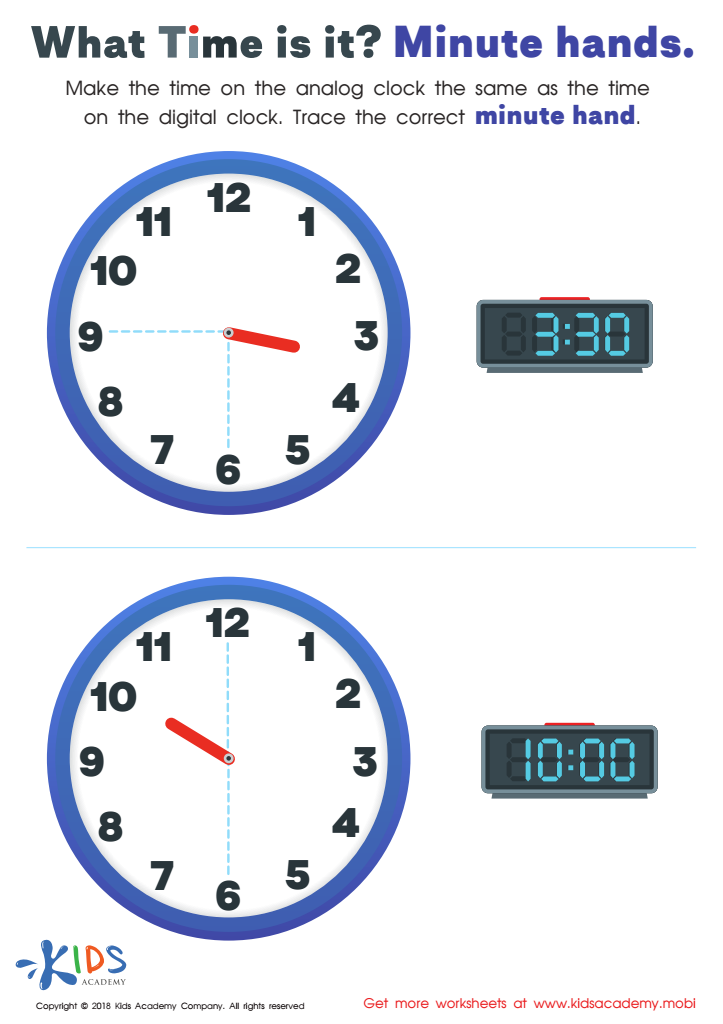
What Time Is it? Minute Hands Worksheet
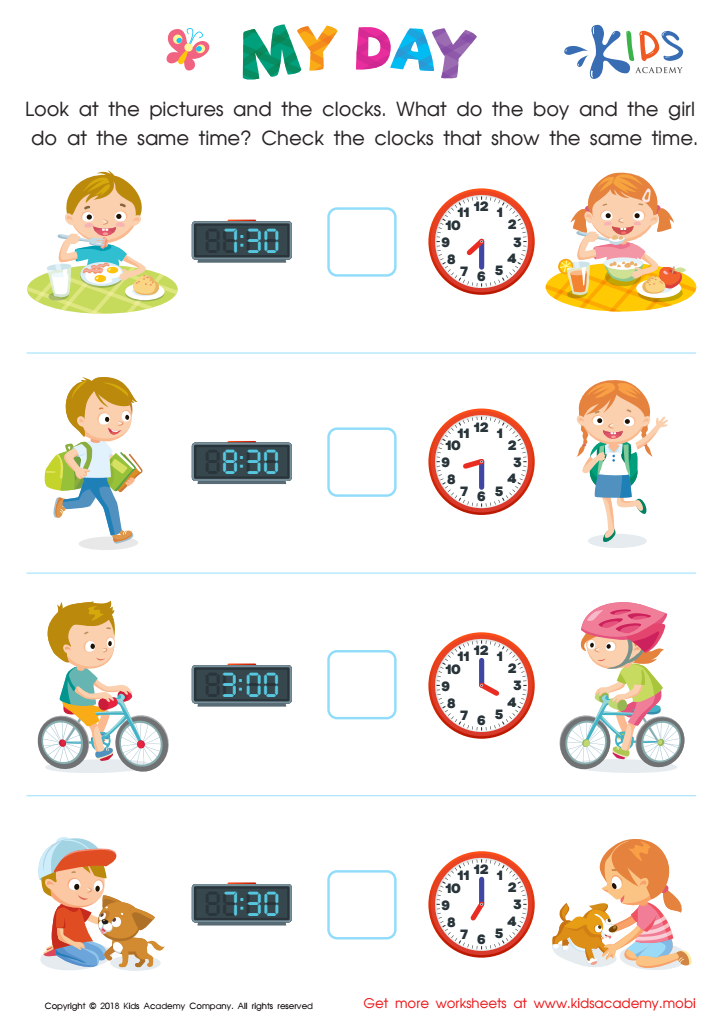
My Day Worksheet




.jpg)


Understanding time is a fundamental skill for first graders that lays the groundwork for daily routines, academic success, and lifelong habits. Parents and teachers play crucial roles in making this concept accessible and engaging. Teaching children to read clocks, recognize days of the week, and grasp sequences of events helps develop critical thinking, personal organization, and responsibility.
By understanding time, children can plan their activities, which enhances their independence and self-regulation. For example, knowing when it’s time to eat, play, or start homework helps them manage their schedules and reduces anxiety about unstructured time. It also fosters social skills, as they learn to communicate about timings—for instance, arranging playdates or attending extracurricular activities.
Moreover, time-related concepts connect various subjects like math, science, and history, providing a comprehensive educational experience. When children learn about time, they gain an appreciation for the rhythm of daily life and the importance of routines. This understanding not only supports their academic endeavors but also equips them for real-world scenarios, where being punctual and planning ahead is essential. Therefore, parents and teachers should prioritize this learning area, ensuring students develop a robust foundation for future growth and success.