Basic counting skills Easy Kindergarten Worksheets
3 filtered results
-
From - To
Welcome to our Basic Counting Skills Easy Kindergarten Worksheets! Designed specifically for young learners, these engaging resources help children develop essential counting abilities in a fun and interactive way. Each worksheet is thoughtfully crafted to reinforce number recognition, one-to-one correspondence, and simple addition concepts through colorful illustrations and relatable themes. Perfect for classroom use or home practice, our activities cater to various learning styles, making counting enjoyable and accessible for every child. With step-by-step guidance and encouraging designs, kids will gain confidence in their math skills. Download our worksheets today and watch your little ones flourish in their counting journey!
 Assign to My Students
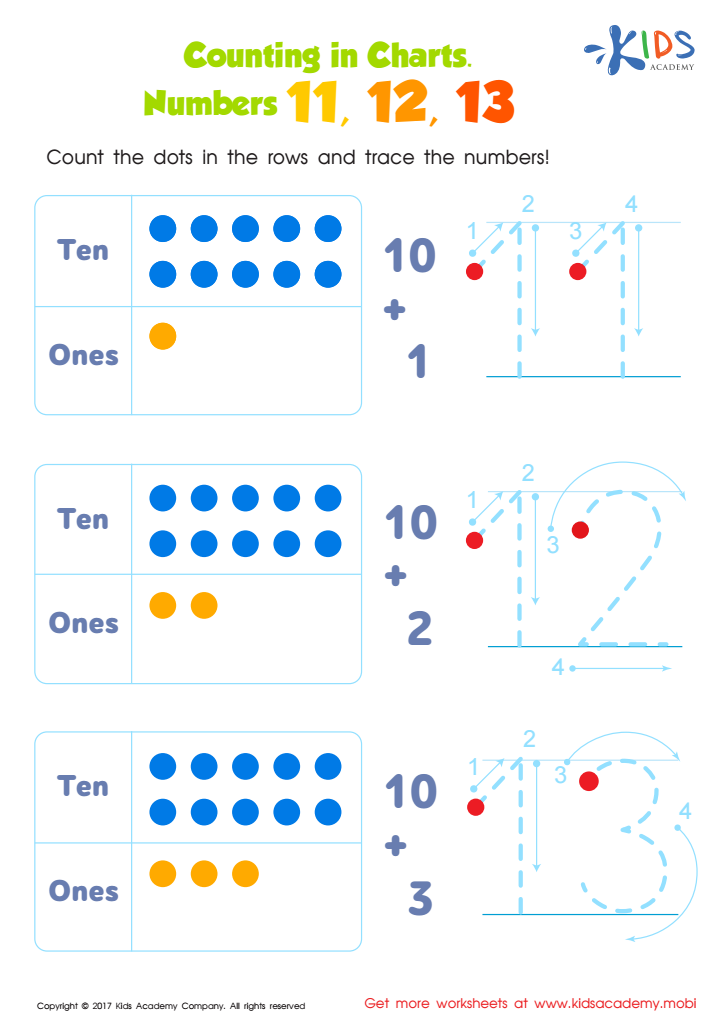
Number Tracing Worksheet For Kindergarten
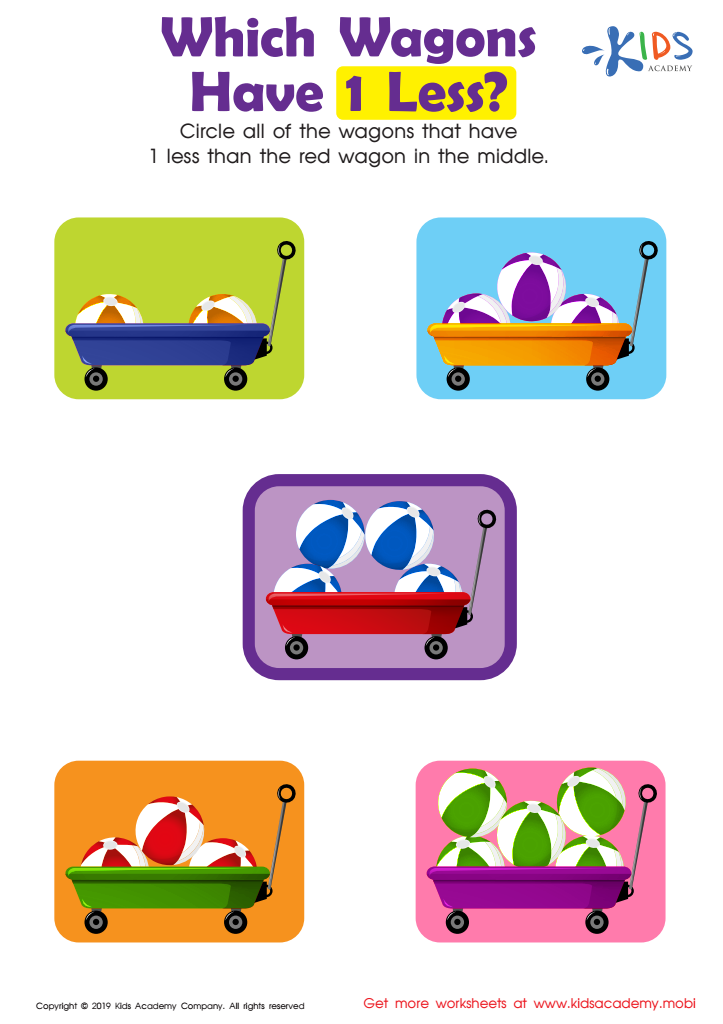
Which Wagons Have 1 Less? Worksheet





Parents and teachers should prioritize basic counting skills in kindergarten as they lay the foundation for a child's mathematical understanding. Counting is not just about numbers; it enhances cognitive development, fostering important skills such as pattern recognition, comparison, and sorting. Mastering counting helps children develop a sense of number sense, which is critical as they advance in mathematics.
Moreover, basic counting aids in everyday situations, from understanding time to managing money or measuring ingredients in cooking. By learning to count, children gain confidence in their quantitative skills, empowering them to tackle more complex math concepts later on. This early investment in counting skills can influence a student's overall academic performance and interest in math-related subjects.
Additionally, counting is often incorporated into various activities, such as songs, games, and storytelling, making learning enjoyable and interactive. When parents and teachers emphasize counting through play, they create a supportive learning environment that encourages curiosity and exploration.
In sum, basic counting skills are pivotal for academic success, practical life skills, and fostering a love for learning. By nurturing counting abilities in kindergarten, adults contribute significantly to a child's foundational education.