Understanding quantity Easy Kindergarten Worksheets
3 filtered results
-
From - To
Discover the joy of learning with our "Understanding Quantity Easy Kindergarten Worksheets"! Tailored for young learners, these engaging worksheets help children grasp essential math concepts through fun activities. Featuring colorful illustrations and interactive exercises, kids will explore numbers, counting, and comparisons, building a strong foundation in quantitativeness. Designed by educators, our resources align with kindergarten curricula, making it easy for teachers and parents to support early math skills. Whether at home or in the classroom, these worksheets promote critical thinking and foster a love for learning. Spark curiosity and enhance your child’s understanding of quantity today! Start your math adventure now!
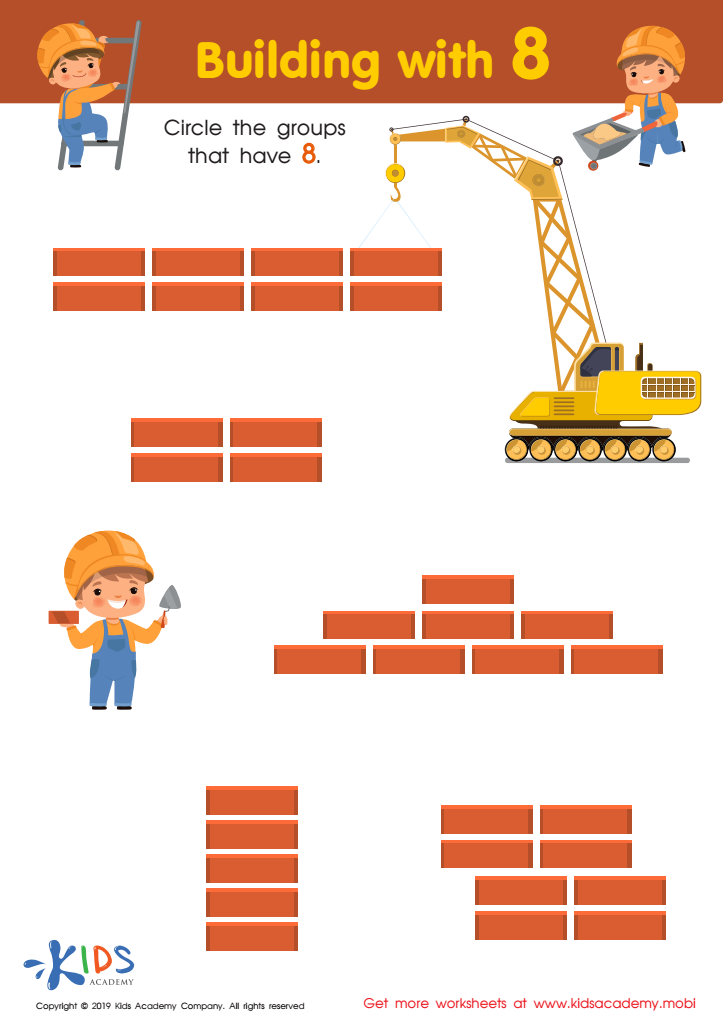
Building with 8 Worksheet
 Assign to My Students
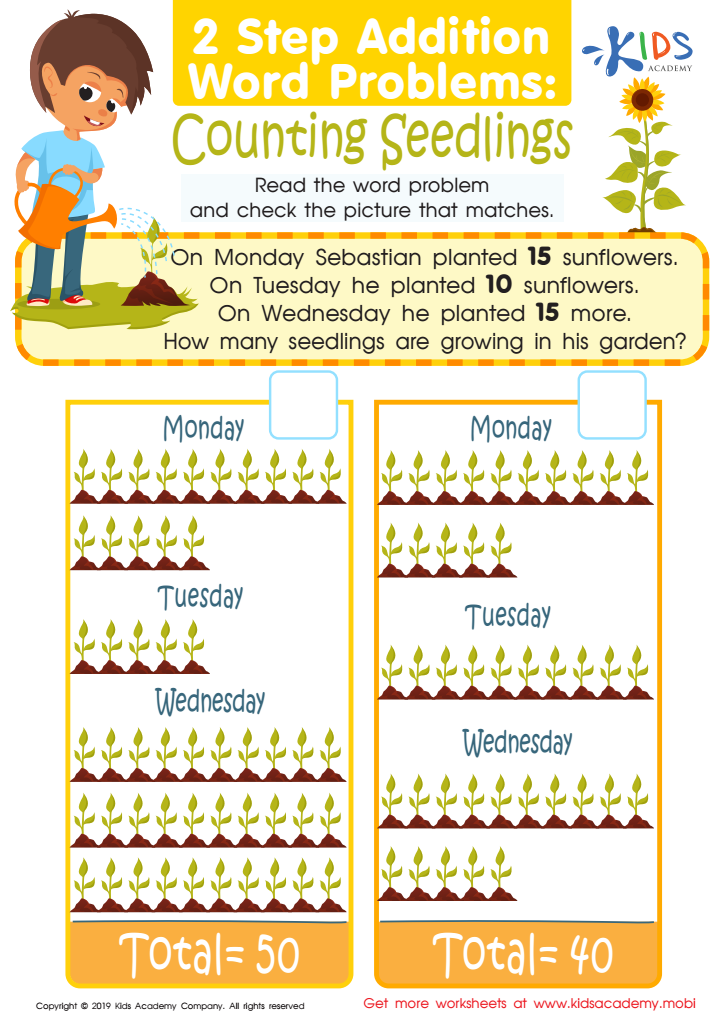
Counting Seedlings Worksheet
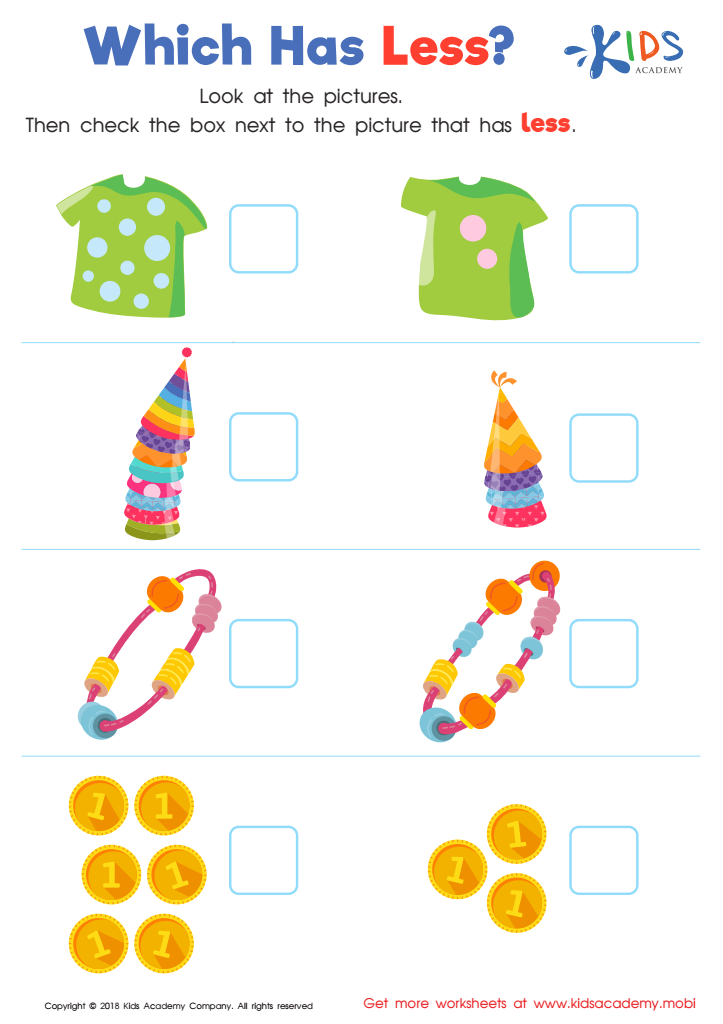
Which Has Less? Worksheet







Understanding quantity is fundamental for young children as it lays the groundwork for their mathematical development and critical thinking skills. For parents and teachers, fostering this understanding in kindergarten is essential because it enhances children's ability to engage with the world around them. When children grasp the concepts of quantity, such as more, less, or equal, they develop early numeracy skills that are crucial for future academic success.
In kindergarten, children learn to compare quantities, recognize numerical symbols, and use simple operations like addition and subtraction. This foundational knowledge not only aids in mathematics but also promotes problem-solving skills and logical reasoning. Furthermore, understanding quantity encourages children to manipulate and explore their environment through activities like counting objects, measuring, and dividing.
Additionally, early competency in math is linked to increased self-esteem and confidence in children, setting them up for a positive attitude toward learning. Parents and teachers who emphasize quantity understanding create an enriching learning atmosphere that nurtures curiosity and exploration. By engaging children in meaningful and hands-on activities, they contribute to the development of critical thinking and a lifelong love for learning, ensuring children are adequately prepared for more complex concepts in the future.