Pattern recognition Easy Numbers Worksheets
3 filtered results
-
From - To
"Pattern Recognition Easy Numbers Worksheets" by Kids Academy are designed to enhance early math skills in a fun and interactive way. These printable worksheets help children identify and complete numerical patterns, fostering their logical thinking and problem-solving abilities. Ideal for preschool and kindergarten students, the worksheets cover a range of simple sequences and repetition to build a solid foundation in pattern recognition. Each sheet is crafted with colorful visuals and engaging activities to maintain interest and encourage learning. Perfect for both classroom settings and home practice, these resources make early math concepts easy and enjoyable for young learners.
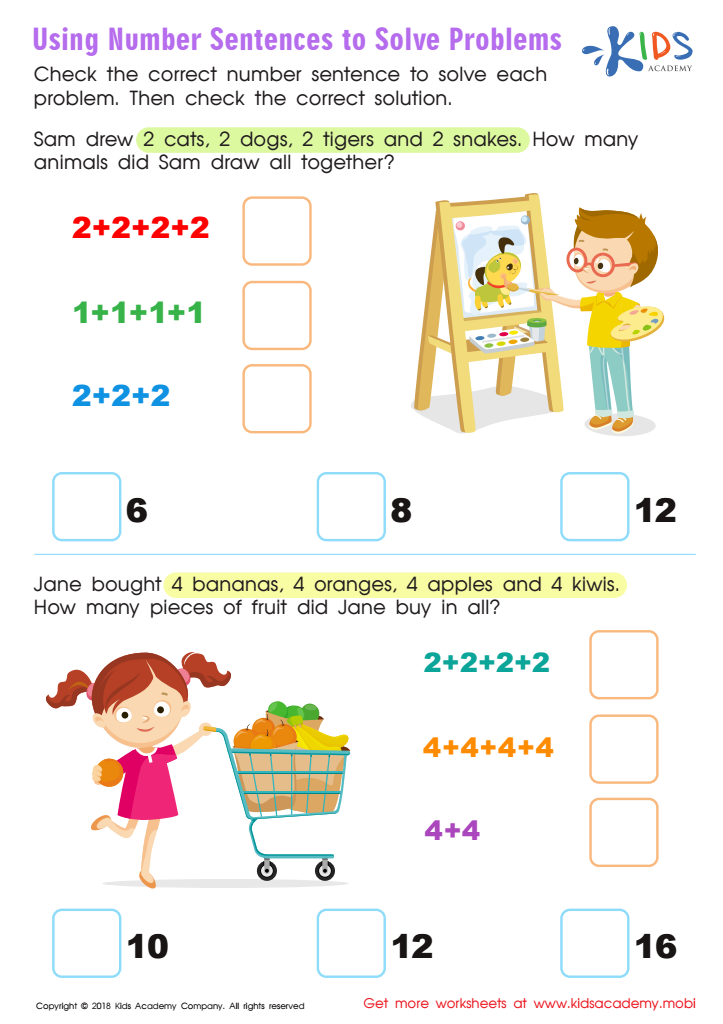
Using Number Sentences to Solve Problems Worksheet
 Assign to My Students
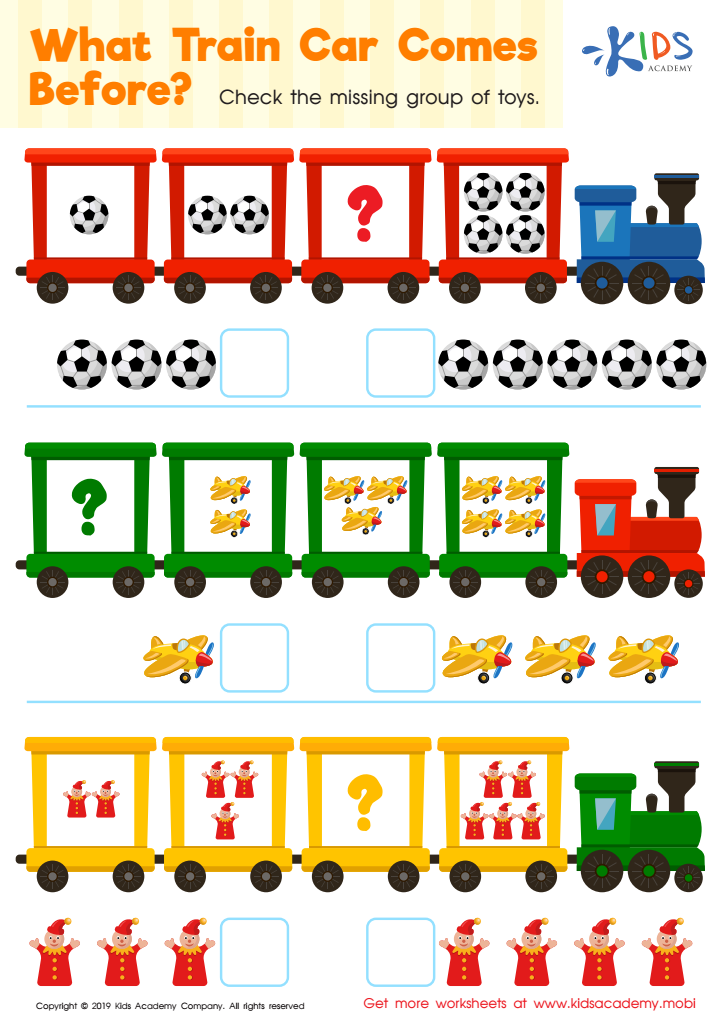
What Train Car Comes Before? Worksheet
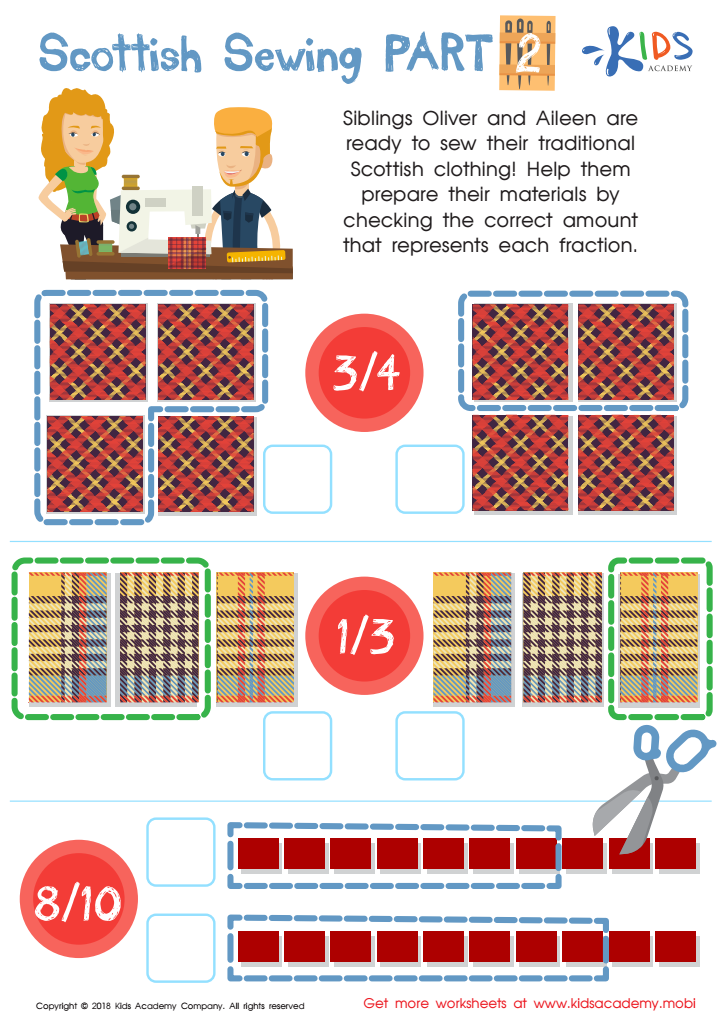
Scottish Sewing Part 2 Worksheet








Pattern recognition and easy number concepts are foundational skills critical to a child's cognitive development. Parents and teachers should prioritize these skills for several compelling reasons. To start, pattern recognition enhances a child's ability to make predictions based on observed sequences, a fundamental aspect of logical thinking and problem-solving. By discerning patterns, children learn to understand relationships and structures in various contexts, ranging from simple sequences in numbers to more complex mathematical concepts and real-world applications in science and art.
Moreover, grasping easy number patterns, such as counting by 2s, 5s, or 10s, builds confidence and reinforces numerical fluency, which is the backbone for advanced arithmetic skills. This fluency enables children to perform calculations more swiftly and accurately, easing the progression toward solving more intricate math problems. The early acquisition of these skills also introduces a level of numerical literacy that supports academic success across various subjects.
Furthermore, encouraging pattern recognition nurtures critical early-life cognitive development. It aids in memory, increases attention to detail, and improves organizational skills. These abilities are universally beneficial, extending beyond academics, influencing daily decision-making, problem-solving, and even social interactions.
In essence, instilling a sense of recognition for patterns and a grasp of basic number concepts primers children for long-term success, making it an indispensable part of early education.








