Fine motor skills (writing) Easy Math Worksheets
3 filtered results
-
From - To
Enhance your child's fine motor skills with our Easy Math Worksheets designed for young learners! These engaging printable resources focus on writing practice while seamlessly integrating essential math concepts. Perfect for preschool and kindergarten aged children, our worksheets encourage the development of pencil grip, hand-eye coordination, and writing accuracy through fun activities. Kids will enjoy tracing numbers, completing simple math problems, and engaging in creative exercises that foster both confidence and competence in early mathematics. Explore our curated collection and watch your child's skills blossom as they build a strong foundation for their educational journey! Learn and play with Kids Academy!
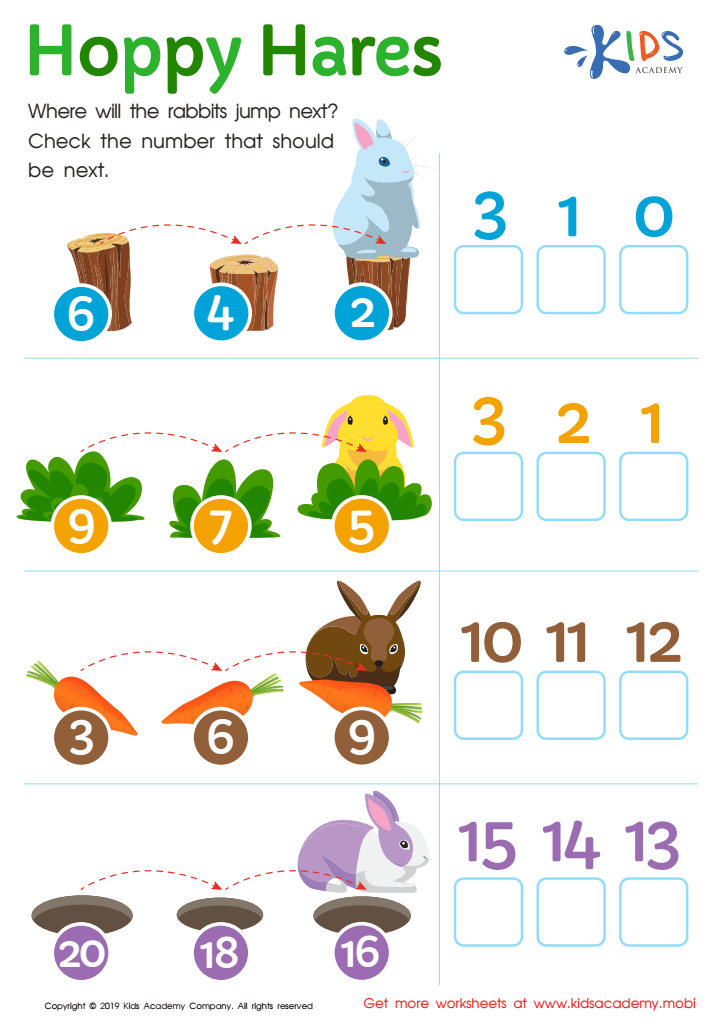
Hoppy Hares Worksheet
 Assign to My Students
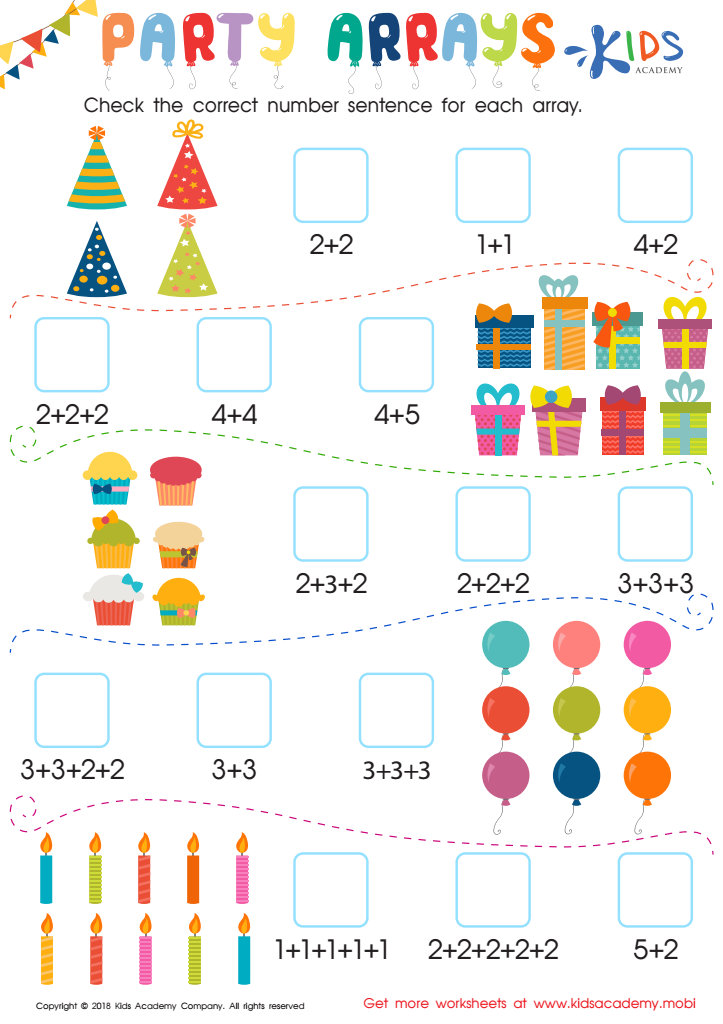
Party Arrays Worksheet
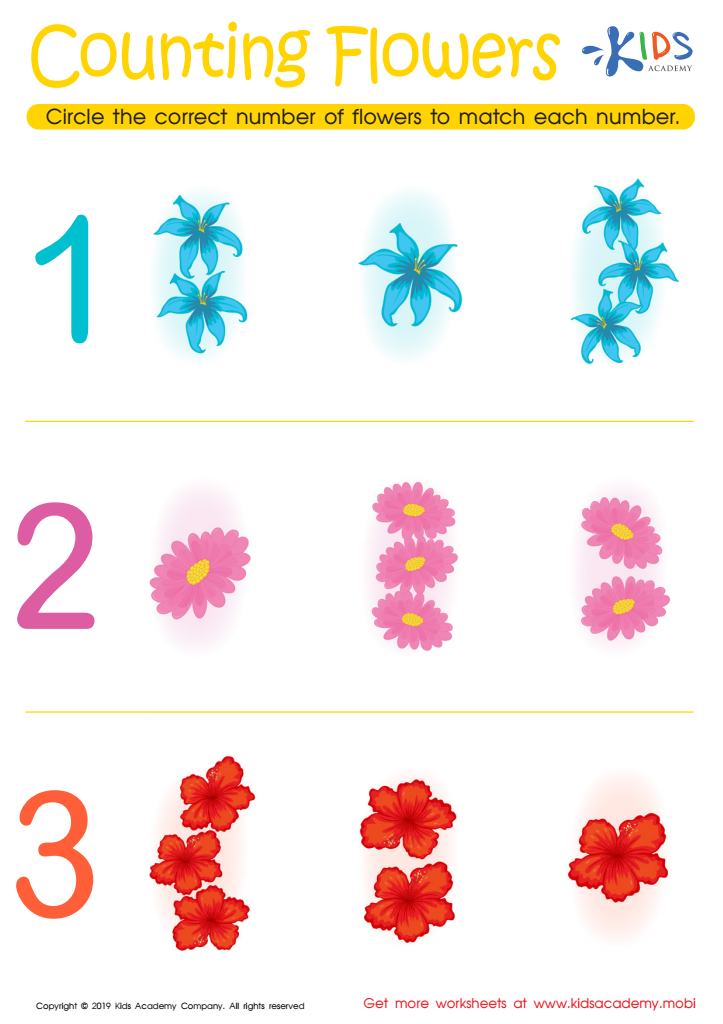
Counting Flowers Worksheet







Fine motor skills are essential for young learners, influencing their ability to perform everyday tasks and lay the groundwork for academic success. In writing, strong fine motor skills enable children to hold and maneuver pencils or crayons confidently, leading to more legible handwriting and the ability to express their thoughts on paper. This foundational skill is crucial as children advance in their education, where clear written communication becomes increasingly important.
Moreover, fine motor skills interact significantly with early math development. Activities that involve manipulating small objects, such as counting beads or sorting shapes, strengthen hand-eye coordination and control. This, in turn, supports children as they progress in math, making it easier for them to grasp concepts like measurement or basic addition and subtraction.
Parents and teachers play a pivotal role in fostering these skills through engaging activities such as arts and crafts, puzzles, or simple cooking tasks that require pouring and stirring. By prioritizing fine motor skill development, adults empower children not only in writing and math but across all areas of learning, creating a solid foundation for lifelong skills that boost confidence and promote a love for learning.








