Spatial reasoning Easy Math Worksheets
3 filtered results
-
From - To
Boost your child's cognitive abilities with our engaging Spatial Reasoning Easy Math Worksheets! Perfect for early learners, these comprehensive resources are designed to enhance problem-solving and critical-thinking skills through fun, hands-on activities. From understanding shapes and patterns to grasping spatial relationships, each worksheet challenges kids to think outside the box and develop their spatial intelligence. Our expertly crafted exercises cater to various learning styles, making complex concepts easy to grasp and enjoyable. Elevate your child’s mathematical foundation today with our top-notch, educational, and entertaining downloadable worksheets, tailored for ultimate success in early math learning.
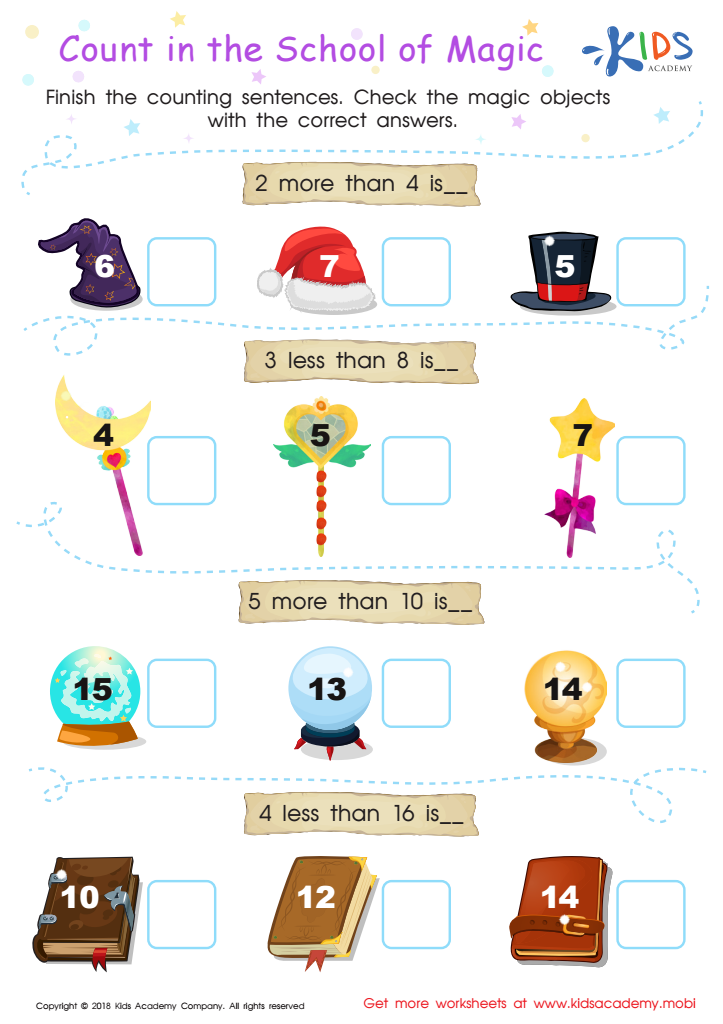
Count in the School of Magic Worksheet
 Assign to My Students
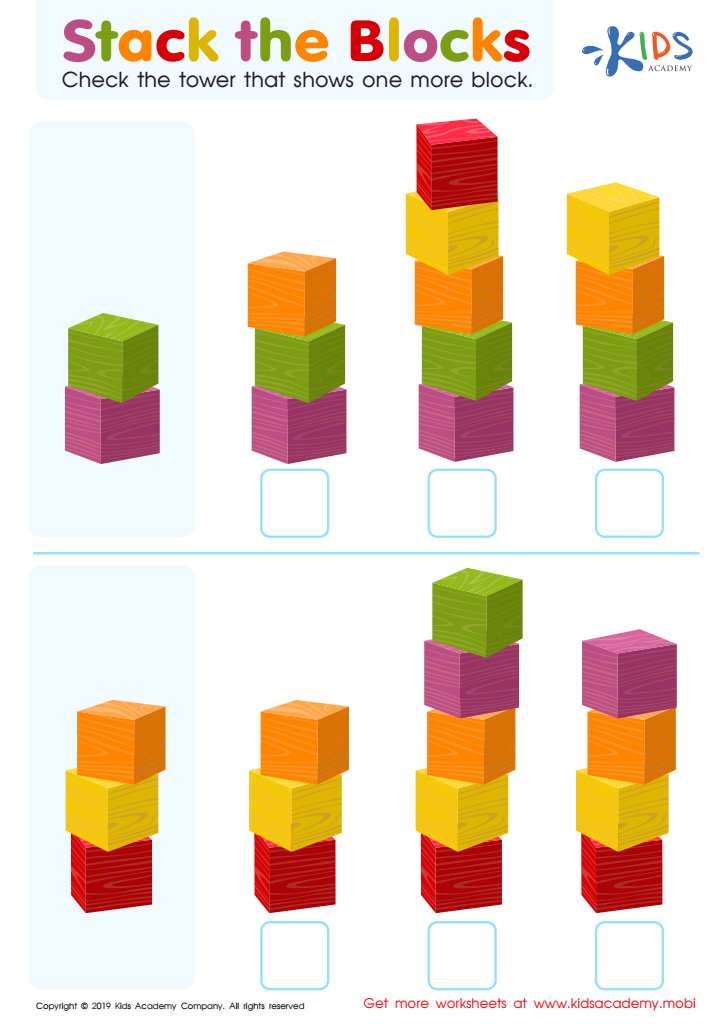
Stack the Blocks Worksheet
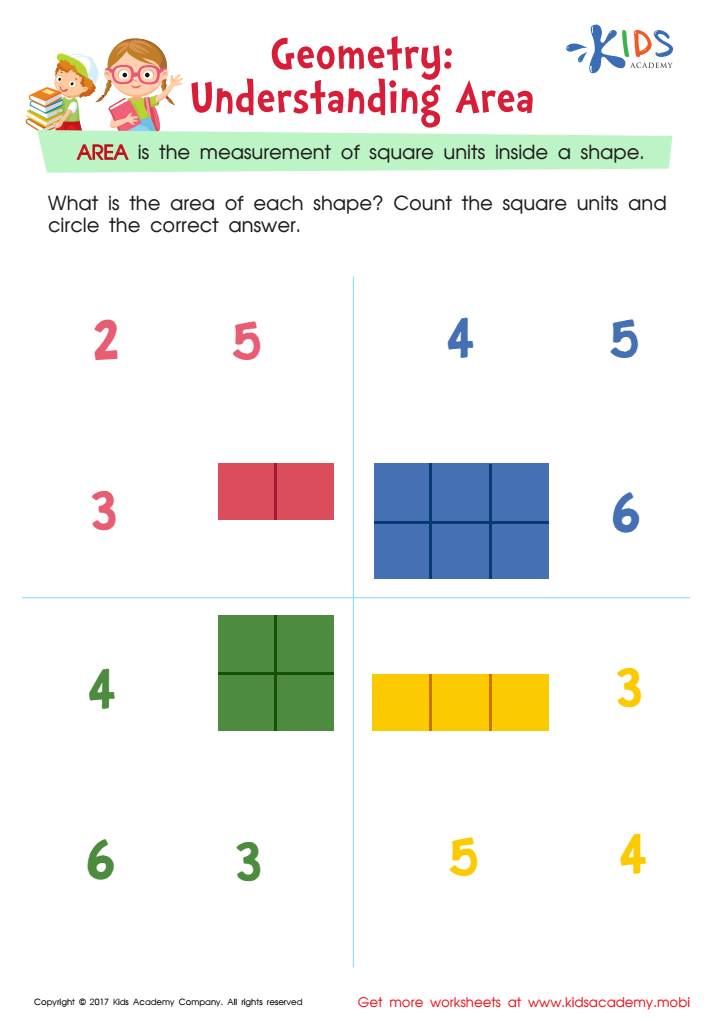
Understanding Area Worksheet


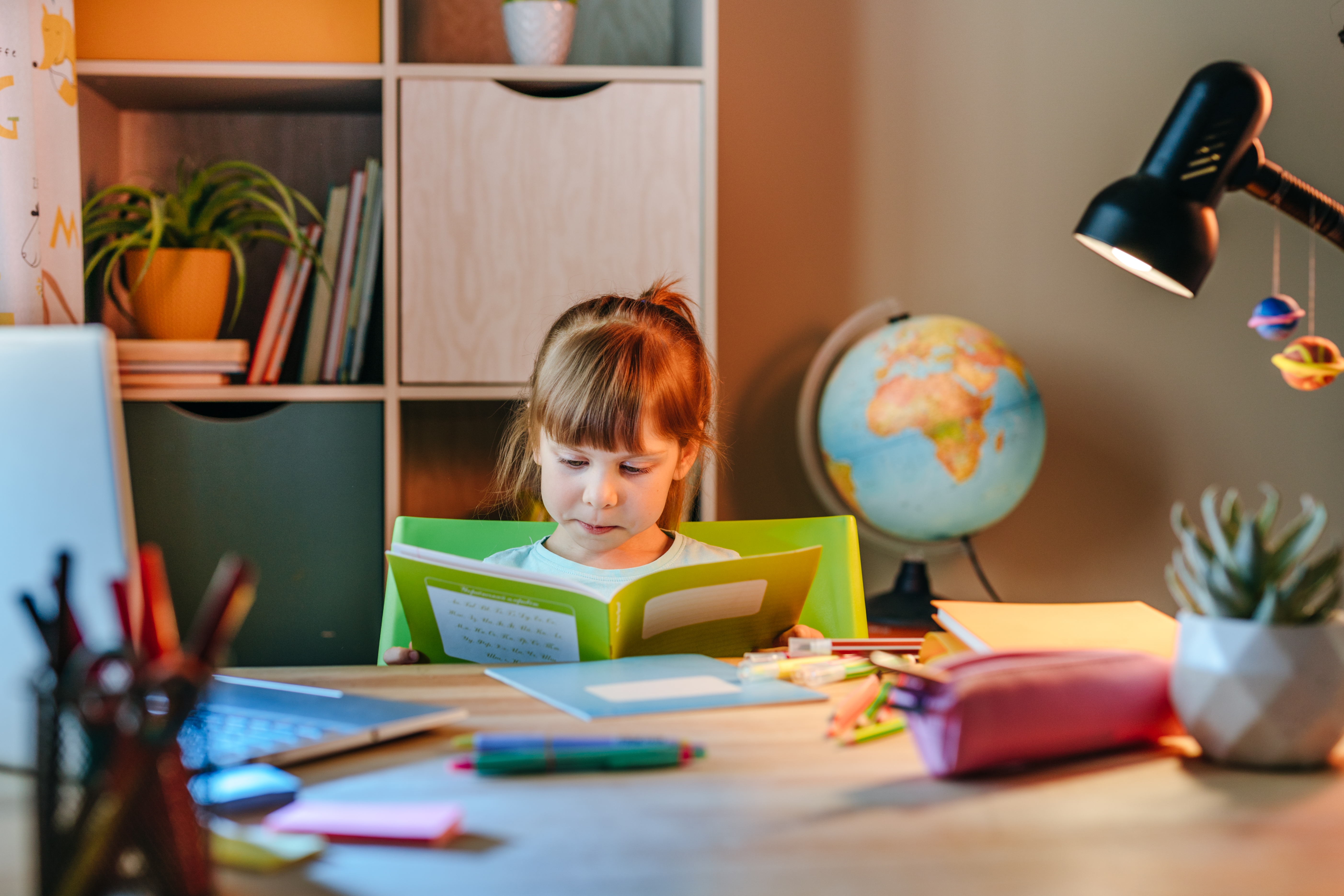




Spatial reasoning is a fundamental cognitive skill that allows children to conceptualize and manipulate objects in their minds. This ability is critical for success in many areas of learning, including mathematics, science, and everyday problem-solving. By fostering spatial reasoning through "Easy Math" activities, parents and teachers can give children a significant head start in their academic careers and daily lives.
Firstly, spatial reasoning underpins essential math skills such as geometry, measurement, and understanding the relationships between different shapes and sizes. Children who develop strong spatial reasoning abilities are better equipped to grasp complex mathematical concepts, leading to improved performance in STEM subjects. Moreover, spatial reasoning is tied to higher-order thinking skills, such as critical thinking and reasoning, which are crucial across all areas of learning.
Incorporating spatial reasoning exercises helps children improve their spatial awareness and visualization skills. Activities like puzzles, building blocks, and drawing shapes encourage kids to explore and understand the physical world around them. These experiences lay the groundwork for more abstract thinking and logical reasoning as they grow older.
By consciously integrating spatial reasoning into early education, parents and teachers ensure that children not only develop robust mathematical abilities but also enhanced problem-solving skills, creativity, and adaptability. These competencies are invaluable for their future academic and real-life success.








