Comparing lengths Easy Measurement Worksheets
5 filtered results
-
From - To
Introducing our "Comparing Lengths Easy Measurement Worksheets," designed specifically for young learners to master the concept of length comparison! These engaging worksheets provide a fun and interactive way for children to practice measuring and comparing different objects. With clear illustrations and easy-to-follow instructions, students will enhance their measurement skills while developing their understanding of more vs. less. Perfect for classroom activities or at-home learning, these resources aim to build confidence in budding mathematicians. Let your child explore the exciting world of measurement with our thoughtfully crafted worksheets, ensuring a solid foundation in this essential math skill! Ideal for early grade teachers and parents alike!
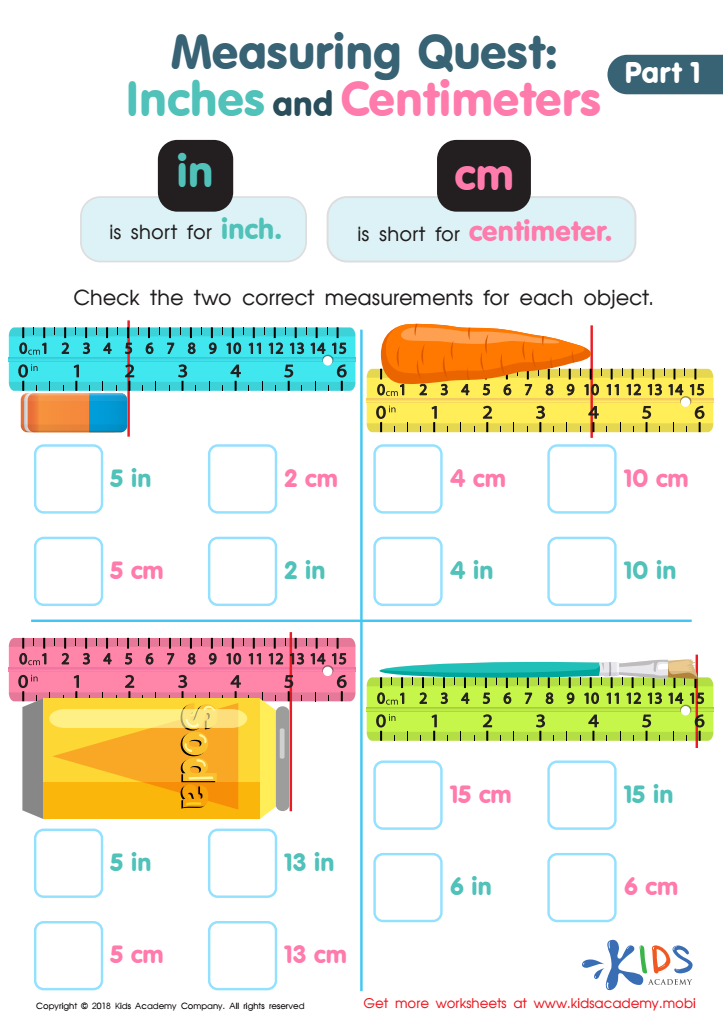
Measuring Quest: Inches and Centimeters Worksheet
 Assign to My Students
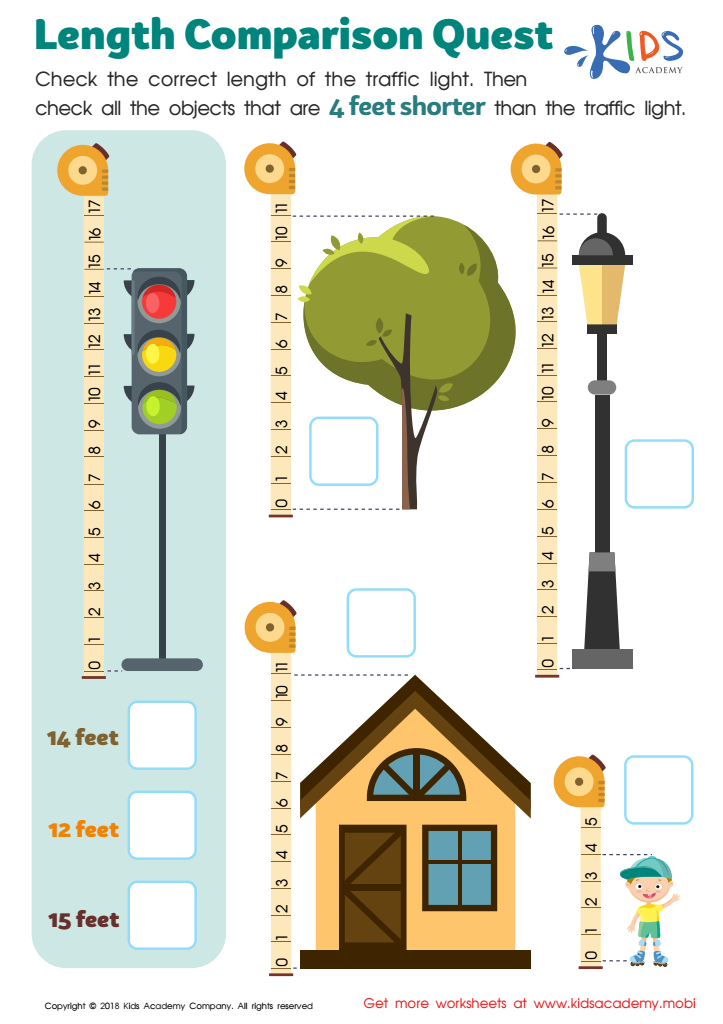
Length Comparison Quest Worksheet
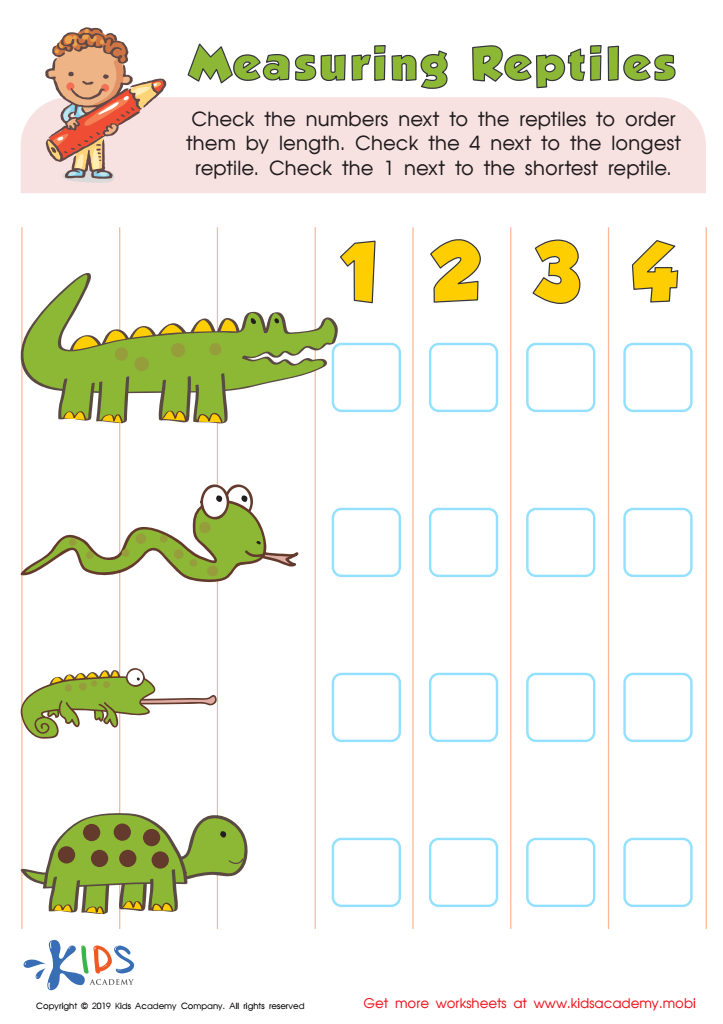
Measuring Reptiles Worksheet
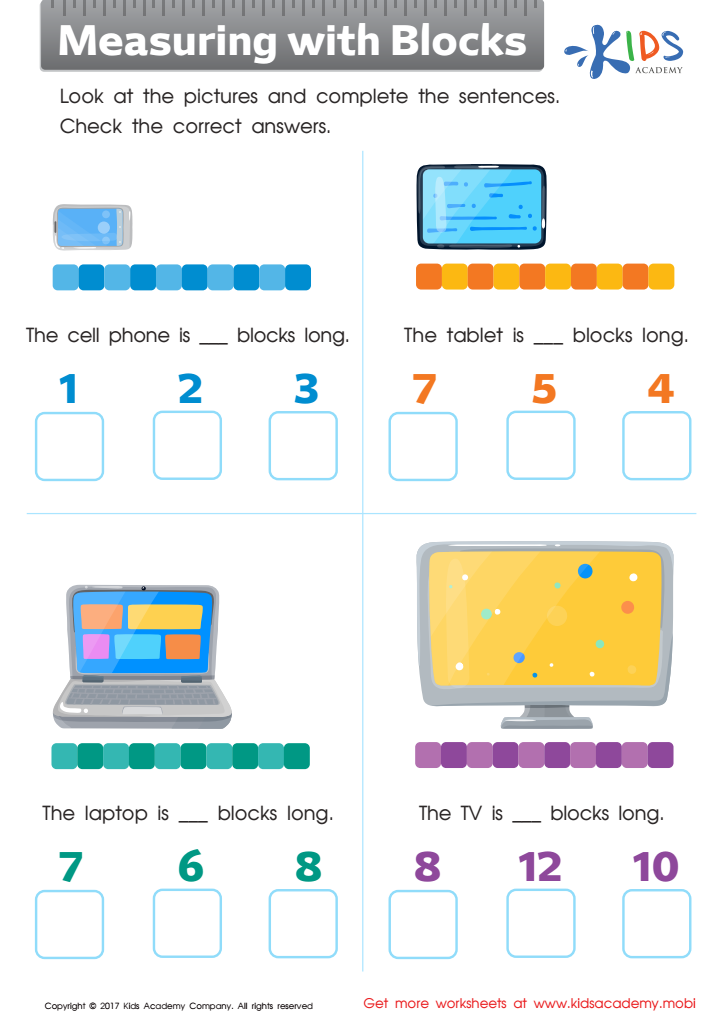
Measuring with Blocks Worksheet
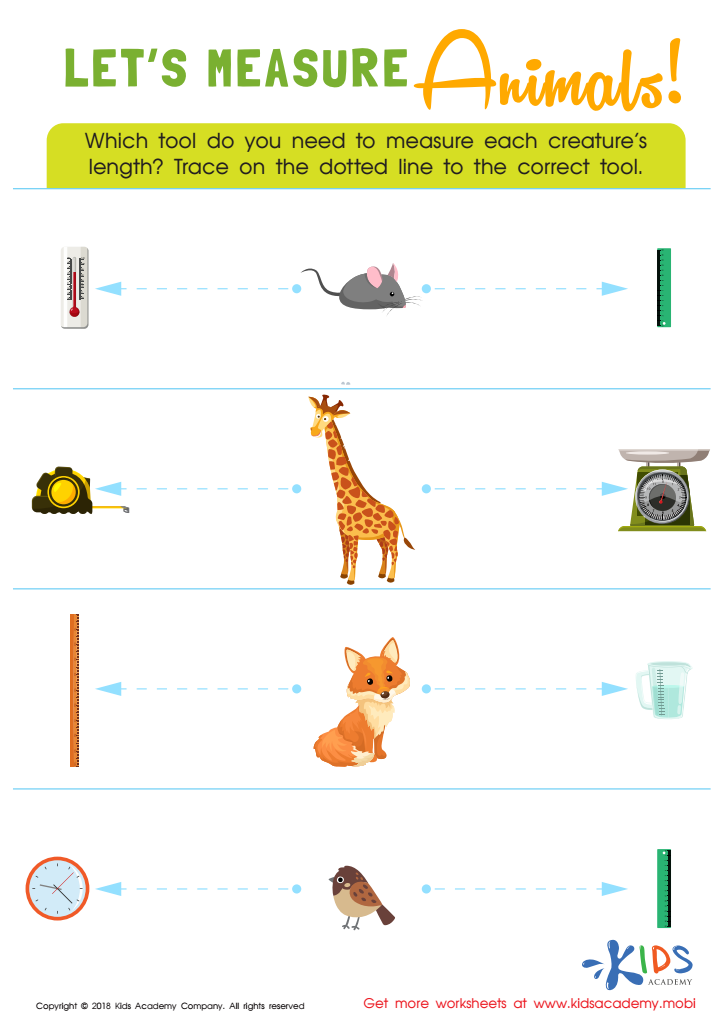
Let's Measure Animals! Worksheet








Understanding and comparing lengths is a fundamental skill that has important implications for young learners. Parents and teachers should prioritize this concept as it lays the groundwork for future mathematical understanding and everyday practical skills.
Firstly, comparing lengths enhances children's critical thinking and problem-solving abilities. By engaging in measuring activities, children learn to make predictions, estimate sizes, and determine the differences in lengths, which fosters cognitive development.
Moreover, mastering measurement through comparing lengths is essential in everyday life. Children encounter situations where they need to measure ingredients while cooking or understand the height of items when organizing spaces.
In addition, this skill aligns with various educational standards and benchmarks related to mathematics and science. It contributes to children's spatial awareness, which is instrumental in subjects like geometry and physics in later stages of learning.
Lastly, involving parents in measuring activities can strengthen family bonding and make learning a shared experience. When children observe their parents measuring and comparing sizes, they can connect academic concepts to real-world applications, making learning meaningful and relevant.
In summary, emphasizing comparing lengths helps build critical skills while promoting a positive and practical approach to mathematics in early childhood education.








