Number comparison Easy Preschool Worksheets
3 filtered results
-
From - To
Explore our engaging "Number Comparison Easy Preschool Worksheets" designed to help your little ones master basic math skills! These fun, printable worksheets provide a colorful and interactive way for preschoolers to learn how to compare numbers using visual aids. Children will enjoy completing activities that emphasize greater than, less than, and equal to concepts, making math a delightful experience. Perfect for parents and educators alike, our worksheets cater to young learners’ varying needs and learning styles. Foster early numeracy skills and boost confidence through enjoyable practice with our easy-to-use resources!Download now and watch your child's understanding of numbers grow!
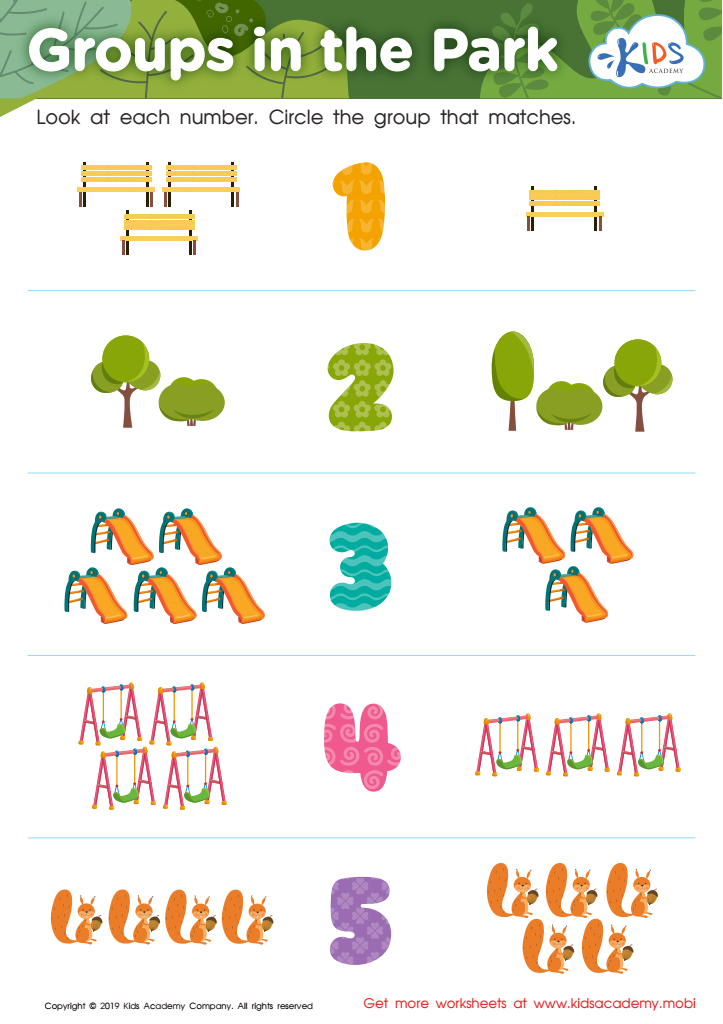
Groups in the Park Worksheet
 Assign to My Students
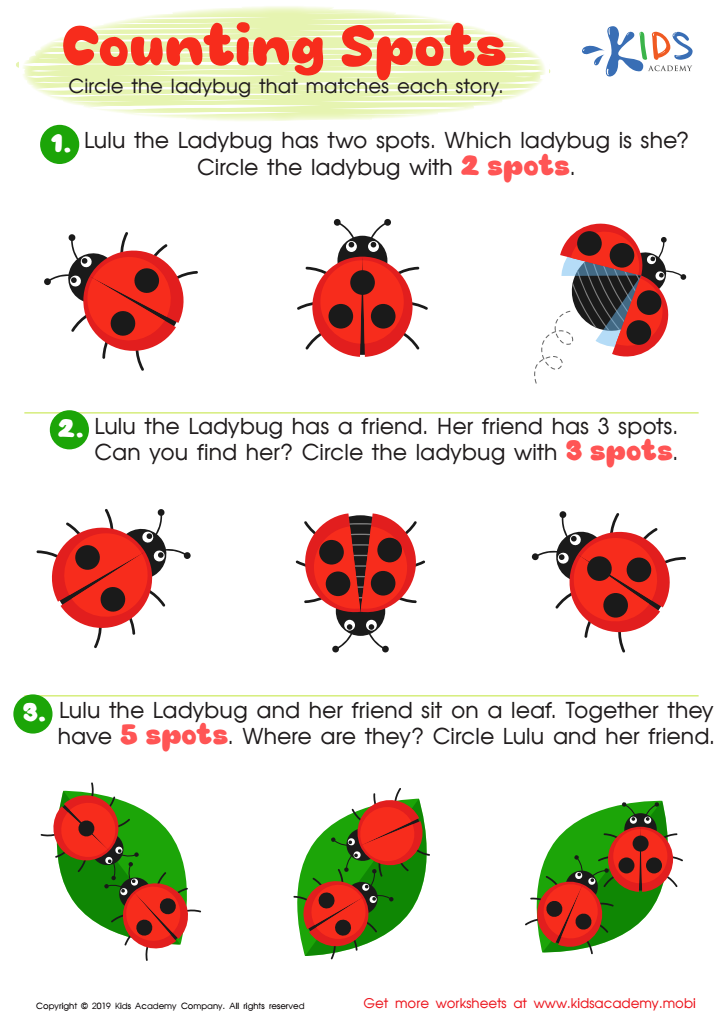
Counting Spots Worksheet
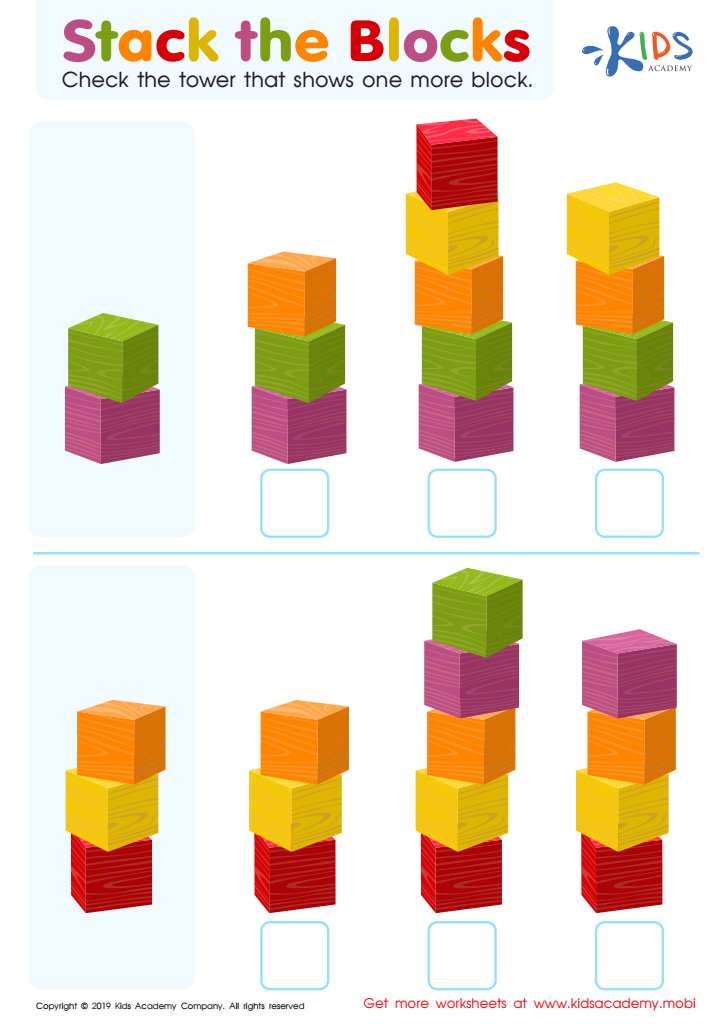
Stack the Blocks Worksheet








Parents and teachers should care about "Number Comparison Easy Preschool" because it plays a fundamental role in early childhood math development. This activity introduces young children to the basic concept of comparing quantities, which is essential for developing mathematical thinking and number sense. Understanding how to compare numbers helps children make sense of their environment, as they learn to quantify and differentiate between different amounts.
Engaging in number comparison activities fosters critical thinking and problem-solving skills. It shows children how to analyze differences, encouraging them to explore relationships between numbers. These skills are not just crucial for academic success; they are vital for everyday life, enabling children to make informed decisions, understand the value of items, and build their confidence in handling numbers.
Furthermore, "Number Comparison Easy Preschool" can enhance language skills. As children verbalize their comparisons, express their reasoning, and share their thoughts with peers, they develop communication skills that aid literacy development.
Finally, laying a solid mathematical foundation in preschool also prepares children for future advanced math concepts, making it easier for them to excel academically. By prioritizing such activities, parents and teachers support the overall cognitive and social development of children, ensuring they are well-equipped for lifelong learning.