Number Recognition Easy Preschool Addition Worksheets
9 filtered results
Difficulty Level
Grade
Age
-
From - To
Subject
Activity
Standards
Introduce your little learners to the exciting world of math with our Number Recognition Easy Preschool Addition Worksheets. Perfect for early childhood education, these fun and engaging activities help children recognize numbers while mastering basic addition skills. Our colorful and entertaining worksheets are designed to make learning enjoyable, encouraging kids to develop their numerical ability through playful exercises. Providing a solid foundation in math, they create a confident start to their educational journey. Download now and watch your preschoolers' math skills blossom with this perfect blend of fun and fundamental learning!
Favorites
With answer key
Interactive
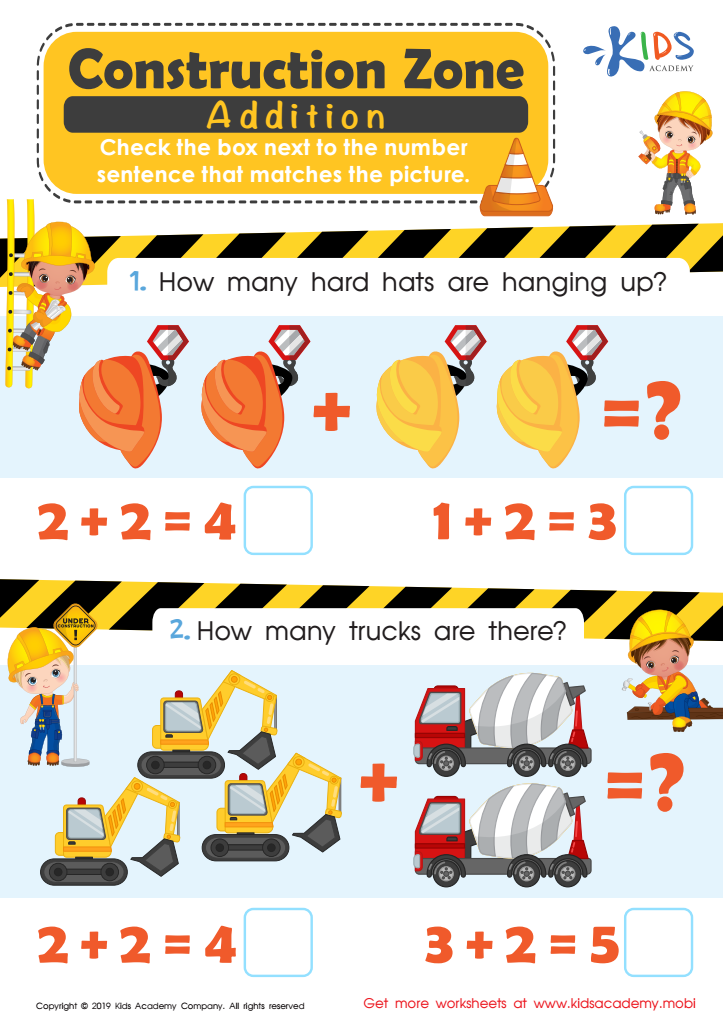
Construction Zone Addition Worksheet
Construction sites are bustling with professionals called construction workers. They use equipment while working, so they must wear protective gear. With kids, look at the pictures and name each object. Then help them check the box next to the number sentence that matches the picture. (80 words)
 Assign to My Students
Construction Zone Addition Worksheet
Worksheet
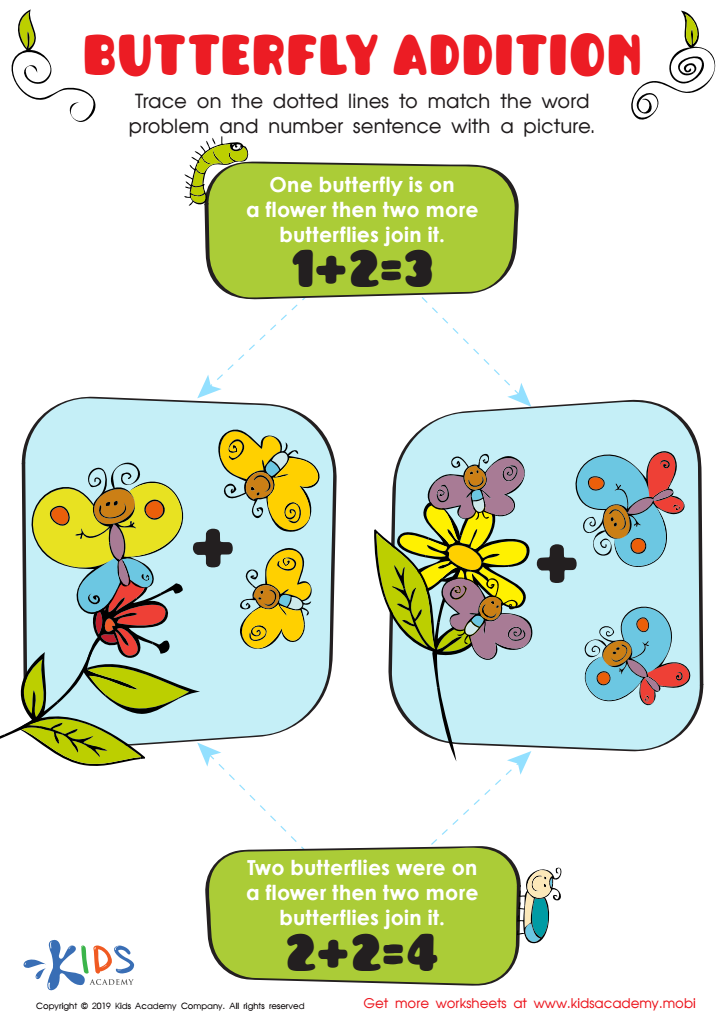
Butterfly Addition Worksheet
This tracing sheet is great for kids to work on math skills and have fun too. Read the word problems to them, then help them trace the dotted lines to match the problem and number sentence to a picture. Not only is it educational, it's beautiful too - your kids will love learning about butterflies!
Butterfly Addition Worksheet
Worksheet
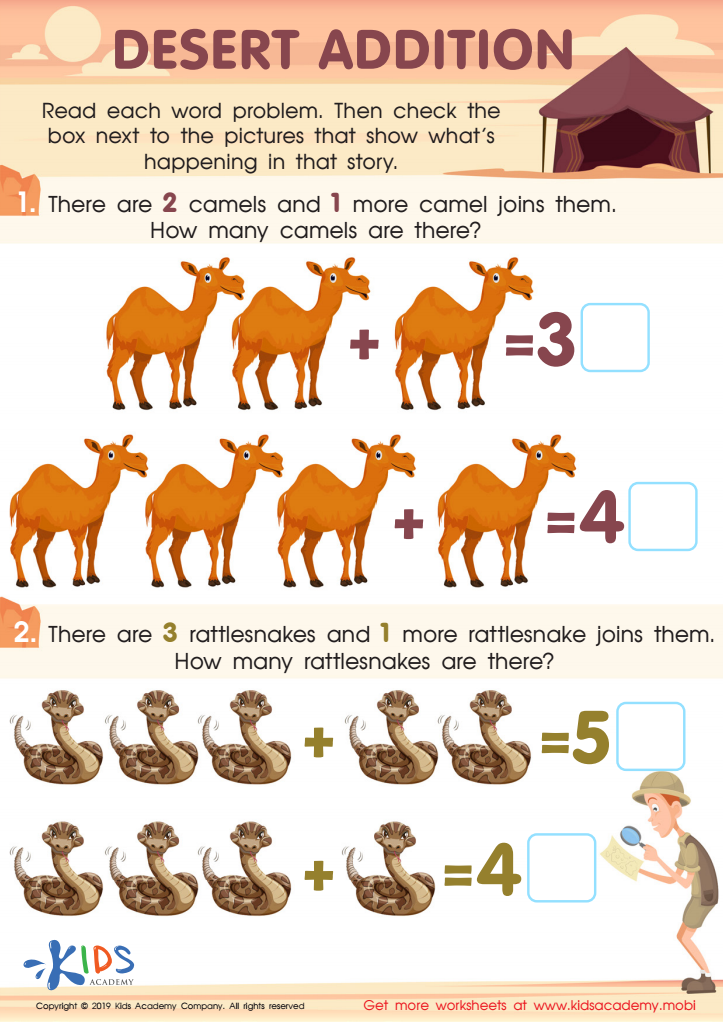
Desert Addition Worksheet
In the desert, scorching heat and little water mean animals must adapt to survive. Show kids pictures of these animals and teach their names. Then, read the word problems in the worksheet, and have them check the box next to the pictures that portray each story. 80 words
Desert Addition Worksheet
Worksheet
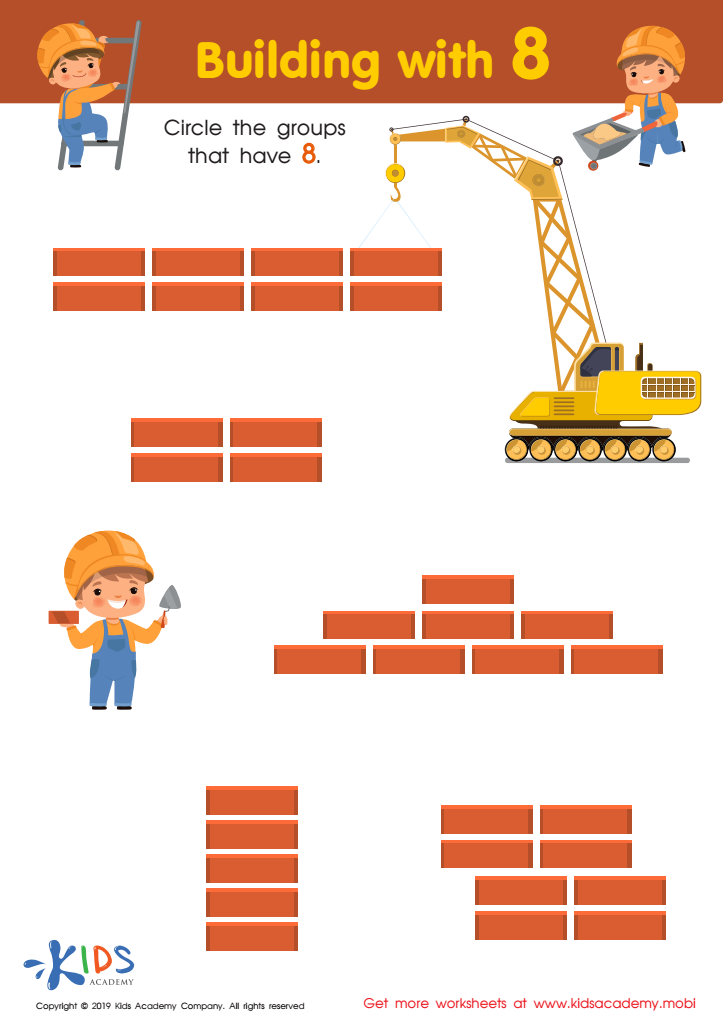
Building with 8 Worksheet
Your child can learn more with this simple exercise! Get them counting and help them circle the groups of 8 bricks. It's a great addition to their post-school lessons, supporting their counting skills. Plus, it's a fun way to learn!
Building with 8 Worksheet
Worksheet
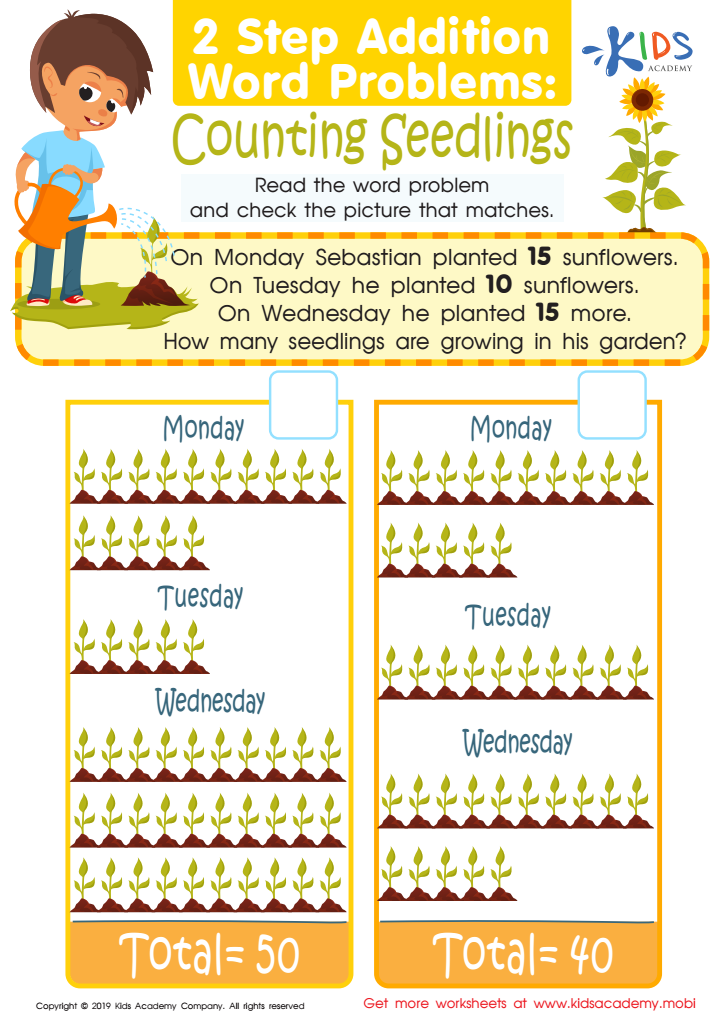
Counting Seedlings Worksheet
Understanding math word problems is key. Multiple steps can prove challenging - this free worksheet provides one-to-one picture representation to help kids solve multi-step addition word problems. Strengthen addition skills by choosing the matching picture to the answer.
Counting Seedlings Worksheet
Worksheet
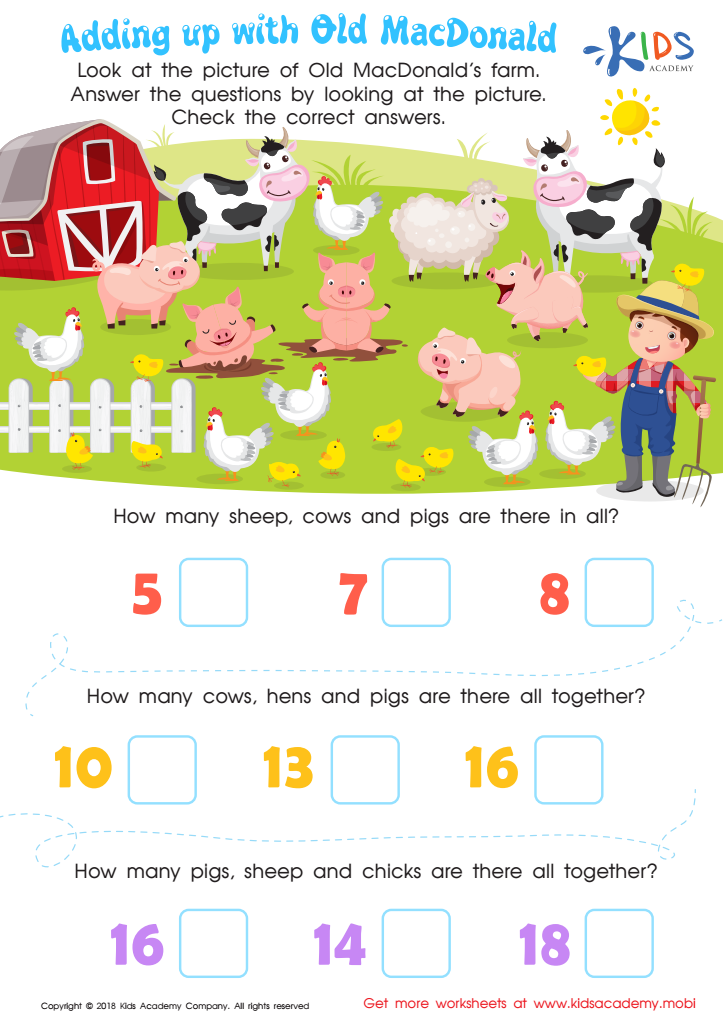
Adding Up with Old MacDonald Worksheet
Old MacDonald needs help counting his animals! Give your little math whiz a fun challenge with a free PDF worksheet. They'll love counting the animals and doing basic addition with two or three addends. Who knew math could be so much fun on the farm?
Adding Up with Old MacDonald Worksheet
Worksheet
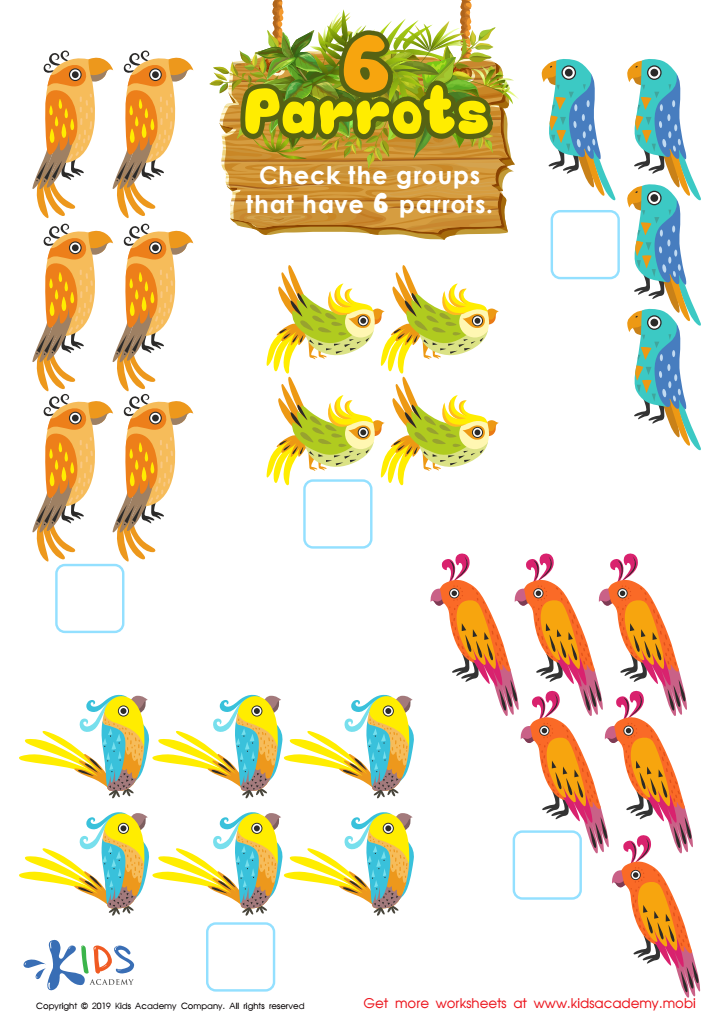
6 Parrots Worksheet
Love parrots? Here's a free worksheet to help your children practice counting to six with colorful parrot representations! Kids will adore counting the parrots and checking off groups of six - and it won't even feel like math! Just a fun way to make some new and exciting friends.
6 Parrots Worksheet
Worksheet
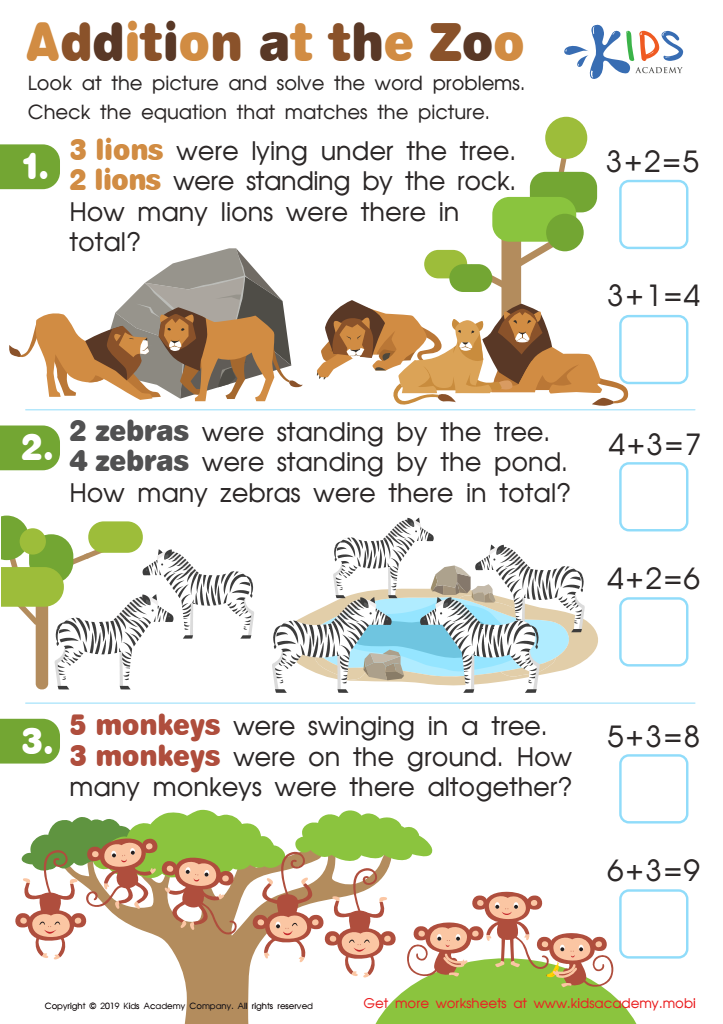
Addition at the Zoo Worksheet
Visit the zoo with your kids and point out all the different animals. Ask them to name their favorites and identify animals on a worksheet. Challenge them to solve word problems related to the pictures. Ask them for the equation that fits the picture and check the answer.
Addition at the Zoo Worksheet
Worksheet
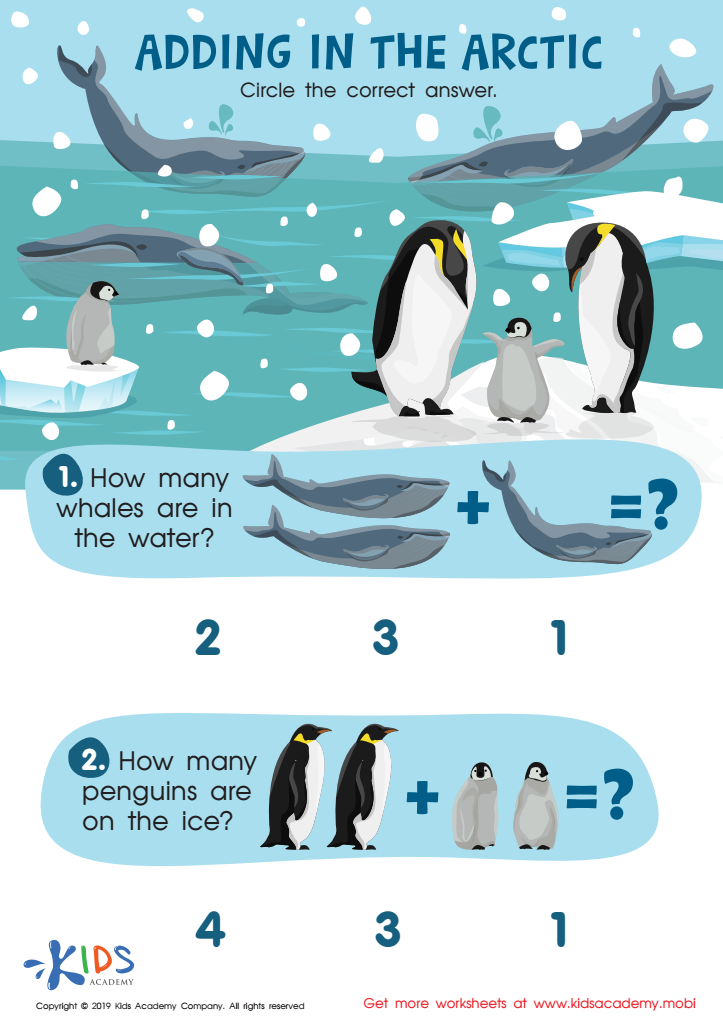
Adding in the Arctic Worksheet
Introduce your kids to the Arctic with this worksheet. Let them look at the pictures, teach them the name of the animals, and help them add up the correct number. Ask your kids to tell you some of the animals found there and what the weather is like. It's a fun and educational way to learn more about the Arctic.
Adding in the Arctic Worksheet
Worksheet
Join Kids Academy for Free
Who is primarily going to use this learning content?








Number recognition and basic addition are fundamental components of early childhood education that significantly impact a child’s future academic success. These skills form the foundation for mathematical understanding and are critical in developing cognitive and problem-solving abilities.
Firstly, number recognition—the ability to identify and understand numbers—sets the stage for more complex mathematical concepts such as counting, measuring, and arithmetic. When children can easily recognize numbers, they are more likely to engage with and appreciate math-related activities, boosting their confidence and enthusiasm for learning.
Secondly, easy preschool addition introduces children to the concept of combining quantities and understanding relationships between numbers. This skill not only enhances mathematical reasoning but also encourages logical thinking and pattern recognition, which are applicable in various aspects of learning and daily life.
Moreover, instilling these skills at an early age can close achievement gaps and foster a lifelong love for mathematics. Parents and teachers play a crucial role in this process by providing interactive and engaging learning experiences, utilizing everyday activities to reinforce these concepts naturally.
Ultimately, prioritizing number recognition and easy preschool addition lays a strong educational foundation, equipping children with essential skills for both academic achievement and everyday problem-solving. Recognizing its importance ensures that children are better prepared for the challenges of formal education and beyond.