Problem-Solving Skills Easy Preschool Subtraction Worksheets
5 filtered results
-
From - To
Discover engaging and effective Problem-Solving Skills Easy Preschool Subtraction Worksheets designed to boost early math abilities in young learners. Our thoughtfully crafted worksheets introduce subtraction concepts in a fun and interactive way, helping children develop critical thinking and problem-solving skills at an early stage. Each worksheet encourages students to visualize math problems, enhancing their understanding and retention. With colorful illustrations and relatable scenarios, these printable resources make learning subtraction enjoyable and accessible. Perfect for home or classroom use, these worksheets empower preschoolers to conquer subtraction challenges with confidence. Start your child's math journey today and set the foundation for future success!
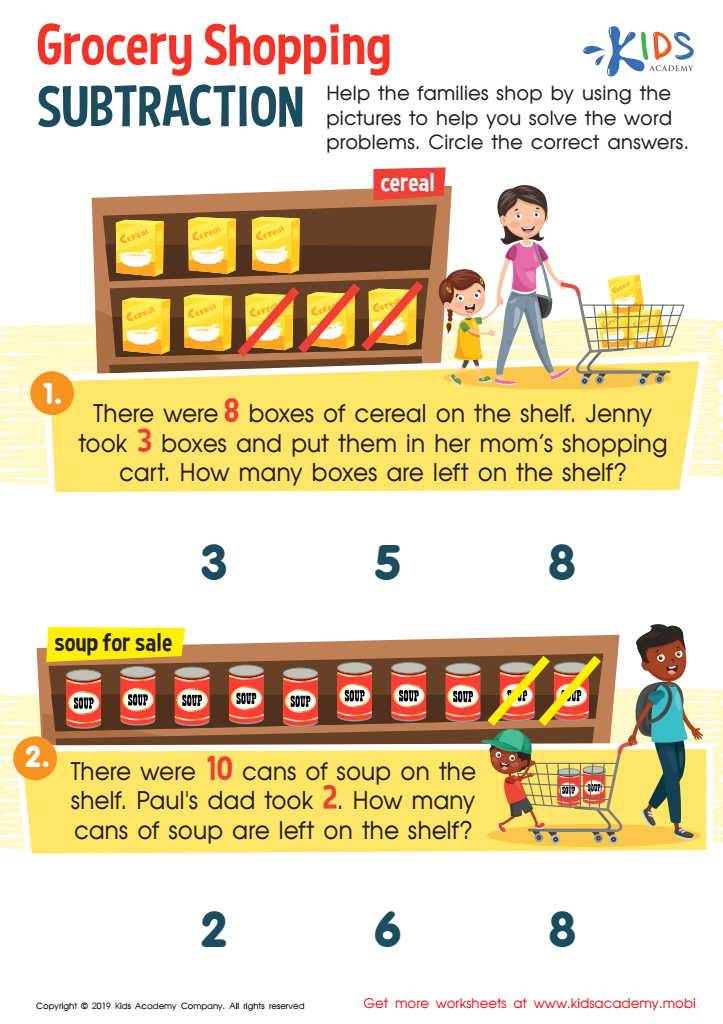
Grocery Shopping Subtraction Worksheet
 Assign to My Students
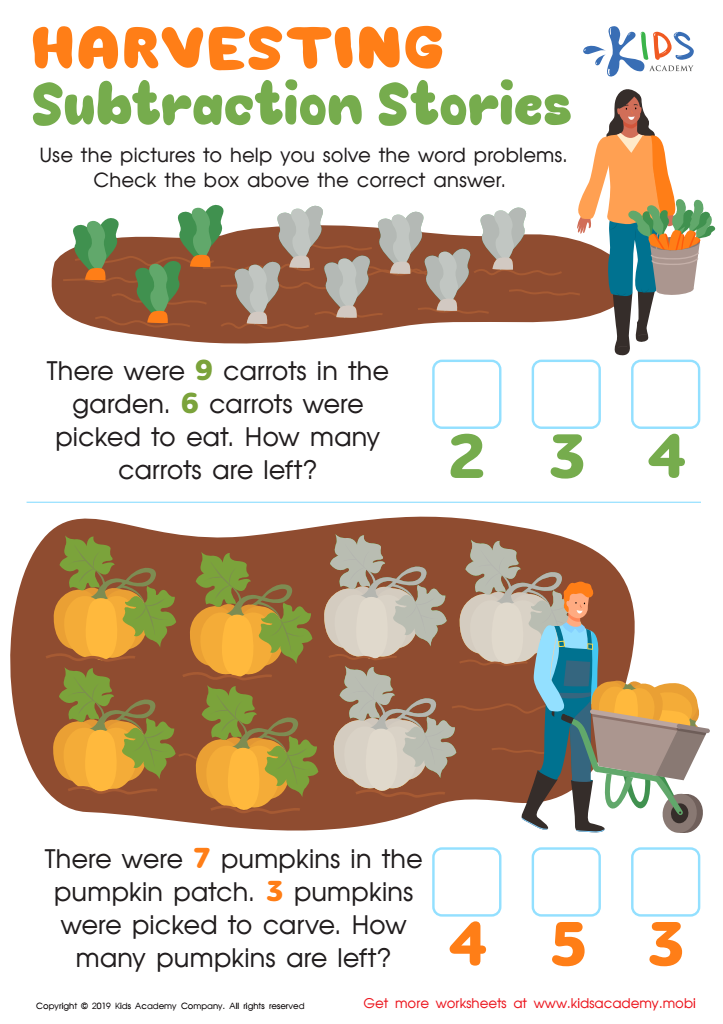
Harvesting Subtraction Stories Worksheet
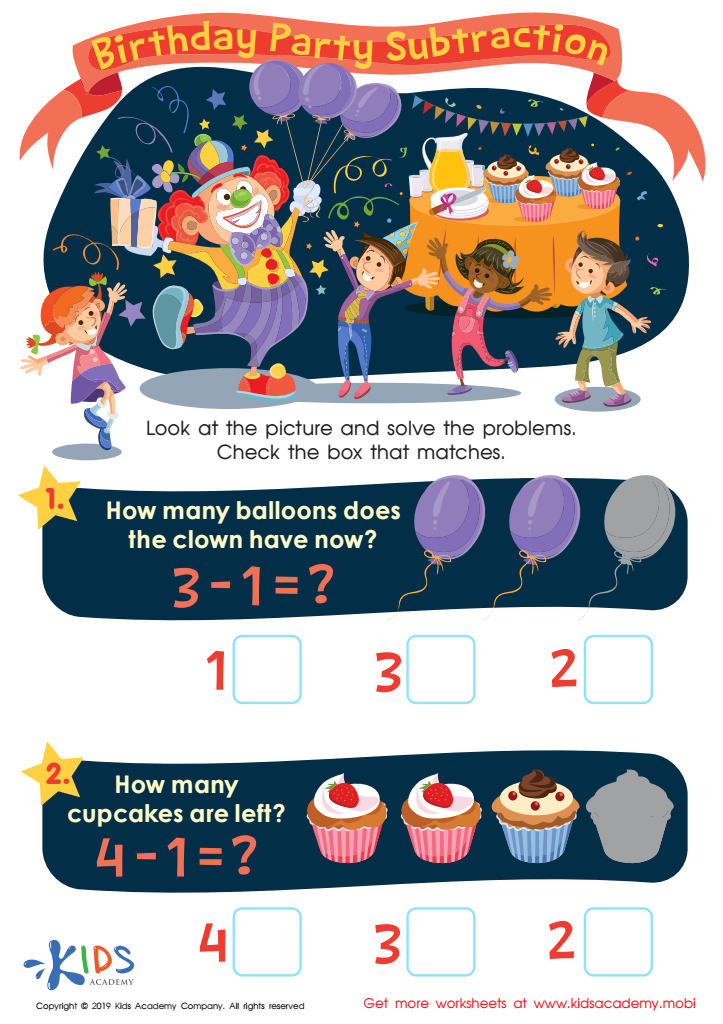
Birthday Party Subtraction Worksheet
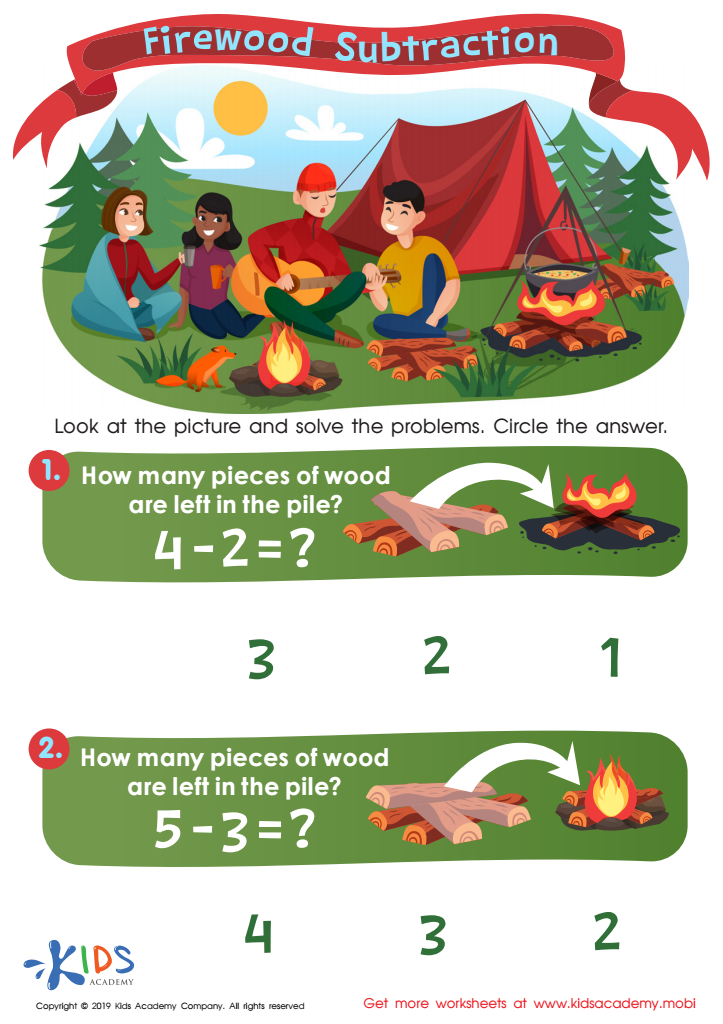
Firewood Subtraction Worksheet
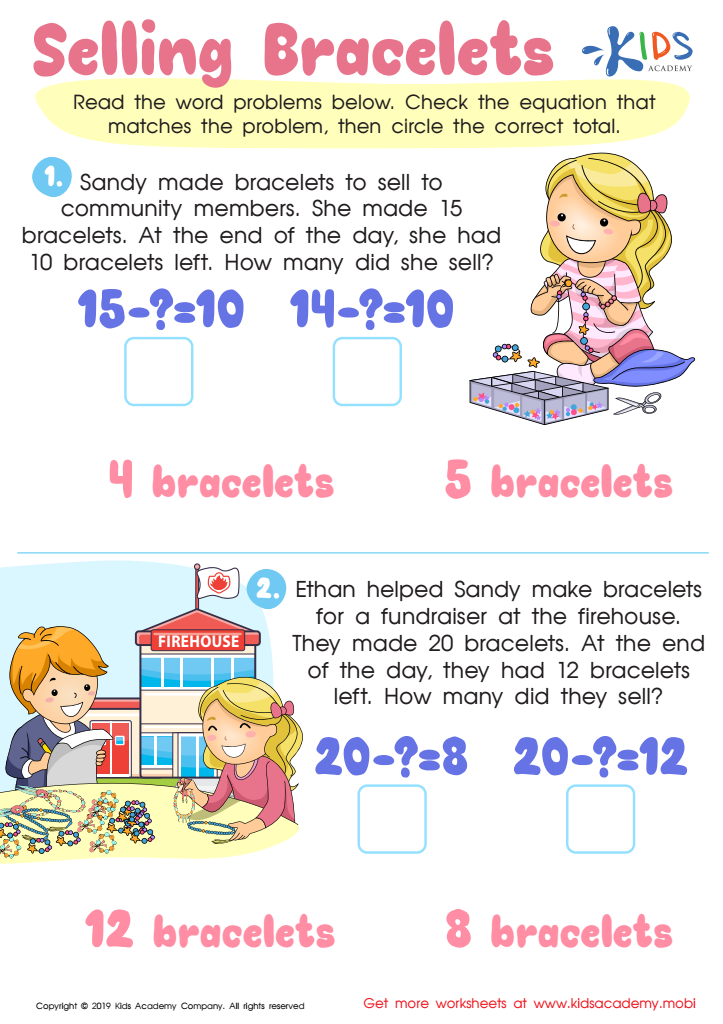
Selling the Bracelets Worksheet








Problem-solving skills, particularly in the context of easy preschool subtraction, are crucial for a child’s overall development. For parents and teachers, nurturing these skills early on enhances cognitive abilities such as critical thinking and analytical reasoning. Mastery of basic subtraction helps children understand fundamental math concepts, fostering a positive attitude towards numeracy.
Preschoolers learn by engaging with the world around them, and Problem-Solving Skills Easy Preschool Subtraction activities encourage this interaction. When kids tackle subtraction challenges, they not only develop mathematical precision but also learn to approach problems systematically, enhancing their ability to find solutions across various contexts—academic or otherwise.
Furthermore, these skills lay the groundwork for the numeric literacy that is essential in everyday life. Children who can confidently solve basic math problems are more likely to excel as they progress through their education.
By focusing on easy subtraction activities in preschool, parents and teachers create a nurturing environment that emphasizes exploration, perseverance, and creativity. These foundational skills contribute to lifelong learning habits, enabling children to navigate more complex challenges in future education and personal experiences. Encouraging growth in this area ultimately builds confidence and resilience in young learners.