Shape Recognition Easy Reading Worksheets
3 filtered results
Difficulty Level
Grade
Age
-
From - To
Subject
Activity
Standards
Shapes are fundamental to early learning, and our "Shape Recognition Easy Reading Worksheets" simplify this essential concept for young learners. Designed for children in pre-K and kindergarten, these interactive worksheets improve reading skills while familiarizing kids with various shapes. Each worksheet combines fun activities with reading prompts to engage children, making the process both enjoyable and educational. With vibrant illustrations and clear instructions, our worksheets support visual learning and critical thinking. Ideal for classroom or home use, they provide a solid foundation in shape recognition, setting the stage for more advanced learning. Foster your child's development with our expertly crafted resources!
Favorites
With answer key
Interactive
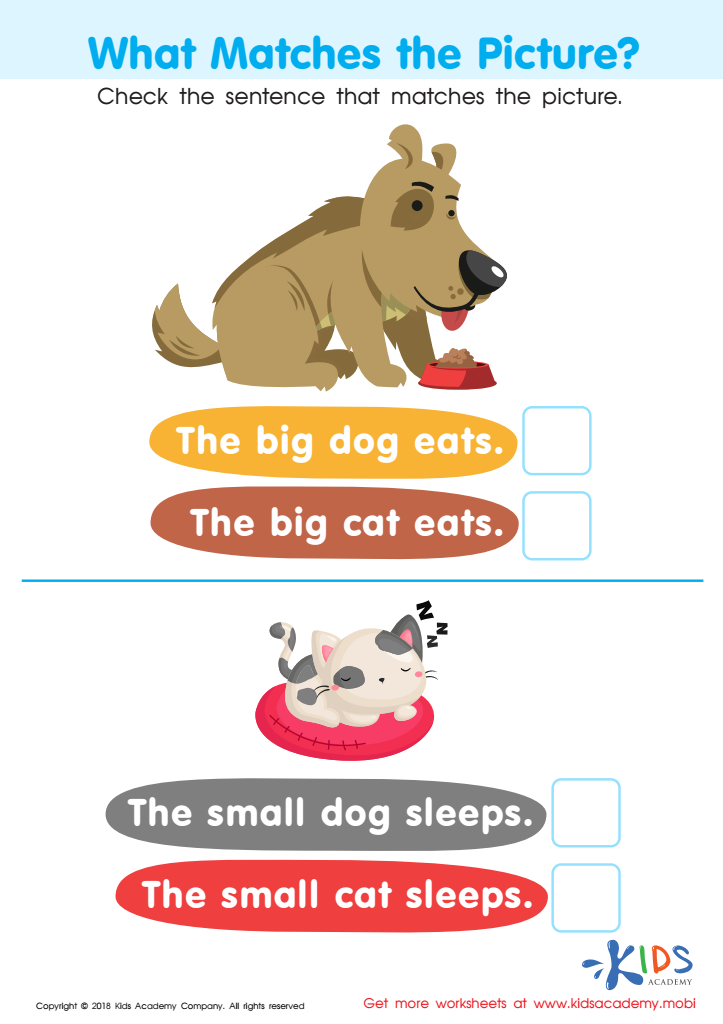
What Matches the Picture? Worksheet
Emerging readers can use pictures of cute pets and phrase repetition to match sentences to pics, building skills while having fun! It's a great way to bolster vocab and confidence, motivating them to keep reading.
 Assign to My Students
What Matches the Picture? Worksheet
Worksheet
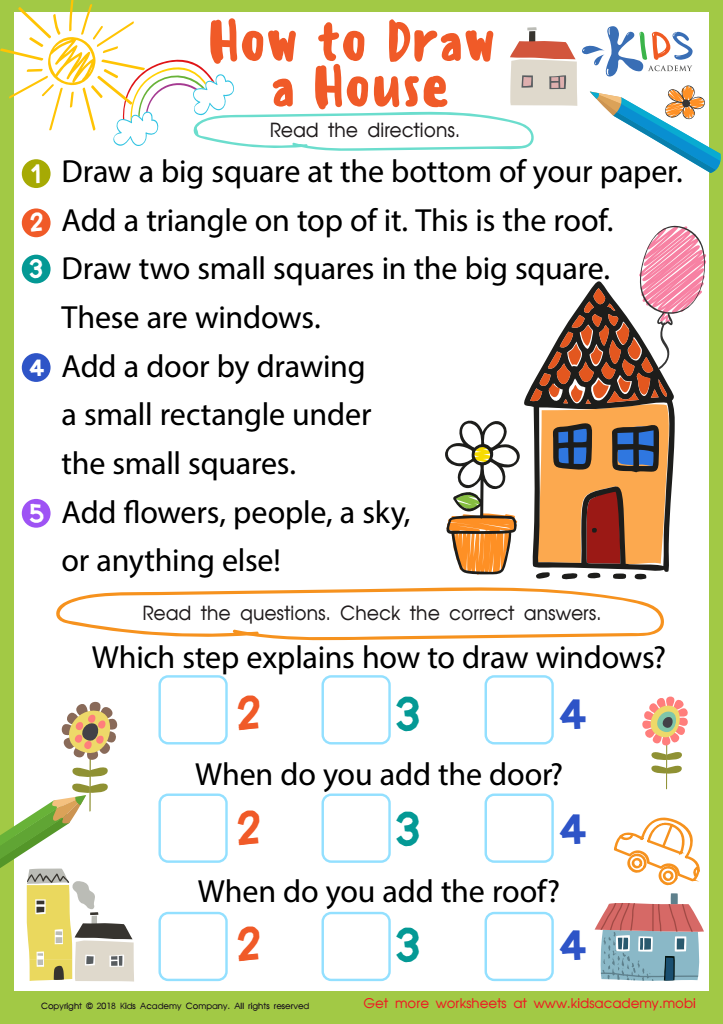
How to Draw House Worksheet
Does your child love to draw? Why not try teaching them some easy tricks? Get them to follow directions on this worksheet and learn how to draw a house. Read the questions at the end and ensure they get the answers right. Your kids will surely love it!
How to Draw House Worksheet
Worksheet
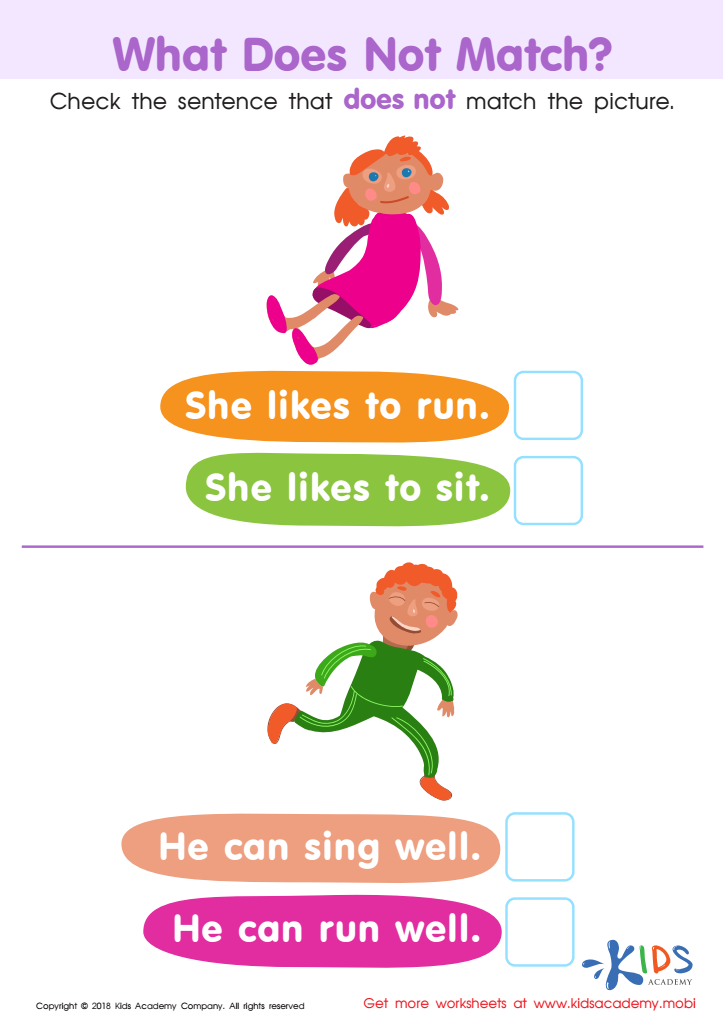
What Does Not Match? Worksheet
Emerging readers need to practice using visual cues and repetitive text. This colorful PDF provides them with an opportunity to look at pictures, use discrimination and discern which phrase does not match. It also enables them to gain familiarity with high-frequency words to aid decoding longer sentences.
What Does Not Match? Worksheet
Worksheet
Join Kids Academy for Free
Who is primarily going to use this learning content?


.jpg)




Shape recognition is an integral part of early childhood development and is essential for various aspects of learning and cognitive development. When parents and teachers focus on shape recognition, they help children develop critical spatial awareness and pattern recognition skills, which form the foundation for more complex mathematical and scientific understanding in later years. Recognizing shapes helps children make connections between objects in their environment, aiding overall observational skills and cognitive mapping.
Additionally, shape recognition strengthens visual processing abilities. By distinguishing between different shapes, children improve their attention to detail—a skill that is crucial in reading and writing. The ability to recognize shapes also contributes to children's ability to understand symbols, which is directly related to letter and number recognition. This foundational knowledge assists in decoding words and understanding geometric concepts, enhancing literacy and numeracy skills.
Incorporating shape recognition in early reading programs encourages interactive learning. Activities like playing with shape sorters, drawing, or identifying shapes in everyday objects make learning fun and engaging, fostering a positive attitude towards education. Parents and teachers play a pivotal role in this developmental phase, and focusing on shape recognition can promote an all-encompassing, enriching learning experience that lays the groundwork for future academic success.