Letter recognition Easy Grade 2 English for Beginners Worksheets
5 filtered results
-
From - To
Boost your child's learning with our "Letter Recognition Easy Grade 2 English for Beginners Worksheets." These engaging and interactive worksheets are designed to help young learners identify and recognize letters with ease. Tailored for second graders, our resources feature vibrant illustrations and fun exercises that make learning enjoyable. Whether your child is a beginner in English or looking to reinforce their skills, these worksheets provide the perfect tools to enhance letter recognition through various activities like tracing, matching, and coloring. Watch your child gain confidence in their literacy skills while having fun! Start their educational journey today with our user-friendly worksheets.
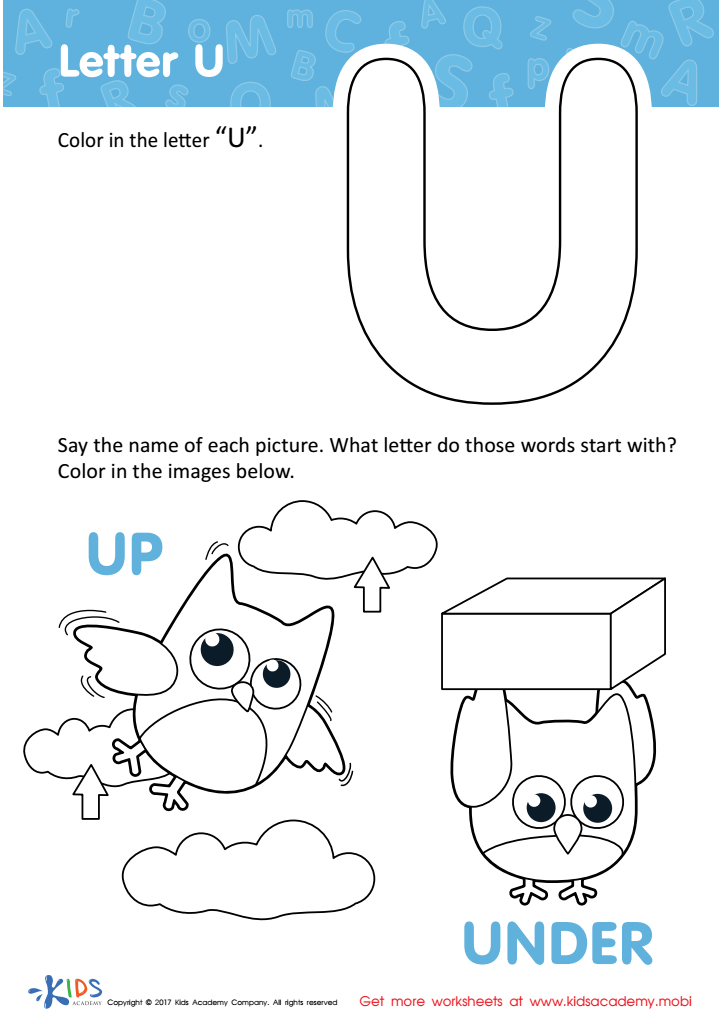
Letter U Coloring Sheet
 Assign to My Students
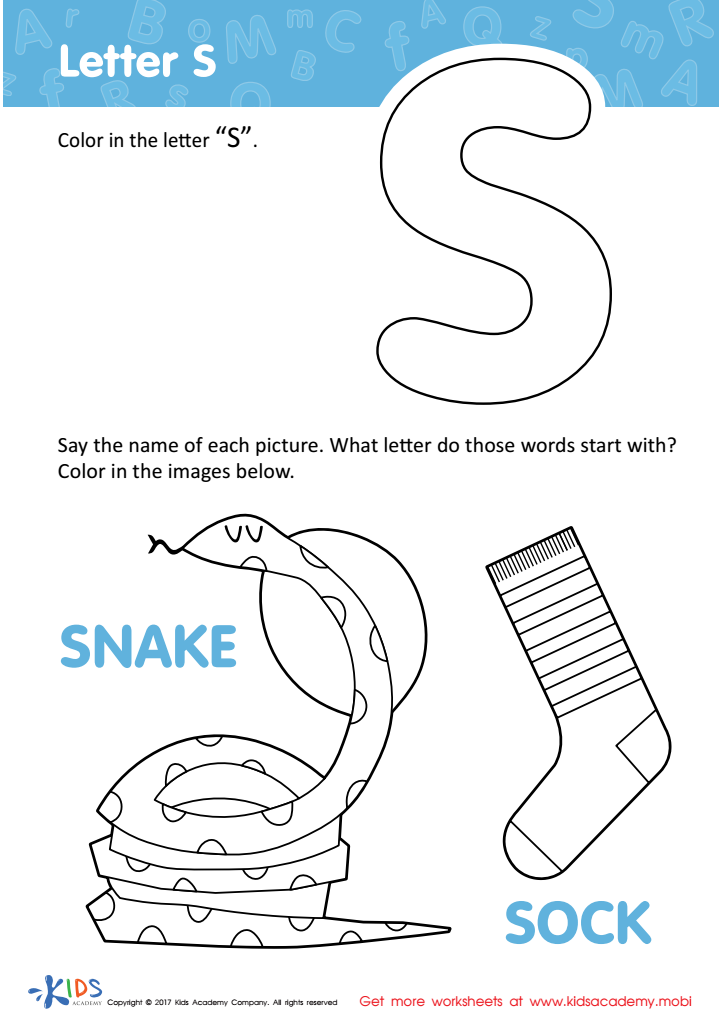
Letter S Coloring Sheet
Assign to My Students
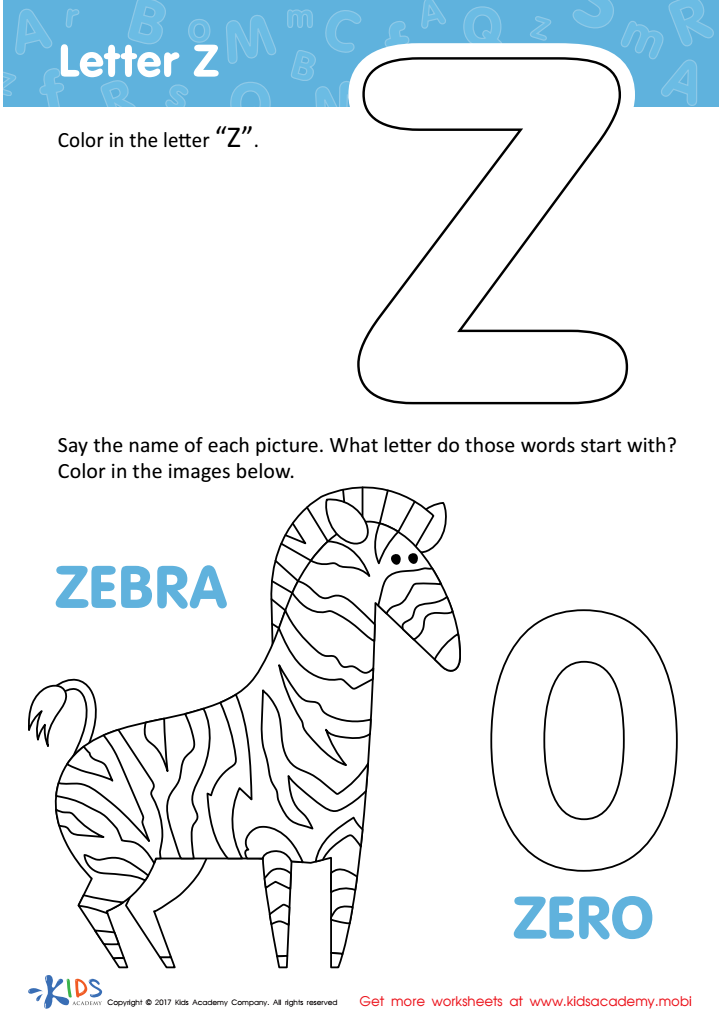
Letter Z Coloring Sheet
Assign to My Students
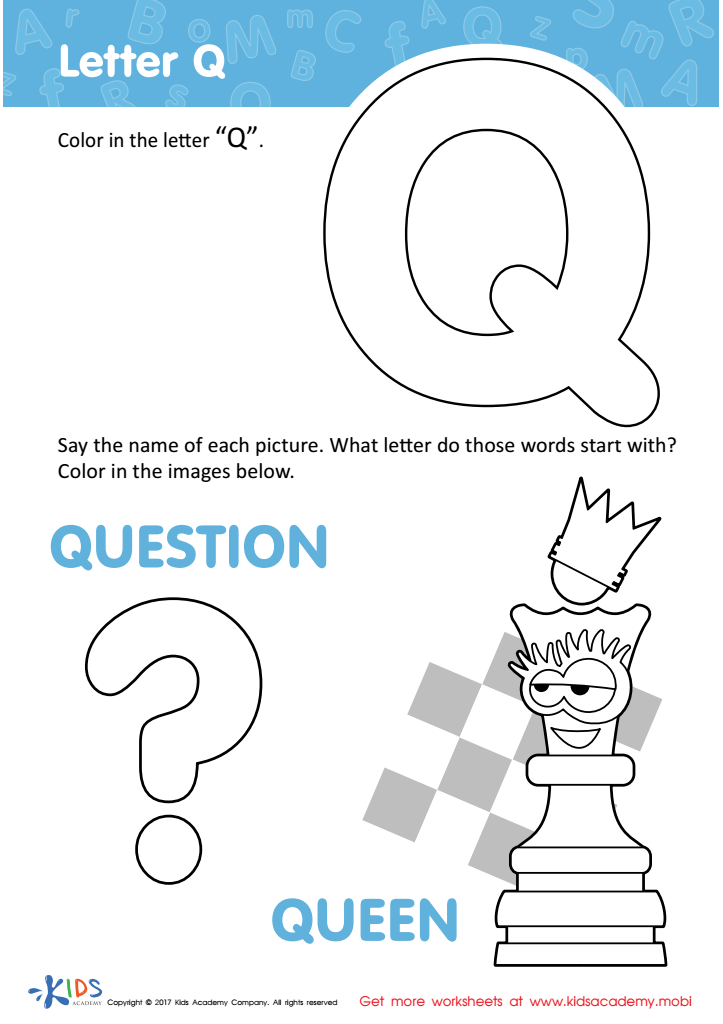
Letter Q Coloring Sheet
Assign to My Students
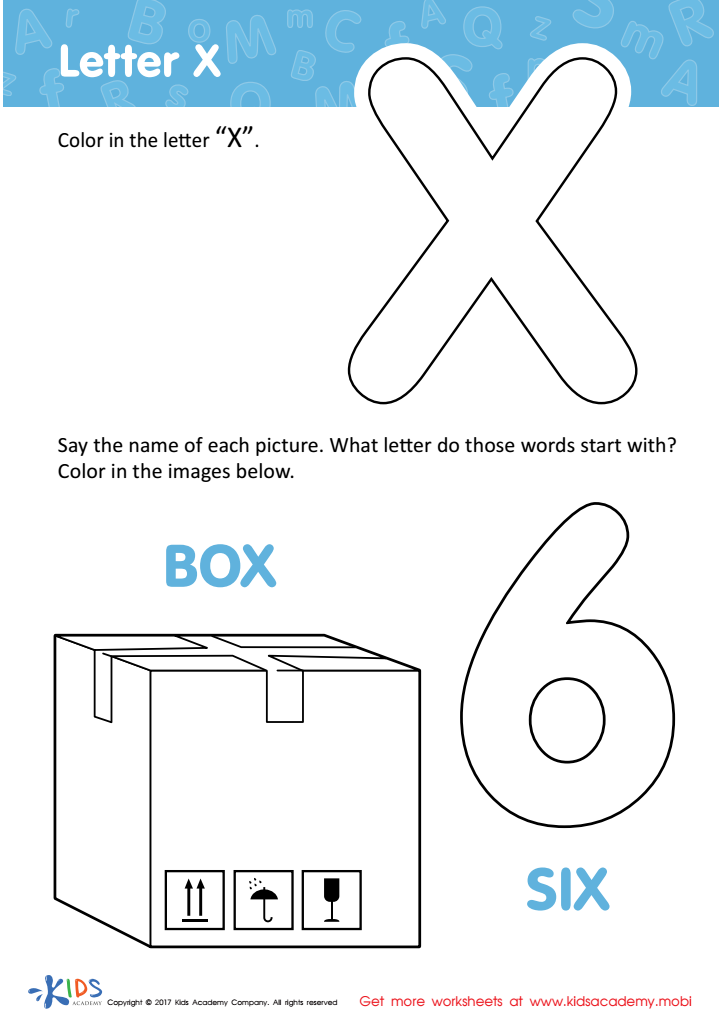
Letter X Coloring Sheet
Assign to My Students


Letter recognition is a fundamental skill for young learners and is critical for their success in reading and writing. Parents and teachers should prioritize this skill in Grade 2 English, as it forms the foundation for literacy development. When children can easily recognize letters, they can better decode words, which is essential for reading comprehension.
Early letter recognition fosters confidence and enthusiasm for learning. It helps children identify letters in everyday contexts, making reading more relatable and fun. Furthermore, recognizing letters is intrinsically linked to improving phonemic awareness—the ability to hear and manipulate sounds in words—which is crucial for spelling.
In a world increasingly driven by information, children equipped with strong letter recognition skills can navigate written communication more effectively. By supporting this foundational skill, both parents and teachers are investing in their child's overall educational journey, paving the way for successful reading habits that will benefit them throughout their schooling.
Moreover, engaging in activities that promote letter recognition can enhance the parent-child or teacher-student bond, fostering a love of learning that lasts a lifetime. In summary, letter recognition is not just an academic requirement; it is a step toward a brighter, literate future for children.