Visual Learning Easy Grade 2 Addition & Subtraction Worksheets
3 filtered results
-
From - To
Discover our engaging "Visual Learning Easy Grade 2 Addition & Subtraction Worksheets," designed to make math enjoyable and accessible for young learners! Tailored specifically for second graders, these worksheets utilize vibrant visuals and interactive elements to reinforce key concepts in addition and subtraction. As students navigate colorful diagrams and fun illustrations, they will build confidence in their math skills while enhancing their understanding of basic operations. Perfect for classroom use or at-home practice, these resources offer a fresh approach to learning, ensuring that kids stay motivated and excited about mastering math. Download now to support your child’s educational journey!
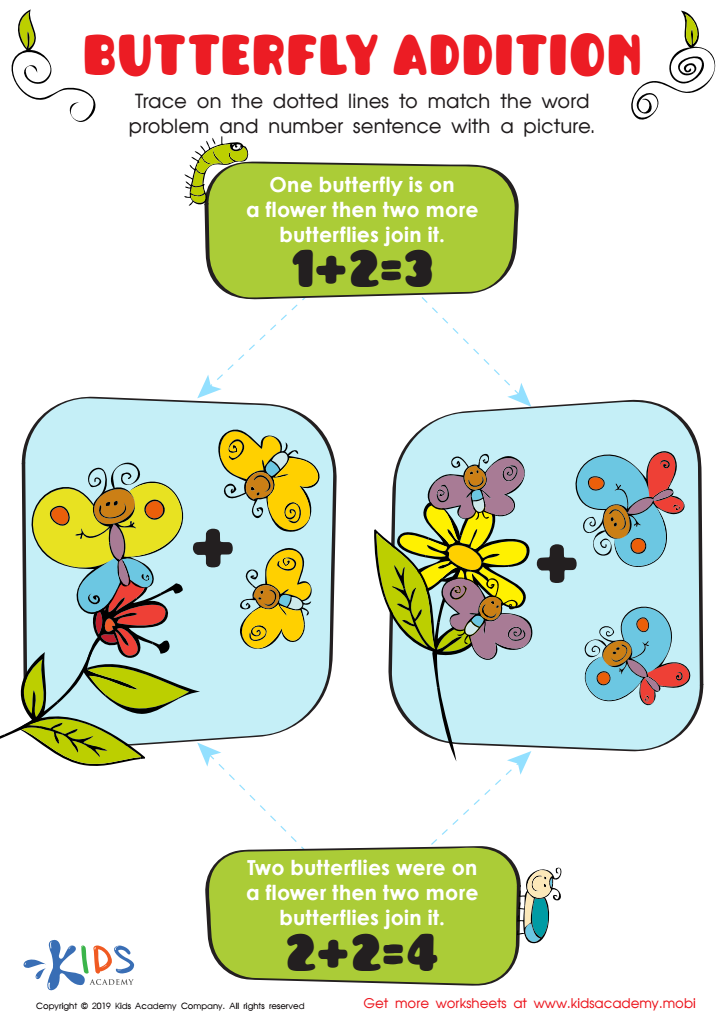
Butterfly Addition Worksheet
 Assign to My Students
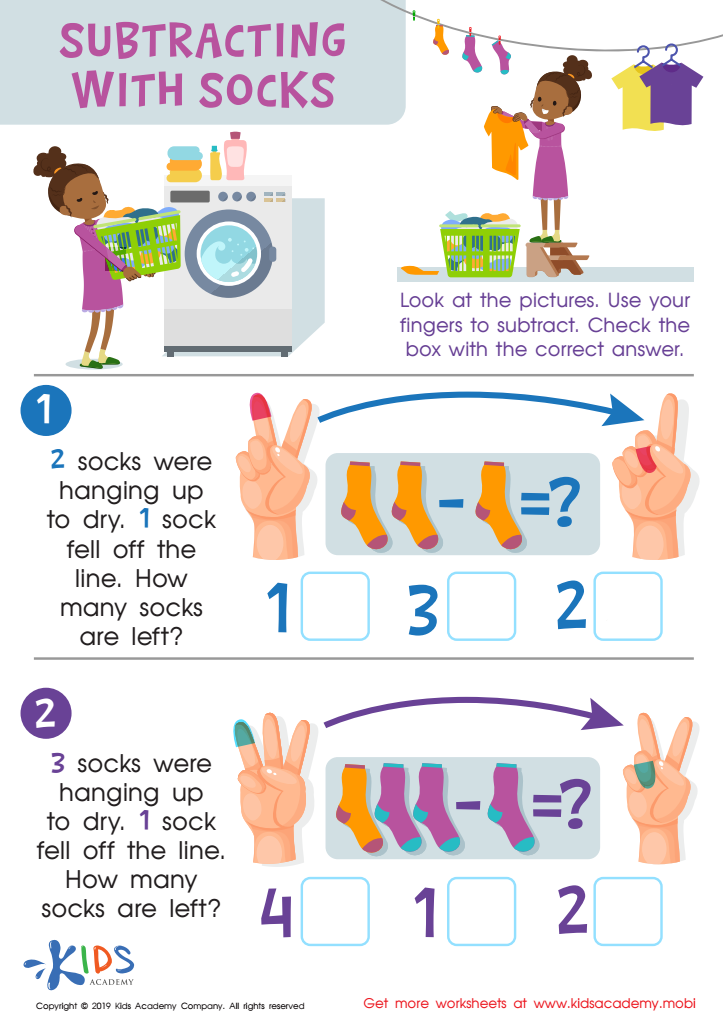
Subtracting Socks Worksheet
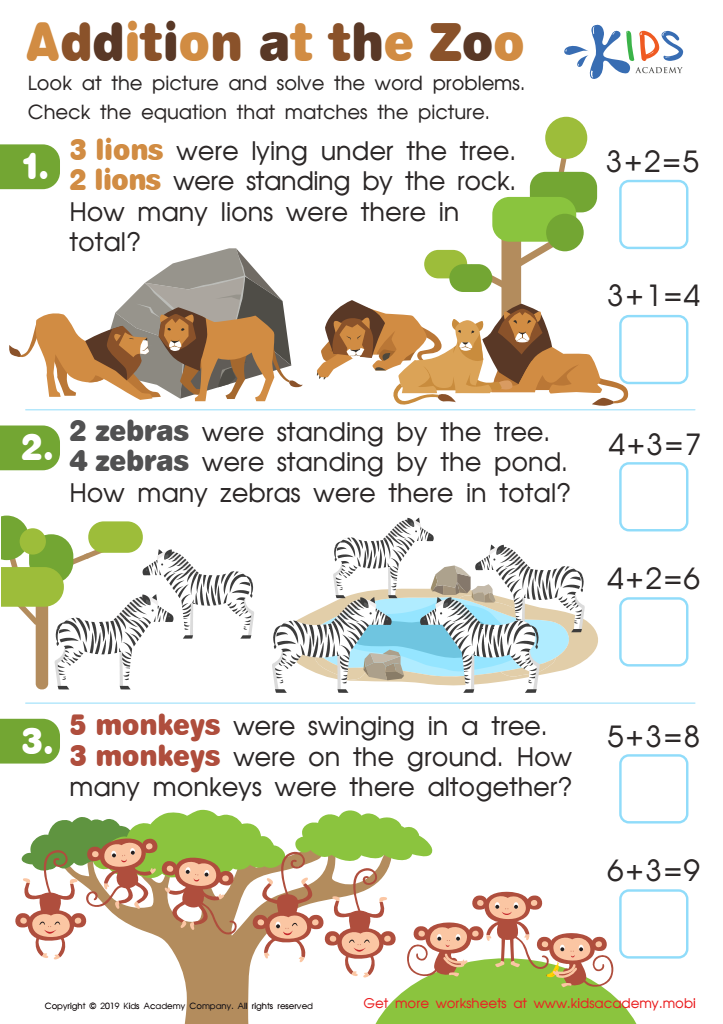
Addition at the Zoo Worksheet








Parents and teachers should care about Visual Learning Easy Grade 2 Addition & Subtraction because it greatly enhances students' comprehension of mathematical concepts. Visual learning strategies, such as using diagrams, pictures, and manipulatives, cater to the diverse learning styles of young children. In Grade 2, students are mastering fundamental addition and subtraction skills, and visual aids can make abstract concepts more concrete.
By presenting math problems through visual means, children can easily grasp relationships between numbers, making it less daunting and more engaging. For example, using number lines, grouped objects, or simple visual representations can help children understand the processes of adding and subtracting better than traditional methods alone.
Additionally, these strategies promote critical thinking and problem-solving skills, as children learn to visualize math problems in creative ways. When children can see and manipulate their work, they become more invested in their learning, fostering a positive attitude toward math.
Moreover, supporting visual learning can enhance retention and recall, leading to improved performance on assessments and a stronger foundation for future math concepts. Ultimately, implementing these strategies in the classroom and at home empowers children, cultivates confidence, and sets the stage for lifelong mathematical success.