Color recognition Easy Grade 2 Arrays Worksheets
3 filtered results
-
From - To
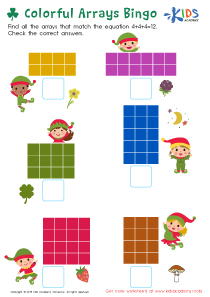
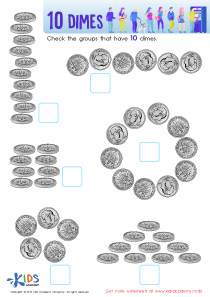
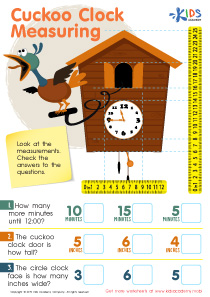
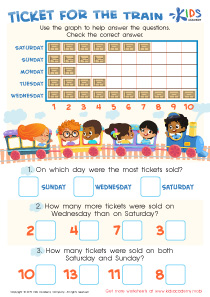
Introducing our "Color Recognition Easy Grade 2 Arrays Worksheets," designed to enhance young learners' understanding of colors and arrays. These engaging worksheets offer a fun and interactive way for second graders to develop their color recognition skills while exploring mathematical concepts. Students will be prompted to identify and color various arrays, reinforcing their understanding of numbers and organizing quantities visually. Ideal for classroom use or at-home learning, our worksheets are perfect for building confidence in math and fostering creativity through coloring. Dive into a world of colors and numbers that make learning enjoyable for every child!
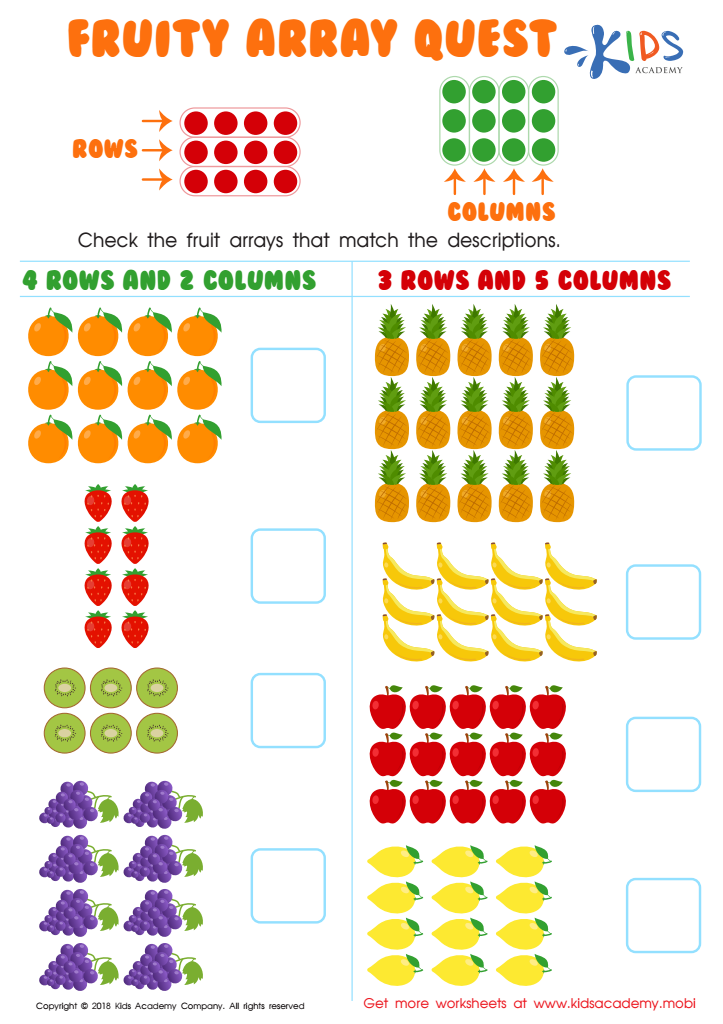
Fruity Array Quest Worksheet
 Assign to My Students
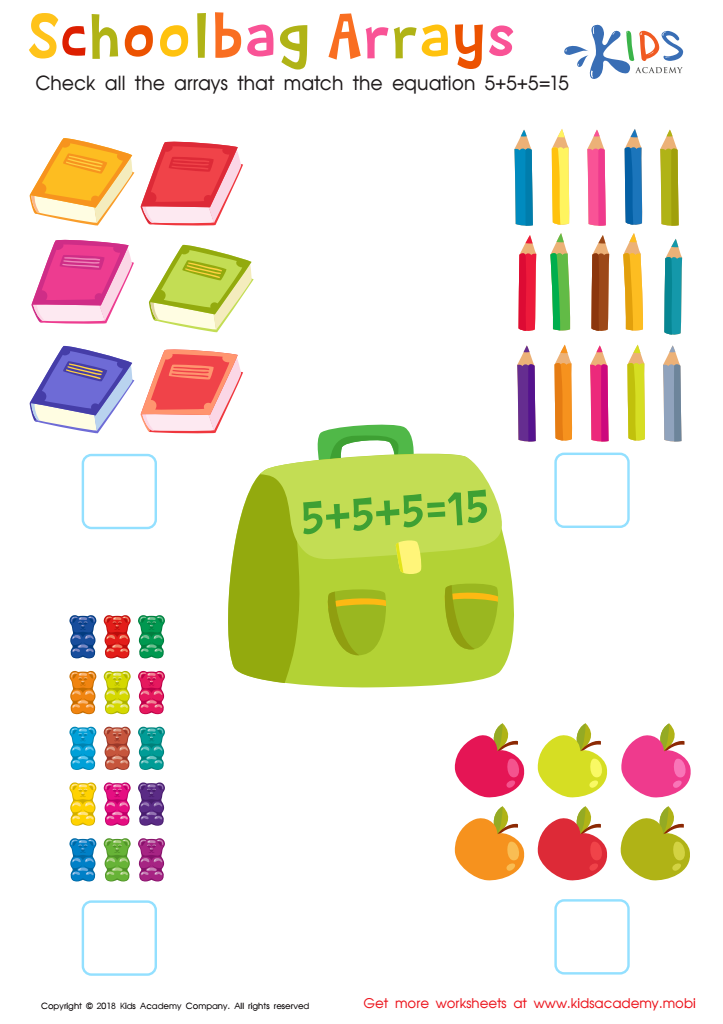
Schoolbag Arrays Worksheet
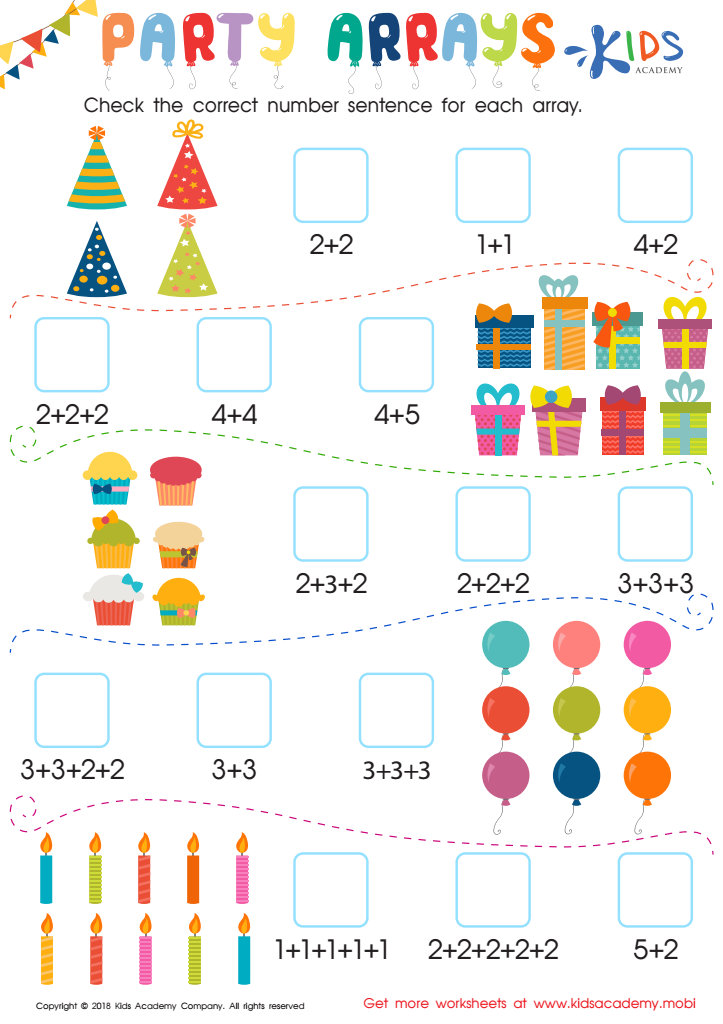
Party Arrays Worksheet






Color recognition is a fundamental skill that significantly influences a child’s cognitive and social development, especially in early grades. For parents and teachers, understanding this concept becomes vital in fostering a child's learning experience.
Color recognition aids children in developing their observational skills, enabling them to notice differences and make connections between objects and their attributes. In Grade 2, children learn to identify and organize colors through simple arrays, laying the groundwork for essential math concepts such as counting, sorting, and pattern recognition. By encouraging children to engage with colors, educators stimulate their imagination and creativity, enhancing their ability to express themselves through art and other activities.
Moreover, mastering color recognition helps build children's confidence as they communicate about their preferences and experiences. It supports social interaction as they can form connections with peers over shared interests, promoting collaboration and communication skills.
For parents, engaging in activities that highlight color recognition, such as games, crafts, or science experiments, can create valuable bonding moments with their children. These experiences reinforce learning in play-based settings, making education enjoyable. Ultimately, nurturing color recognition in young learners can lead to a more holistic development and foster a lifelong love for learning.